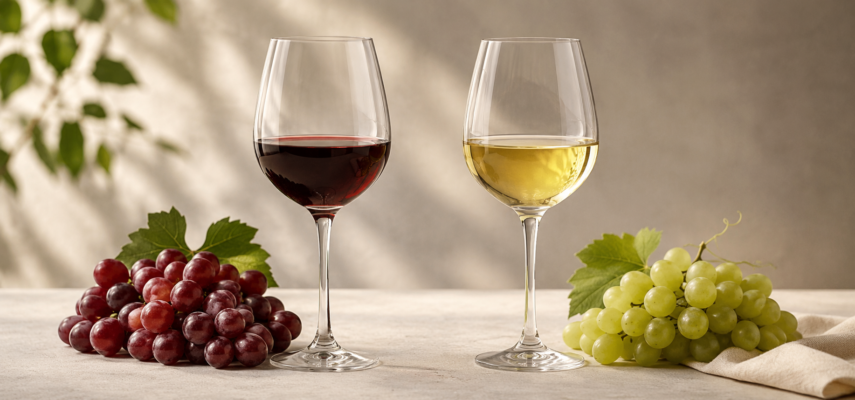
Wine can feel complicated at first, but one of the easiest ways to begin understanding it is by looking at the most familiar divide: red wine vs white wine.
Most people know the basics. Red wine is darker, often richer, and commonly served with steak. White wine is lighter, brighter, and often served chilled. But the real differences go deeper than color. Red and white wines are made differently, taste different, pair with food differently, and often appeal to different moods, meals, and occasions.
Understanding the difference between red and white wine is one of the best starting points for anyone learning about wine.
The Simple Difference
The biggest difference between red wine and white wine comes from how the grapes are handled during winemaking.
Red wine is usually made from dark-skinned grapes. During fermentation, the grape skins stay in contact with the juice. Those skins give red wine its color, tannins, structure, and many of its deeper flavors.
White wine is usually made from green or yellow-skinned grapes, though it can technically be made from red grapes if the skins are removed quickly. For most white wines, the juice is separated from the skins before fermentation. That produces a lighter-colored wine with fresher, crisper flavors.
In short:
Red wine gets much of its character from grape skins. White wine is usually made with little or no skin contact.
That one difference explains a lot.
Why Red Wine Is Red
The juice inside most wine grapes is actually clear or pale. Red wine gets its color from the skins of dark grapes such as Cabernet Sauvignon, Merlot, Pinot Noir, Syrah, Malbec, and Zinfandel.
When the grape skins soak with the juice during fermentation, they release pigments, tannins, aromas, and flavor compounds. The longer the skins stay in contact with the juice, the deeper the color and the more structured the wine can become.
That is why red wines can range from light ruby to deep purple. A Pinot Noir may look pale and transparent, while a Cabernet Sauvignon or Malbec may appear almost black in the glass.
Why White Wine Is White
White wine is usually made from lighter-skinned grapes such as Chardonnay, Sauvignon Blanc, Riesling, Pinot Grigio, Chenin Blanc, and Albariño.
Because the skins are typically removed early, white wine does not take on the same dark color or tannic structure as red wine. Instead, white wines often emphasize acidity, freshness, fruit, minerality, and floral aromas.
White wines can range from nearly clear to pale straw, gold, or deep yellow. A crisp Pinot Grigio may look very light, while an oak-aged Chardonnay may appear richer and more golden.
Taste Differences
Red wines and white wines often taste different because of their grape varieties, winemaking methods, aging choices, and structure.
Red wines commonly show flavors such as cherry, blackberry, plum, raspberry, currant, tobacco, leather, earth, pepper, cocoa, and spice. They often feel fuller and more textured on the palate.
White wines commonly show flavors such as lemon, lime, apple, pear, peach, apricot, melon, pineapple, herbs, flowers, honey, and stone. They often feel lighter, brighter, and more refreshing.
Of course, these are general patterns. A light red wine can feel delicate and fresh, while a full-bodied white wine can feel rich and creamy.
Tannins: The Big Red Wine Factor
One of the most important differences between red and white wine is tannin.
Tannins are naturally occurring compounds found in grape skins, seeds, and stems. They can also come from oak barrels. In wine, tannins create a drying, gripping sensation in your mouth, especially on your gums and tongue.
That dry feeling you get from a bold Cabernet Sauvignon? That is tannin.
Red wines usually have more tannin because they are fermented with grape skins. White wines generally have little tannin because the skins are removed before fermentation.
Tannin gives red wine structure. It can make a wine feel firm, serious, and age-worthy. It also helps red wine pair well with rich foods like steak, lamb, burgers, short ribs, and aged cheeses.
Acidity: The Freshness Factor
White wines are often associated with acidity. Acidity is what makes wine feel crisp, bright, mouthwatering, and refreshing.
Think of the sharp freshness of lemon juice or green apple. That sensation is acidity.
High-acid white wines like Sauvignon Blanc, Riesling, Chablis, and Albariño can feel lively and clean. This makes them excellent with seafood, salads, goat cheese, sushi, and lighter dishes.
Red wines also have acidity, especially lighter reds like Pinot Noir, Gamay, and Sangiovese. But in many beginner wine conversations, acidity is most noticeable in white wine.
Body: Light, Medium, and Full
Both red and white wines can be light-bodied, medium-bodied, or full-bodied.
Body refers to the weight and texture of the wine in your mouth. A light-bodied wine feels delicate and easy-drinking. A full-bodied wine feels richer, heavier, and more powerful.
Common lighter red wines include Pinot Noir, Gamay, and some Grenache-based wines.
Common fuller red wines include Cabernet Sauvignon, Syrah, Malbec, Zinfandel, and many Bordeaux-style blends.
Common lighter white wines include Pinot Grigio, Sauvignon Blanc, Albariño, and Vinho Verde.
Common fuller white wines include Chardonnay, Viognier, white Rhône blends, and some aged or oak-fermented whites.
This is why “red vs white” only tells part of the story. A full-bodied Chardonnay can feel heavier than a light Pinot Noir.
Serving Temperature
Red and white wines are usually served at different temperatures.
White wine is typically served chilled. This helps preserve freshness, acidity, and crisp fruit flavors. Most white wines taste best when cool but not ice-cold.
Red wine is usually served slightly cooler than room temperature. This surprises many beginners. If red wine is too warm, the alcohol can feel stronger and the wine can taste heavy. Slightly chilling a red wine can make it more balanced and refreshing.
A useful rule:
Serve white wine chilled, but not freezing. Serve red wine slightly cool, not warm.
Light reds like Pinot Noir or Beaujolais can even benefit from a short chill before serving.
Food Pairing: Red vs White
The old rule says red wine with red meat and white wine with fish or chicken. That rule is not completely wrong, but it is too simple.
Red wines often pair well with richer, heavier foods because tannins and body can stand up to fat, protein, and bold flavors. Cabernet Sauvignon with steak is a classic example because the wine’s tannins cut through the richness of the meat.
White wines often pair well with lighter, brighter foods because acidity refreshes the palate. Sauvignon Blanc with goat cheese, Riesling with spicy food, and Chardonnay with roast chicken are all classic pairings.
But there are many exceptions.
Pinot Noir can work beautifully with salmon. Champagne can pair with fried chicken. Chardonnay can handle lobster, pork, or creamy pasta. Rosé can pair with grilled vegetables, seafood, and charcuterie.
A better rule is this:
Match the weight and intensity of the wine with the weight and intensity of the food.
Light food usually works with lighter wine. Rich food usually works with richer wine.
Common Red Wine Grapes
Some of the most popular red wine grapes include:
Cabernet Sauvignon is bold, structured, and often full-bodied. It commonly shows blackcurrant, blackberry, cedar, tobacco, and spice.
Merlot is usually softer and rounder than Cabernet Sauvignon, with plum, cherry, chocolate, and herbal notes.
Pinot Noir is lighter, elegant, and aromatic, often showing cherry, raspberry, earth, mushroom, and spice.
Syrah, also called Shiraz in some regions, can be bold and peppery, with dark fruit, smoke, meat, spice, and floral notes.
Malbec is deeply colored and fruit-forward, often showing blackberry, plum, cocoa, and violet.
Zinfandel can be rich, jammy, spicy, and high in alcohol, with flavors of blackberry, raspberry, pepper, and baking spice.
Common White Wine Grapes
Some of the most popular white wine grapes include:
Chardonnay is one of the most versatile white grapes. It can be crisp and mineral, or rich, buttery, and oak-aged.
Sauvignon Blanc is usually bright, crisp, and aromatic, with citrus, green apple, grass, herbs, and tropical fruit.
Riesling can range from dry to sweet, often showing lime, peach, apricot, flowers, honey, and high acidity.
Pinot Grigio, also called Pinot Gris in some places, is often light, clean, and refreshing, with apple, pear, citrus, and almond notes.
Chenin Blanc can be dry, sweet, sparkling, or rich, with apple, pear, honey, quince, and floral notes.
Albariño is bright and coastal in style, often showing citrus, peach, salinity, and freshness.
Is Red Wine Stronger Than White Wine?
Not always.
Many red wines are higher in alcohol than many white wines, but this is not a rule. Alcohol depends on grape ripeness, climate, region, and winemaking choices.
A bold California Cabernet Sauvignon or Australian Shiraz may be high in alcohol. But a German Riesling or Vinho Verde may be lower. At the same time, some white wines, especially ripe Chardonnay or Viognier, can also be relatively high in alcohol.
The label will tell you the alcohol by volume, usually listed as ABV.
Is Red Wine Healthier Than White Wine?
Red wine often gets more attention because it contains compounds from grape skins, including polyphenols. Since red wine is fermented with skins, it generally contains more of these compounds than white wine.
However, wine is still alcohol. Any health discussion around wine should be approached carefully. The most important factor is moderation. For most people, wine should be viewed as something to enjoy with food, friends, and culture, not as a health product.
Which Is Better for Beginners?
Neither red nor white wine is automatically better for beginners. It depends on your taste.
If you like crisp, refreshing drinks, start with white wines such as Sauvignon Blanc, Pinot Grigio, Riesling, or Albariño.
If you like richer, darker, smoother flavors, start with red wines such as Merlot, Pinot Noir, Malbec, or Grenache.
If you are unsure, Pinot Noir and Sauvignon Blanc are great starting points because they show the red-white contrast clearly without being too extreme.
A beginner-friendly tasting comparison could include:
A Sauvignon Blanc for crispness and acidity.
A Chardonnay for body and texture.
A Pinot Noir for light red fruit and elegance.
A Cabernet Sauvignon for tannin, structure, and depth.
Taste them side by side and the differences become much easier to understand.
Red Wine vs White Wine: Quick Comparison
| Category | Red Wine | White Wine |
|---|---|---|
| Main grape type | Usually dark-skinned grapes | Usually green or yellow-skinned grapes |
| Skin contact | Fermented with skins | Skins usually removed before fermentation |
| Color | Ruby, garnet, purple, deep red | Pale yellow, straw, gold |
| Structure | More tannin | More emphasis on acidity |
| Common flavors | Cherry, plum, blackberry, spice, earth | Citrus, apple, pear, peach, flowers, herbs |
| Serving temperature | Slightly cool | Chilled |
| Common pairings | Steak, lamb, burgers, roast meats, aged cheese | Seafood, chicken, salads, goat cheese, spicy food |
| Beginner-friendly examples | Pinot Noir, Merlot, Malbec | Sauvignon Blanc, Pinot Grigio, Riesling, Chardonnay |
The Bottom Line
The difference between red wine and white wine begins with the grape skins.
Red wine is made with extended skin contact, which gives it color, tannin, structure, and deeper flavors. White wine is usually made without extended skin contact, which gives it a lighter color, fresher acidity, and brighter fruit flavors.
But the best way to understand the difference is not just to read about it. Taste them side by side.
Pour a glass of Sauvignon Blanc next to a glass of Pinot Noir. Then try Chardonnay next to Cabernet Sauvignon. Notice the color, smell, body, acidity, tannin, and finish.
Wine becomes much easier to understand when you stop treating it as a mystery and start treating it as a comparison.
Red vs white is the perfect place to begin.