










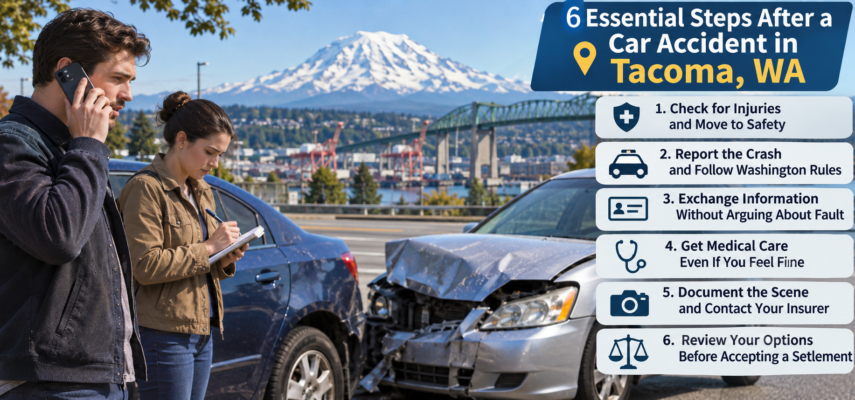

Getting into a car accident on the roads of Tacoma, WA, can leave you unsure of what to do first. Between checking for injuries, speaking with the other driver, and figuring out whether to call the police, there are several things that need your attention. Trying to handle everything at once can make it easy to miss an important detail.
Knowing the steps to take after a car accident in Tacoma, WA, can help you deal with each task in the right order, from making sure everyone is safe to handling insurance matters without rushing into decisions.
1. Check for Injuries and Move to Safety
Before worrying about vehicle damage or insurance, check yourself and anyone else involved for injuries. If someone is badly hurt, call 911 and explain what happened. Avoid moving an injured person unless there is an immediate danger, such as a fire or moving traffic.
If your vehicle is blocking traffic and can be moved safely, move it away from the road. Turn on your hazard lights to warn other drivers. However, do not risk another collision just to clear the road. If you cannot move your vehicle safely, stay in a protected place nearby while waiting for help.
2. Report the Crash and Follow Washington Rules
After checking for injuries, find out whether police need to respond. Call 911 if anyone is injured, there is a serious road hazard, or the situation requires emergency help. Give the dispatcher clear details about your location in Tacoma, WA, and what has happened.
Washington also has rules about reporting collisions. Drivers must submit a collision report to the Washington State Patrol within four days if the crash was not investigated by an officer and involved an injury, death, or at least $1,000 in damage to one person’s property. A police investigation does not require you to file a separate report for the same crash.
3. Exchange Information Without Arguing About Fault
Once everyone is safe, exchange information with the other driver. Keep the conversation calm, even if you believe the other person caused the crash. An argument beside the road will not settle the issue, and guessing about what happened may only create confusion.
Collect these details:
- Full names and contact information.
- Driver’s license numbers and vehicle registration details.
- Insurance company names and policy information.
- Vehicle makes, models, and license plate numbers.
- Names and contact details of any witnesses.
Answer questions from the police honestly, but avoid guessing about details you do not know. You can describe what you saw without deciding who was legally responsible for the collision.
4. Get Medical Care Even If You Feel Fine
Some injuries are easy to notice, while others may take hours or days to cause clear symptoms. Pain in the neck, back, or head may not appear right away, so do not assume you are unhurt just because you can walk away from the crash.
Arrange a medical checkup as soon as possible, especially if you notice pain, dizziness, headaches, or unusual discomfort. Follow the healthcare provider’s instructions and attend any recommended follow-up visits.
Keep copies of medical bills, test results, prescriptions, and treatment records. These documents can help show what care you received and when it began. If your symptoms get worse, contact a healthcare professional rather than ignoring them.
5. Document the Scene and Contact Your Insurer
Your memory of the crash may become less clear as time passes, so record useful details as soon as you can do so safely. Take pictures of vehicle damage, the road, traffic signs, skid marks, and any visible injuries. Include different angles so the damage is easy to see.
Write down what you remember, including the direction each vehicle was traveling and anything unusual about the road or traffic. Then contact your insurance company and report the collision within the time set by your policy.
Share accurate information, but read documents carefully before signing them. If an insurer asks for a recorded statement or offers a settlement, make sure you understand what you are agreeing to before moving ahead.
6. Review Your Options Before Accepting a Settlement
A quick payment from an insurance company may sound appealing, especially if your vehicle needs repairs. However, do not feel pressured to accept an offer before you understand the damage, your medical needs, and the terms of the agreement.
The value of a claim can depend on several details, including who caused the crash, the injuries involved, available insurance coverage, and the records supporting the claim. If the other driver disputes fault or the insurer refuses to pay, a car accident lawyer in Tacoma, WA, may explain the claims process and discuss possible options. Getting information does not mean you must start a legal claim. It simply gives you a better idea of what your choices involve.
Keep Your Next Steps Clear After a Crash
The right response after a car crash starts with safety, not paperwork. Get medical care, exchange information, document what happened, and keep track of important documents before deciding on a claim.
The steps to take after a car accident in Tacoma, WA, may seem like a lot to manage, but dealing with each task in order can make the process less confusing. If injuries or insurance disputes complicate matters, consider speaking with a qualified professional about your options.












