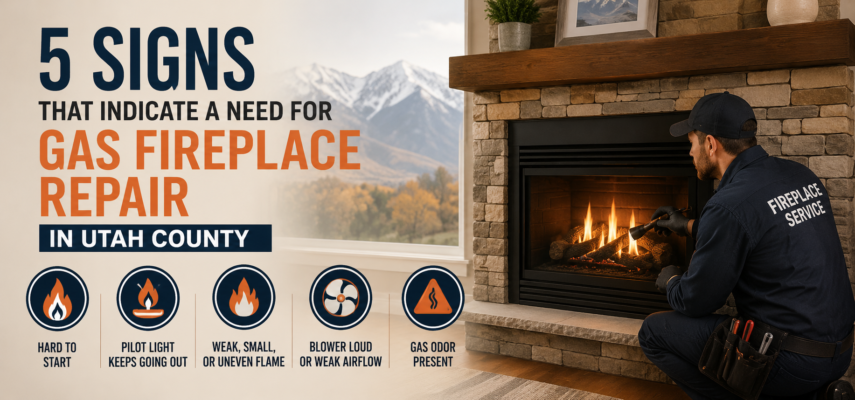
A gas fireplace should start smoothly, hold a steady flame, and provide consistent warmth. Changes in performance may signal a component or gas-related issue. Recognizing these signs early can help prevent unreliable operation during colder months.
Problems may appear through startup trouble, pilot issues, unusual flames, weak airflow, or gas odor. Homeowners seeking gas fireplace repair Utah County can use these signs to know when professional service may be needed. The sections below explain each sign, its cause, consequence, and professional response.
1. The Fireplace Needs Several Attempts to Start
A unit that once started promptly but now requires repeated attempts may have an ignition, wiring, or gas-control issue. Frequent clicking without a steady flame can also point to trouble within the startup system. If the problem continues, the fireplace may become increasingly unreliable and eventually fail to provide heat when needed.
Diagnostic Testing Identifies the Startup Failure
A qualified technician in Utah County can examine how the ignition sequence responds from the moment the controls activate. Testing helps separate an electrical fault from an ignition or gas-delivery concern. Accurate diagnosis allows the repair to focus on the confirmed source instead of unnecessary component replacement.
2. The Pilot Light Keeps Going Out
A pilot light that repeatedly shuts off can interfere with dependable fireplace operation. A worn thermocouple or another ignition-control problem may prevent the pilot from remaining stable. Persistent shutoffs can make startup unpredictable and may stop the unit from operating consistently through colder periods.
Pilot-System Evaluation Confirms the Weak Point
Professionals in Utah County can assess how the pilot responds and how related safety controls function. The evaluation helps determine which part interrupts the steady pilot flame. Once the source is confirmed, the technician can complete the service required for more dependable operation.
3. The Flame Becomes Weak, Small, or Uneven
A flame that appears smaller or irregular compared with its normal pattern can signal a performance concern. Restricted gas flow, burner buildup, or pressure-related trouble may contribute to the change. Reduced flame quality can lower heat output and may also lead to unwanted soot around the firebox.
Burner and Flame Testing Identifies the Cause
For gas fireplace repair in Utah County, technicians can assess burner performance, flame behavior, and related operating conditions. These checks reveal why the flame has changed rather than treating the appearance alone. A clear diagnosis helps professionals select the appropriate repair for steadier performance.
4. The Blower Sounds Louder or Moves Less Warm Air
A blower that suddenly rattles, runs louder, or produces weaker airflow can indicate a developing mechanical problem. Wear within the motor or a related control may prevent warm air from circulating efficiently. Reduced circulation can make the room feel cooler even when the flame itself still appears normal.
Airflow Assessment Checks Blower Operation
A service professional can evaluate how the blower starts, runs, and distributes warmth from the unit. Testing helps determine whether the concern comes from the fan assembly, motor, controls, or electrical connections. Proper assessment prevents assumptions based only on the sound or reduced airflow.
5. A Gas Odor Signals an Immediate Service Concern
A natural gas odor near the fireplace requires more urgent attention than a routine performance change. The smell may indicate a concern with the supply line, valve, connection, or another gas-carrying component. Continued leakage can create a safety risk and make further operation inappropriate until the source receives professional attention.
Gas-Line Inspection Locates the Source
A qualified technician in Utah County can inspect gas lines, valves, and connections for possible leakage. Professional leak detection helps identify the exact area that requires service. Final checks can confirm that affected connections and components function properly after the repair.
Changes in ignition, pilot stability, flame quality, blower operation, or gas odor can indicate that a fireplace needs professional service. Recognizing these signs helps homeowners understand when a change goes beyond normal operation. Qualified technicians can diagnose the source, complete the appropriate repair, and help restore dependable performance through Utah’s colder months.