The local café scene has become increasingly competitive, with new concepts and specialty shops continuing to enter the market. Customers now have more options than ever, and their expectations have evolved accordingly. Beyond good coffee, they typically look for consistency, speed, attentive staff, and an overall experience that feels worth their time and money. In this environment, even small gaps in product quality or service can make it harder to stand out.
That said, improving your coffee shop doesn’t always require a complete overhaul of your business. Whether you’re running a neighborhood café, a takeaway kiosk, a co-working joint, or a more design-driven space, the key often lies in making the right investments. When you prioritize areas that directly affect product quality and customer experience, you can create meaningful improvements without stretching your resources too thin.
With this in mind, this feature outlines several practical investments that can help you improve the products and services at your coffee shop, focusing on upgrades that support both day-to-day operations and long-term growth.
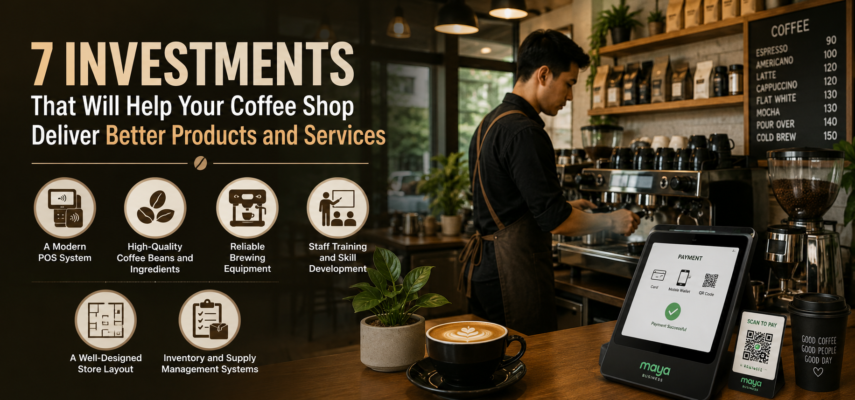
A Modern POS System
The checkout counter is often where customers form their impression of your coffee shop, and delays or limited payment options can quickly undermine an otherwise positive experience. Long queues, manual errors, or limited payment methods can create friction at the exact moment a customer is ready to pay.
Investing in a modern point of sale (POS) system like the popular payment terminal machine from Maya helps streamline transactions and reduce wait times. A flexible solution that can support a wide range of payment preferences, from cards to digital wallets, will give your team a more reliable way to process orders and track sales in real time. This can then improve both speed and accuracy during busy periods.
High-Quality Coffee Beans and Ingredients
Most café-goers ultimately come back for the quality of what’s in their cup, and that quality starts with the ingredients you choose. If you have inconsistent or low-quality beans, low-grade milk, or poorly sourced add-ons, it can affect flavor and make it difficult to maintain standards across different batches. Aim instead to prioritize high-quality coffee beans and fresh ingredients, so you can create a more reliable and enjoyable cup of coffee every time. This doesn’t always mean choosing the most expensive options, but rather working with suppliers that you can count on to be consistent and transparent about sourcing.
Reliable Brewing Equipment
Even the best ingredients can fall short without the right tools to prepare them properly. Brewing equipment like grinders and espresso machines play a direct role in both the taste of your drinks and the speed at which your staff can serve them. Equipment that is outdated or poorly maintained can lead to uneven extraction and wasted ingredients. It’s also a common culprit behind slower service during peak hours. Reliable, well-maintained equipment may cost you upfront, but the investment helps ensure that each cup meets your standards while allowing your team to work more efficiently.
Staff Training and Skill Development
Consistency in both product and service often comes down to how well your team is trained. Even with high-quality ingredients and reliable equipment, gaps in technique or customer handling can affect the overall experience. Regular training helps baristas refine their brewing methods and prepare drinks faster. It can also improve their confidence when it comes to handling customer interactions. Your modules can include everything from proper espresso extraction and milk texturing to communication skills during busy periods.
A Well-Designed Store Layout
How your coffee shop is organized can have a direct impact on both the efficiency of your service and your customers’ comfort. A cramped or poorly planned layout can slow down staff movement behind the counter and create bottlenecks during peak hours. On the customer side, unclear ordering and pickup areas can lead to confusion and unnecessary waiting.
Try to create a layout that supports a smooth workflow. You might, for instance, set up clearly defined stations for ordering, preparation, and pickup. This will help your team work more efficiently while making the experience easier to navigate for customers. Even small adjustments, like repositioning equipment or improving signage, can make a noticeable difference in day-to-day operations.
Inventory and Supply Management Systems
Running out of key ingredients during service can disrupt operations and leave customers disappointed, especially if their preferred items suddenly become unavailable. At the same time, overstocking can lead to unnecessary waste, particularly for perishable goods like milk and pastries.
A reliable inventory and supply management system can help you monitor stock levels more accurately and plan restocking schedules with greater confidence. It’s the best way to ensure that your menu remains consistently available while minimizing losses from spoilage. With better visibility over your supplies, you can maintain smoother operations and avoid interruptions that affect both product quality and customer satisfaction.
The cafés that stay top of mind are often the ones that provide quality offerings with seemingly no effort. Customers remember places where each visit feels smooth and familiar in the right ways; chances are many will return without much second thought if they enjoy such an experience at your establishment. And as time goes by, your quiet consistency from behind the counter may just be what turns everyday transactions into lasting loyalty.