











How can Riesling make both a piercingly dry Australian white and a sweet German wine with relatively little alcohol? Riesling explained through acidity, ripeness and fermentation makes that range logical. The grape supplies a strong acid backbone; the producer decides how to balance it with fruit, alcohol and remaining sugar.
This is Article #6 of The TFE Guide to WSET Level 2 Wine, Part II: The Eight Principal Grape Varieties. Germany supplies the most demanding label vocabulary, but the central lesson is simple: grape ripeness and finished sweetness are different pieces of information. Learn to read them separately and many intimidating words become useful clues.
What WSET Level 2 expects you to know
LO3 requires Riesling’s characteristics, environmental and production influences, prescribed regions and important terms. The current specification names Mosel, Rheingau and Pfalz in Germany; Alsace in France; and Clare Valley and Eden Valley in Australia. It also assigns the German terms covered below.
You aren’t being asked to memorize every German wine regulation. You do need to distinguish a dry descriptor from a ripeness designation and explain why high acidity can coexist with sweetness. That distinction will support the later Tokaj and sweet-wine lessons too.
The grape: aromatic, acidic and remarkably versatile
Riesling is a white variety associated with high acidity and pronounced fruit or floral character. Citrus, green apple, peach and blossom are useful starting associations; riper or concentrated styles can show richer stone-fruit and honeyed character. Don’t treat every aroma as obligatory or try to identify the grape from one descriptor alone.
The variety can develop flavour while retaining substantial acidity, helping it work in cool regions and in sweet wines. Ripening conditions and picking decisions shape the balance. It can also remain on the vine for concentrated late-harvest styles where conditions permit, although waiting brings risks as well as opportunities.
Body and alcohol vary widely. A wine retaining considerable sugar after a shorter fermentation may have relatively low alcohol and a lighter impression, while a dry wine from riper fruit may feel fuller and contain more alcohol. High tannin isn’t the structure to chase here. Compare sweetness, acidity, alcohol, body and flavour rather than letting one stand in for all the rest.
Why sweetness and acidity can work together
Imagine lemon juice with and without sugar. Adding sweetness changes the balance without deleting the acid. A sweet Riesling can therefore taste refreshing rather than simply heavy, while a dry version may make the acidity feel more prominent.
Fermentation supplies the other half of the explanation. Yeast uses sugar to produce alcohol and carbon dioxide. Stopping fermentation with sugar remaining can preserve sweetness and limit the alcohol produced from that sugar. Fermenting more of it can create a drier wine with more alcohol, given the same starting juice.
That doesn’t create one universal numerical formula for every bottle. Starting sugar levels, production decisions and concentration differ. The useful lesson is that “sweet Riesling” and “high-acid Riesling” can describe the same wine without contradiction. Taste or read each component separately.
Winemaking: let the grape speak clearly
Many Rieslings emphasize primary fruit and floral character through relatively cool fermentation and vessels that don’t add obvious new-oak flavours. Malolactic conversion is commonly avoided when the aim is to preserve acidity and the variety’s aromatic profile. Don’t import Chardonnay’s buttery reference into every white-wine description.
Large old wooden vessels may be used without producing the same obvious wood flavour as small new barrels. “No obvious oak” doesn’t necessarily mean the wine never touched wood. Vessel size, age and handling remain relevant.
Some Rieslings develop attractive bottle-ageing character, including honeyed or petrol-like associations, while retaining freshness. Petrol-like character in a suitable mature example isn’t automatically cork taint or heat damage. Nor must every young wine show it. Ageing potential depends on the particular wine, not simply the grape name.
Mosel: cool conditions and carefully used sunlight
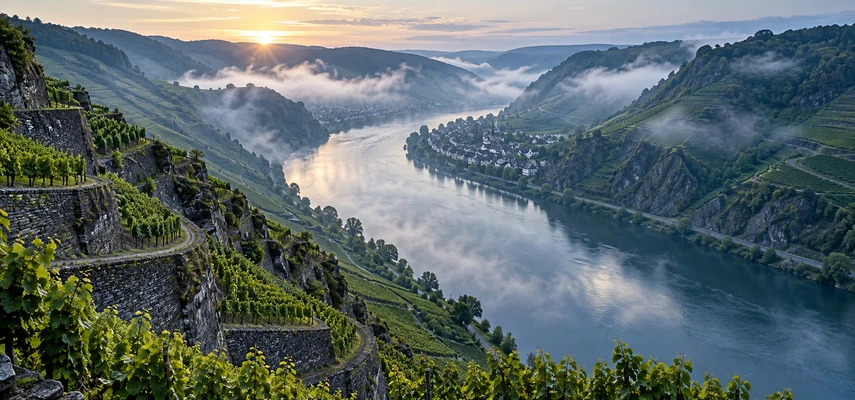
Mosel is a German Riesling reference associated with cool conditions, steep vineyard slopes and wines that can combine delicacy with pronounced acidity. Favourable slope exposure helps grapes receive useful sunlight. The river landscape matters as a collection of site influences, rather than a magical source of flavour.
Many familiar examples have relatively low alcohol and some sweetness, but dry Mosel Riesling also exists. Don’t answer “sweet” solely because Mosel appears on a label. First look for additional style information, including trocken where present.
For revision, connect climate to the need for suitable exposure and ripeness, then connect the juice to fermentation decisions. This is more durable than memorizing “Mosel equals light and sweet” and having the first dry example dismantle the entire rule.
Rheingau and Pfalz: useful German comparisons
Rheingau is another important Riesling region, with favourable sites along the Rhine and a range of styles. Compared with a delicate Mosel reference, examples may show a fuller impression, but the comparison depends on the actual wines. Region isn’t a substitute for reading the label.
Pfalz is generally a warmer German reference and is important for riper, often dry Riesling. More warmth can support greater ripeness and potential alcohol, while the grape still retains its characteristic acidity. Avoid converting that tendency into “Pfalz has low acid.”
Learn all three German names together, then compare body, alcohol and ripeness in specified examples. This preserves their relationship without pretending every producer in each region follows one recipe. The German Wine Institute’s resources also explain the category terms you’ll encounter alongside those origins.
German labels: ripeness isn’t the same as sweetness
Qualitätswein and Prädikatswein are important categories. Within Prädikatswein, names such as Kabinett, Spätlese and Auslese concern grape ripeness or harvest conditions rather than directly stating the final sugar level. A separate taste descriptor can therefore be essential.
Kabinett is associated with grapes at the lighter end of the Prädikat ripeness framework. Spätlese means late harvest and indicates riper material. Auslese refers to selected harvest material with greater ripeness. These categories can include dry wines as well as wines with sweetness; don’t simply translate the sequence into a fixed sweetness ladder.
Beerenauslese, commonly abbreviated BA, uses selected very ripe berries, often affected by noble rot, and is associated with sweet wines. Trockenbeerenauslese, or TBA, involves selected, shrivelled noble-rotted berries and concentrated sweet styles. The “trocken” inside that compound describes the dried berries; it doesn’t mean the resulting wine is dry.
Eiswein is made from grapes harvested and pressed while naturally frozen. Ice retains some water during pressing, concentrating the juice. Noble rot isn’t the defining mechanism here. The category is associated with concentrated sweet wines, and it should not be confused with simply chilling an ordinary wine in the cellar.
Trocken describes a dry finished style; halbtrocken describes a semi-dry style. Those are different kinds of information from a Prädikat designation. For this course, recognize the distinction before trying to memorize detailed numerical sugar allowances or the wider origin reforms outside this article’s scope.
Noble rot and concentration: useful, but conditional
Under suitable conditions, Botrytis can affect ripe berries in a way that encourages water loss and concentration, contributing distinctive sweet-wine character. Under unsuitable conditions, rot is destructive. “Botrytis” isn’t a guarantee that any damaged bunch can become a great dessert wine.
Late harvesting, noble rot and freezing are different routes to concentrated ingredients. In each case, sugar and flavour concentration interact with Riesling’s acidity. The final style still depends on fermentation and the producer’s choices. Keep the concentration mechanism separate from the category word and from your tasting description.
Alsace: French Riesling with a different label context
Alsace is the prescribed French association. Many classic Rieslings are dry, relatively full examples with pronounced acidity and citrus or stone-fruit character. Sweeter and late-harvest styles also exist, so a grape name alone isn’t a complete sweetness declaration.
Alsace Grand Cru is an important regional classification term. It concerns a classified origin, not a universal promise that a wine is sweet, oaked or made from the ripest possible grapes. Article #25 will compare its use with similarly worded terms elsewhere.
The practical comparison is with the German framework. An Alsace label doesn’t require you to apply the German Prädikat categories, even when the grape is the same. Similar geography or shared vocabulary doesn’t erase separate national systems.
Clare Valley and Eden Valley: dry Australian reference points
Clare Valley and Eden Valley are the two prescribed Australian Riesling associations. Dry styles with high acidity and citrus, especially lime-like, character are important references. They show immediately why “Riesling means sweet” is an unreliable rule.
These regions can combine warm sunshine with cooling influences, including elevation and cooler nights. The useful explanation concerns the site, not the idea that all Australian vineyards are uniformly hot. Freshness and ripeness can coexist when the conditions and harvest decisions support them.
Wine Australia’s Riesling guide describes the regional range and the importance of restrained production. Some wines can develop further in bottle, adding more mature character without requiring obvious new oak. Compare that with a sweeter, lower-alcohol German example by naming the differences in sweetness, body and alcohol while retaining the shared high-acidity reference.
Common mistakes and exam traps
Riesling isn’t always sweet. Kabinett, Spätlese and Auslese don’t directly guarantee finished sweetness. TBA isn’t dry because its name contains trocken, while Eiswein’s defining concentration method is freezing rather than noble rot. Finally, high acidity and sweetness can balance each other without either disappearing.
Related study guides
Knowledge check: 10 original practice questions
Choose one answer each. These independent questions support LO3 and relevant LO1/2 mechanisms.
1. Which structural feature is especially associated with Riesling?
- High acidity.
- Mandatory high tannin.
- Guaranteed high sweetness.
- Complete absence of aroma.
2. Which set contains the prescribed German Riesling regions?
- Napa, Sonoma, Oregon.
- Mosel, Rheingau, Pfalz.
- Sancerre, Touraine, Chablis.
- Barolo, Gavi, Soave.
3. What does trocken describe on a German wine label?
- A required new-oak treatment.
- A frozen grape.
- A dry style.
- A particular river valley.
4. Which statement about Spätlese is correct?
- It means a black grape.
- It guarantees all wines are dry.
- It guarantees one exact final sugar level.
- It indicates late-harvest ripeness information, rather than automatically fixing finished sweetness.
5. Why can a sweet Riesling remain refreshing?
- Its acidity can balance the sweetness.
- Sugar removes every acid molecule.
- Sweetness proves high tannin.
- The wine must contain no alcohol.
6. What distinguishes Eiswein’s concentration method?
- Adding oak chips.
- Harvesting and pressing naturally frozen grapes.
- Removing acidity by heating.
- Blending finished red and white wines.
7. Which interpretation of Trockenbeerenauslese is correct?
- The finished wine must be dry.
- It is a sparkling method.
- It concerns selected shrivelled noble-rotted berries and sweet concentrated styles.
- It is another name for Chardonnay.
8. Which Australian pair is prescribed for Riesling?
- Napa and Carneros.
- Sancerre and Touraine.
- Central Valley and Casablanca.
- Clare Valley and Eden Valley.
9. Which French region is prescribed for Riesling?
- Alsace.
- Bordeaux’s Médoc.
- Beaujolais.
- Chablis.
10. Why might a producer prevent malolactic conversion in Riesling?
- To guarantee high tannin.
- To retain acidity and the intended aromatic profile.
- To turn Riesling into Sauvignon Blanc.
- To replace all primary fruit with butter.
Answers and explanations
1. A — Grape structure; LO3. Acidity is central across Riesling’s dry and sweet styles; sweetness isn’t universal.
2. B — German geography; LO3. These three regions form the prescribed German Riesling group.
3. C — Style terminology; LO3. Trocken concerns dryness in the finished style, unlike a harvest-ripeness designation.
4. D — Prädikat terminology; LO3. Spätlese gives ripeness information; additional evidence is needed to determine finished sweetness.
5. A — Component balance; LO3. Acid and sugar can coexist and balance the impression of the wine.
6. B — Concentration; LO1/3. Pressing frozen grapes separates concentrated juice from some water retained as ice.
7. C — TBA; LO3. The compound describes dried berries, rather than using trocken as a declaration of a dry wine.
8. D — Australia; LO3. Both valleys are the assigned Australian Riesling associations and important dry-style references.
9. A — France; LO3. Alsace is the prescribed French origin, with its own regional label context.
10. B — Production; LO2/3. Preventing malolactic conversion can preserve the acid and aromatic style the producer seeks.
One-page revision summary
| Subject | Essential association | Keep separate |
|---|---|---|
| Germany | Mosel, Rheingau, Pfalz | Region versus final sweetness |
| France | Alsace; Grand Cru terminology | French and German label systems |
| Australia | Clare Valley, Eden Valley; important dry styles | Australian origin versus uniformly hot sites |
| Kabinett, Spätlese, Auslese | Ripeness/harvest information | A fixed final-sugar ladder |
| BA and TBA | Selected concentrated berries; sweet wines | TBA’s compound name versus dry style |
| Eiswein | Naturally frozen grapes harvested and pressed frozen | Noble rot |
| Trocken; Halbtrocken | Dry; semi-dry style descriptors | Prädikat ripeness categories |
| Riesling structure | High acidity across many styles | Sweetness, body and alcohol as separate observations |
First identify the region, then the ripeness or production term, then the finished-style information. Reading a Riesling label in those layers is much more useful than guessing sweetness from the longest word.











