










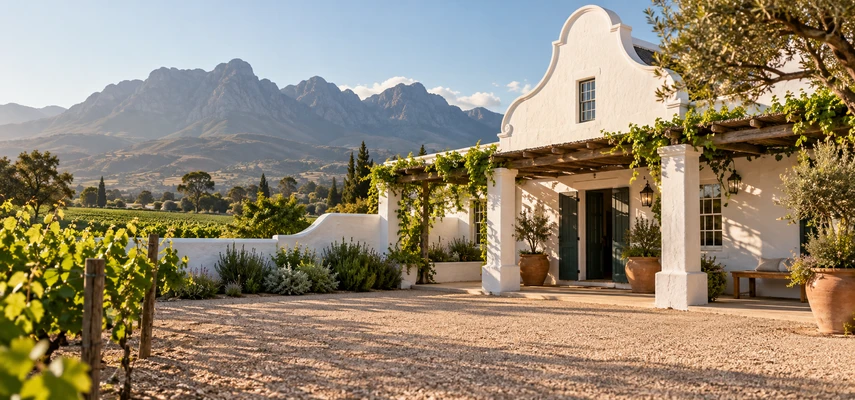

If Pinotage has Pinot Noir in its family, why doesn’t every glass taste like Pinot Noir? Pinotage explained through its identity and production makes the answer straightforward: a grape crossing creates a variety with its own characteristics. It isn’t a blend poured together in the cellar, and its parents don’t supply a compulsory tasting recipe.
This is Article #17 of The TFE Guide to WSET Level 2 Wine, Part III: Regionally Important Grape Varieties. We’ll connect Pinotage with South Africa’s Western Cape, compare the range of red styles and explain the Cape Blend term. The aim is to replace one-dimensional reputations with a clear description of grape, place and handling.
What WSET Level 2 expects you to know
The current official specification assigns Pinotage, Western Cape and Cape Blend terminology to LO4. Learn typical colour, fruit, tannin, acidity and alcohol-related style features, then understand how production and the broad growing context can alter the result.
South Africa’s other important grapes remain separate. Chenin Blanc is a white variety, Pinot Noir is a distinct black variety, and Cabernet Sauvignon or Merlot may be blending partners rather than alternative names for Pinotage. Similar names or shared origin don’t establish botanical identity.
A crossing is different from a blend
Pinotage was created in South Africa by crossing Pinot Noir and Cinsaut, historically called Hermitage locally. Abraham Izak Perold developed the variety in the 1920s. WSET’s Pinotage profile explains the history and the variety’s changing modern expressions.
Crossing means breeding a new vine variety, not mixing finished Pinot Noir and Cinsaut wines. Once planted, a Pinotage vine produces Pinotage grapes. The distinction matters because winemakers can blend parent varieties together without making the new variety appear by arithmetic.
Lanzerac’s discussion of a separate Pinot Noir–Cinsaut blend provides a useful real-world contrast. That wine can explore the parental combination, but it isn’t a substitute for the grape crossing. In a question, watch whether the subject is breeding, grape identity or a finished blend.
The grape’s red-wine reference
Pinotage is a black variety capable of deeply coloured, medium- to full-bodied reds with red- and black-fruit character. Plum, cherry and blackberry are useful associations. Tannin can be substantial, while acidity and alcohol vary with site, ripeness and production.
Don’t assume Pinot Noir parentage guarantees pale colour, low tannin or a delicate body. The offspring is a separate variety. Equally, don’t insist every Pinotage must be enormous and heavily extracted: producers can choose fresher, lighter expressions.
Typical familiar still examples are dry. Ripe fruit, toasty aromas or a broad palate impression don’t directly establish sugar. Keep fruit identity, sweetness, body, tannin and alcohol in separate boxes before deciding how the overall style feels.
Why one reputation doesn’t describe every bottle
Pinotage has sometimes been discussed through distinctive smoky or earthy associations, and some oak-treated styles emphasize coffee or chocolate-like character. Those descriptions can be relevant to a wine, but they shouldn’t become a checklist you impose on every example.
A coffee-like aroma doesn’t prove that coffee was added. Oak and production can create familiar aromatic resemblances, just as vanilla in Chardonnay doesn’t normally mean someone poured vanilla essence into a fermenter. Describe what you perceive, then consider plausible origins.
Also avoid turning an unpleasant smell into the grape’s defining feature. A wine still needs assessment for condition and balance. Saying “that’s just Pinotage” isn’t a useful excuse to stop examining a possible fault or an unbalanced example.
Western Cape: a broad origin with varied conditions
Western Cape is the prescribed geographical association. Much of South Africa’s wine production lies in this broad part of the country, but the origin encompasses varied sites, distances from the sea and elevations. It doesn’t describe one vineyard with a single temperature and soil.
Coastal influences can cool suitable sites, while inland settings may provide warmer conditions. Slope, aspect and altitude further modify the environment. Wines of South Africa’s study guide places Pinotage within that broader national wine context.
The practical study point is the connection between conditions and grape development. Warmth can help ripeness and sugar accumulation, while suitable cooling can preserve freshness. Neither “South Africa” nor “Western Cape” automatically gives you a final alcohol or acidity figure.
Vineyard choices and harvest timing
Pinotage can suit relatively warm conditions and has become important in local viticulture, but the intended style still depends on fruit condition and picking decisions. Growers assess sugar, acidity, flavour and health rather than waiting for one universal calendar date.
Its relatively small, thick-skinned berries and early-to-mid-season development help explain some growing and extraction choices. Those characteristics differ from simply expecting its Pinot Noir parent to dictate every feature of the fruit.
Earlier picking can support a fresher style and limit potential alcohol compared with a later-picked counterpart from the same context. Greater ripeness can support fuller body and richer fruit, but it doesn’t automatically improve balance. The producer’s objective matters.
Crop size and canopy management also affect the material reaching the winery. Don’t infer quality solely from an old-vine statement or a low-yield claim. Those facts may provide useful context, but the actual fruit and final wine still need evaluation.
Extraction: work with the material
Red fermentation with skins extracts colour, tannin and flavour. Temperature, contact time and cap management influence the amount and character of extraction. A producer seeking a concentrated wine can make different decisions from one emphasizing supple texture and fresh fruit.
More extraction isn’t automatically a better use of Pinotage. If tannin or alcohol dominates the fruit, the balance may suffer even when the wine looks impressively dark. Colour, density and quality aren’t three names for the same thing.
The comparison with Pinot Noir is useful again. Their different structural references don’t mean one should be made to imitate the other. Suitable handling responds to the variety and the fruit rather than applying one universal red-wine recipe.
Oak and the coffee-style association
Oak maturation can add toast, spice, vanilla or other secondary character. Some Pinotage styles deliberately emphasize roasted or coffee-like impressions, while others use less obvious wood or focus more directly on fruit. New versus older oak and the treatment of the wood influence the result.
That range is more informative than a rule that all Pinotage tastes of coffee. The producer can choose whether secondary character supports or dominates the fruit. A strong aromatic signature isn’t proof of greater grape concentration or a guarantee of better quality.
When revising, identify the production choice and its possible effect. “Oak can contribute toasted character” is a defensible mechanism. “The Pinotage grape contains coffee” confuses a tasting resemblance with an ingredient claim.
Cape Blend: Pinotage within a team
Cape Blend is a relevant South African red-blend term in which Pinotage plays an important role, often alongside varieties such as Cabernet Sauvignon or Merlot. The aim can be complementary fruit, structure and complexity rather than a wine that tastes exactly like each component in turn.
Read any stated composition or applicable producer and classification context before applying a numeric percentage rule. The useful Level 2 anchor is Pinotage’s central association with the term, not an invented claim that every South African red blend has identical proportions.
Don’t confuse a Cape Blend with the historical Pinot Noir–Cinsaut crossing. One concerns combining wine components; the other concerns the origin of a vine variety. A finished blend containing Pinotage remains different from the breeding event that created Pinotage.
Pinotage and Chenin Blanc: keep South Africa’s stories separate
Chenin Blanc, assigned in Article #12 with Western Cape, supplies an important white-wine context. It can make dry and sweet styles with high acidity and varied production. Pinotage supplies a black-grape red-wine story with different structure and aromas.
The two can share a broad origin without sharing botanical identity or one national taste. If a question names South Africa, wait for the grape and style information before assigning a description. A country association should help organize knowledge, not overwrite it.
Likewise, Pinotage and Pinot Noir aren’t synonyms. Their name overlap is historically understandable, but an exam question can rely on that difference. A useful revision table keeps separate identities alongside the relationship that explains the names.
Ageing, quality and style range
Some concentrated, balanced Pinotages can develop further in bottle, with softer tannin impressions and mature fruit or savoury character. Many fruit-led examples are intended for earlier drinking. Ageing capacity depends on the particular wine, not a blanket promise attached to the grape.
Quality assessment should consider balance, intensity, complexity and persistence. A lighter, fresh expression can be successful, while a fuller oak-matured wine can also work when its components fit. Don’t treat a stylistic preference for one as proof the other is inherently inferior.
WSET’s modern profile emphasizes this diversity rather than a single fixed reputation. For study, the stable facts are grape identity, Western Cape association, relevant structural features and Cape Blend context. The range of valid producer choices sits around that framework.
Common mistakes and exam traps
Pinotage isn’t Pinot Noir, and a crossing isn’t a cellar blend. Western Cape is a broad origin, coffee-like character isn’t a compulsory ingredient or universal flavour, and Chenin Blanc is a separate white variety. Finally, Cape Blend concerns Pinotage’s role in a red blend, not every wine made anywhere near Cape Town.
Related study guides
Knowledge check: 10 original practice questions
Choose one answer each. These independent questions support LO4 and relevant identity/production concepts.
1. Which country is especially associated with Pinotage?
- South Africa.
- Hungary.
- Germany.
- Italy.
2. Which broad origin is prescribed for Pinotage?
- Tokaj.
- Western Cape.
- Rías Baixas.
- Barolo.
3. Which varieties were crossed to create Pinotage?
- Merlot and Malbec.
- Riesling and Chenin.
- Pinot Noir and Cinsaut.
- Chardonnay and Viognier.
4. What is the difference between crossing and blending?
- They are identical processes.
- Blending creates a new vine variety.
- Crossing means adding oak to wine.
- Crossing breeds a variety; blending combines wine components.
5. Which is a useful Pinotage reference?
- Red/black fruit, substantial possible body and tannin.
- Mandatory white colour.
- Always no tannin.
- Guaranteed sweetness.
6. What does a coffee-like aroma establish directly?
- Proof coffee was added.
- An aromatic resemblance requiring context, not an ingredient declaration.
- A universal fault.
- A guarantee of one vineyard.
7. Which variety has an important association with Cape Blend?
- Furmint.
- Cortese.
- Pinotage.
- Albariño.
8. Which statement about Western Cape is sound?
- It is one vineyard with one climate.
- It guarantees identical alcohol.
- It excludes all white wines.
- It is a broad origin encompassing varied sites.
9. Which is a separate important South African white variety?
- Chenin Blanc.
- Pinotage.
- Cabernet Sauvignon.
- Syrah.
10. Which statement about Pinotage’s style range is sound?
- It must always be heavily oaked.
- Producers can make fresh lighter or richer more structured expressions.
- Every example must taste of coffee.
- Pinot Noir parentage guarantees no tannin.
Answers and explanations
1. A — Country association; LO4. Pinotage has a distinctive South African origin and modern regional importance.
2. B — Prescribed geography; LO4. Western Cape is the required broad regional association.
3. C — Variety identity; LO4 background. Pinot Noir and Cinsaut are its parents, not components mixed to create a new vine in the cellar.
4. D — Production distinction; LO4 foundation. Vine breeding and wine blending are different operations.
5. A — Grape characteristics; LO4. The variety can give deeply coloured, substantial reds, with producer variation.
6. B — Aroma interpretation; LO4. Oak and production can contribute familiar aromatic resemblances without adding the named food.
7. C — Cape Blend; LO4. Pinotage is the important course association, with other red varieties contributing complementary elements.
8. D — Origin scale; LO4. Broad regional information doesn’t establish one exact site or finished composition.
9. A — Variety distinction; LO4. Chenin Blanc is a separate white variety, not another name for Pinotage.
10. B — Style range; LO4. Appropriate growing and production choices can support more than one successful expression.
One-page revision summary
| Subject | Essential fact | Avoid confusing |
|---|---|---|
| Identity | Pinotage is a black variety created in South Africa | Pinotage and Pinot Noir |
| Parents | Pinot Noir × Cinsaut; developed in the 1920s | A vine crossing and a finished blend |
| Prescribed origin | Western Cape | Broad origin and one site |
| Style | Red/black fruit; medium/full body; possible substantial tannin | One compulsory coffee or smoky profile |
| Production | Extraction and oak influence texture and secondary aromas | Aroma resemblance and added ingredients |
| Cape Blend | Pinotage-important red-blend context | Every South African wine |
| Other white story | Chenin Blanc in Western Cape | Shared origin and shared grape identity |
Keep identity, origin and production separate, then connect them. Pinotage becomes more useful to study when its own range replaces a borrowed Pinot Noir expectation or a single memorable smell.











