











What happens when two French-origin grapes find especially important homes on opposite sides of the Andes? Malbec and Carménère explained through their new growing contexts reveal two distinct stories. Their South American identities are useful, but neighbouring countries don’t automatically share the same climate, vineyard decisions or signature flavours.
This is Article #16 of The TFE Guide to WSET Level 2 Wine, Part III: Regionally Important Grape Varieties. We’ll connect Malbec with Argentina’s Mendoza and Carménère with Chile’s Central Valley, then compare fruit, structure, ripening and production. The mountains help organize the map; they don’t make the two varieties interchangeable.
What WSET Level 2 expects you to know
The current official specification assigns Malbec–Mendoza and Carménère–Central Valley to LO4. You need the varieties’ typical characteristics and the styles associated with these origins. Broader Argentine and Chilean background helps explain the pairings, but shouldn’t replace the precise names.
The useful comparison asks how suitable ripeness develops, what the fruit resembles, and how tannin, acidity, body and alcohol fit together. A country slogan such as “Argentina makes Malbec” is only the first flashcard, not a complete explanation of the wine.
Malbec: colour and ripe dark fruit
Malbec is a black variety associated with deeply coloured reds, ripe plum or blackberry character and substantial body in many familiar examples. Tannin can be medium to high, while acidity and the overall impression vary with site, ripeness and production. Violet-like floral character can also appear.
Those associations don’t mean every Malbec is a heavily oaked blockbuster. Fresher, more restrained or more textured expressions are possible. Distinguish a regional reference from a mandatory recipe, especially when a wine’s particular site offers different conditions from the national stereotype.
Typical familiar still examples are dry. Ripe plum and dark-fruit aromas don’t establish remaining sugar, and a smooth tannin impression doesn’t mean there is no tannin. The structural vocabulary from the opening article remains important even when the fruit seems generous and immediately appealing.
Mendoza: the Andes matter through physical mechanisms
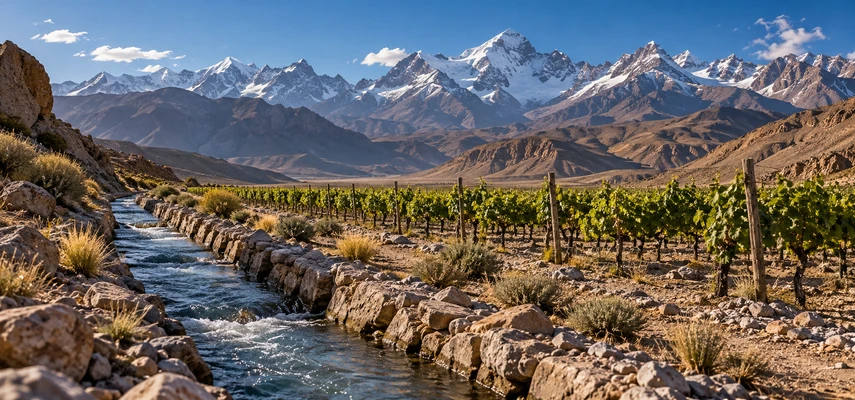
Mendoza sits at the foot of the Andes in western Argentina. Altitude, dry continental conditions, soil variation and water from mountain snowmelt are important parts of its vineyard context. Wines of Argentina’s regional overview connects those influences with the area’s production.
Elevation can bring cooler conditions, helping explain how a sunny vineyard can preserve freshness. Daytime warmth supports ripening, while cooler periods affect the overall development of the fruit. Don’t reduce altitude to a promise of one exact aroma or assume every higher vineyard must make the better wine.
Dryness also creates a practical water question. Irrigation can supply water where rainfall isn’t sufficient, with local management determining how it is used. Grapevines still need usable water for normal function; a dramatic desert-like landscape isn’t proof that the vines thrive without it.
Site differences make “Mendoza Malbec” a range
Mendoza is a broad region, not one vineyard at one elevation. Fruit from differing sites can provide varying acidity, ripeness, tannin texture and aromatic emphasis. The producer’s decisions then shape how much of that difference appears in the bottle.
A relatively warm site can support ripe fruit and generous body, while a cooler or higher setting may give a fresher impression. These aren’t absolute categories. Crop balance, canopy, water supply and picking time also influence how the grapes reach the intended condition.
For revision, explain the chain rather than praising altitude in isolation: suitable site conditions affect grapes; grapes provide material for fermentation; production shapes the finished balance. It is the same mechanism learned in Article #2, now attached to Argentina’s most familiar red-wine association.
Malbec production: concentration isn’t just an oak flavour
Red fermentation extracts colour, tannin and flavour from the grape solids. Producers vary temperature, contact and cap handling to suit the material. A firmer, concentrated wine and a supple, fruit-focused one can therefore differ without changing the variety.
Oak can contribute vanilla, toast, spice or other secondary notes, while older vessels can provide maturation with less obvious wood flavour. More oak isn’t automatically a sign of better fruit. A wine whose wood overwhelms its primary character still needs to be judged for balance.
Bottle ageing can allow some concentrated, balanced Malbecs to develop softer tannin impressions and more mature fruit or savoury character. Many examples are intended for earlier drinking. The grape name doesn’t provide a universal cellar schedule, and colour depth doesn’t guarantee long life.
Carménère: ripe fruit with a distinctive herbal edge
Carménère is a black variety associated with Chile, particularly the prescribed Central Valley origin. Useful references include ripe black fruit, herbal or green-pepper associations, relatively full body and a rounded tannin impression in suitably ripe examples. Acidity is often less pronounced than in a high-acid Cabernet or Pinot reference.
The herbal dimension shouldn’t automatically be called a fault. It can form part of the grape’s character. At the same time, insufficient ripeness can make green character dominate, so appropriate growing conditions and harvest decisions matter.
Separate the origin of aromas from their intensity. A wine can show ripe fruit and an herbaceous element together. One green-pepper note doesn’t prove the fruit was entirely unripe, just as one blackberry note doesn’t prove every part of the grape reached exactly the same stage of development.
Chile’s Central Valley: warmth and a long enough season
Carménère ripens relatively late, making suitable warmth and time important. A producer who picks by the schedule of a different variety may not obtain the intended balance. Ripening needs help explain why identification of the variety mattered to vineyard and cellar decisions.
Central Valley is a broad Chilean geographical association with varied sites. Water supply, exposure and cooling influences affect individual vineyards. Don’t assume one exact temperature or one flavour profile across the whole origin.
For this article, keep Central Valley as the prescribed exam association. Other Chilean place names may be useful background or appear on bottles, but they shouldn’t crowd out the specified grape-region pair. The article on Cabernet already introduced some of Chile’s more specific red-wine contexts; the variety’s current assignment determines what is essential here.
The Merlot confusion: history with a practical consequence
For years, some Chilean vines identified as Merlot were actually Carménère. The distinction became widely recognized following identification work in the 1990s. Viña Carmen’s account of the rediscovery describes the historical context.
The important lesson isn’t a piece of wine-world trivia. Different varieties can have different ripening requirements, so identifying the grape correctly changes the decisions a grower can make. A later-ripening vine shouldn’t simply inherit the harvest assumptions used for its mistaken identity.
Carménère and Merlot remain separate grapes. Their historical confusion doesn’t make the names synonyms, in contrast to Syrah/Shiraz or Zinfandel/Primitivo. This is exactly the kind of distinction a useful study comparison should preserve.
Carménère production: give the fruit a suitable frame
Extraction, oak and blending can influence Carménère’s finished style. A producer may use oak to complement ripe fruit, while managing extraction to achieve a balanced tannin impression. A broad, supple wine doesn’t prove the complete absence of tannin or acidity.
Blending with other red varieties can add complementary structure or complexity. That doesn’t mean every Carménère is a blend, or that the grape needs to be disguised to be successful. Read the actual wine information before assigning a production history.
As with Malbec, some examples can develop further while many are intended for relatively early enjoyment. A mature savoury note and a youthful herbal note can have different explanations. Don’t use the general word “earthy” to avoid asking whether the character comes from grape, production, maturity or a possible fault.
Compare the grapes through separate observations
Start with Malbec’s deep colour, plum or blackberry fruit and potentially substantial tannin and body. Set Carménère’s ripe black fruit and herbal or pepper-like dimension alongside it. Then compare the actual wines’ acid, tannin texture, alcohol and oak influence.
These are reference patterns rather than guaranteed blind-tasting identities. A producer can make a fresher Malbec or a highly ripe Carménère, and the shared dark-fruit language doesn’t prove they are the same variety. Your explanation should identify the evidence rather than force every bottle into a stereotype.
The geographical comparison works the same way. Mendoza’s elevation and irrigation story differs from the broad Central Valley context and Carménère’s ripening needs. Both countries have varied sites and traditions. Being neighbours is useful for the map, not an excuse to merge their viticulture.
Quality, maturity and the limits of a signature grape
A signature association doesn’t mean the variety originated in the country now famous for it. Both grapes have French historical roots, while their modern South American importance reflects a different chapter. You don’t need to deny that history to recognize their Argentine and Chilean identities today.
Quality depends on balance, concentration, complexity and persistence in the particular wine. Higher altitude, more alcohol, darker colour or stronger oak isn’t an automatic verdict. Explain how the components fit together and what the production appears intended to achieve.
Common mistakes and exam traps
Malbec belongs with Mendoza in Argentina; Carménère belongs with Central Valley in Chile. Carménère isn’t another name for Merlot, despite historical misidentification. Sunny conditions don’t mean irrigation is unnecessary, altitude isn’t a universal quality guarantee, and ripe fruit doesn’t directly establish sweetness.
Related study guides
Knowledge check: 10 original practice questions
Choose one answer each. These independent questions support LO4 and relevant growing/production mechanisms.
1. Which is the prescribed Malbec association?
- Mendoza, Argentina.
- Mosel, Germany.
- Gavi, Italy.
- Condrieu, France.
2. Which is the prescribed Carménère association?
- Rioja, Spain.
- Central Valley, Chile.
- Alsace, France.
- Clare Valley, Australia.
3. Which is a useful Malbec fruit reference?
- Only gooseberry in every wine.
- Mandatory lychee.
- Ripe plum or blackberry.
- No fruit character.
4. Which character can be associated with Carménère?
- Compulsory sweetness.
- A ban on herbal aromas.
- White-flower perfume only.
- Ripe dark fruit alongside herbal or green-pepper associations.
5. Why can elevation matter in Mendoza?
- Cooler conditions can modify ripening and freshness despite sunshine.
- It guarantees every wine is best.
- It removes all need for water.
- It changes Malbec into Merlot.
6. Why is irrigation relevant in dry Mendoza settings?
- Grapes require alcohol in their roots.
- It can supply water when rainfall is insufficient.
- It proves all vineyards are identical.
- It automatically makes sweet wine.
7. What is the relationship between Carménère and Merlot?
- Exact synonyms.
- A grape and an oak term.
- Separate varieties despite historical misidentification.
- The same as Syrah and Shiraz.
8. Why do Carménère’s ripening needs matter?
- It can never ripen in Chile.
- Identification has no vineyard consequences.
- All grapes share one harvest date.
- It needs suitable warmth and a long enough season for the intended maturity.
9. What does ripe plum aroma establish directly?
- A fruit-character resemblance, rather than guaranteed residual sugar.
- Exact final sweetness.
- A compulsory oak regime.
- An identical national style.
10. Which is the best comparison method?
- Treat neighbouring countries as identical.
- Compare grape, site, structure and production in the specified examples.
- Assume altitude alone ranks quality.
- Ignore the prescribed regions.
Answers and explanations
1. A — Argentina; LO4. Mendoza is the required Malbec origin for this course assignment.
2. B — Chile; LO4. Central Valley is the specified Carménère association, rather than an Argentine region.
3. C — Malbec character; LO4. Ripe plum or blackberry supplies a useful reference without describing every example identically.
4. D — Carménère character; LO4. Fruit and an herbal dimension can coexist without automatically indicating a fault.
5. A — Site influences; LO4. Elevation modifies the growing context but isn’t a universal quality ranking.
6. B — Vine requirements; LO4 foundation. Vines need usable water, and dry conditions can require a managed supply.
7. C — Variety identity; LO4. Historical confusion doesn’t make the two names botanical synonyms.
8. D — Ripening; LO4. Correct identity and suitable season length help growers choose the right harvest strategy.
9. A — Fruit versus sugar; LO4 foundation. Aroma resemblance isn’t a direct sugar measurement.
10. B — Regional comparison; LO4. Separate observations and relevant mechanisms avoid merging countries or styles.
One-page revision summary
| Subject | Essential association | Keep separate |
|---|---|---|
| Malbec | Argentina; Mendoza | Modern signature identity versus historical origin |
| Malbec reference | Deep colour, plum/blackberry, substantial body and tannin | Dark colour versus guaranteed quality |
| Mendoza setting | Andes, altitude, dry conditions, managed water | Elevation versus automatic superiority |
| Carménère | Chile; Central Valley | Chile versus neighbouring Argentina |
| Carménère reference | Dark fruit, herbal/pepper dimension, ripe rounded style | Herbal character versus automatic fault |
| Ripening | Carménère relatively late | Merlot harvest assumptions |
| Variety identity | Carménère and Merlot are separate | Historical confusion versus synonyms |
Start with the exact grape-country-region pair, then explain the growing and production mechanisms. The Andes become a useful part of the story rather than a reason to treat two countries as one wine region.












