










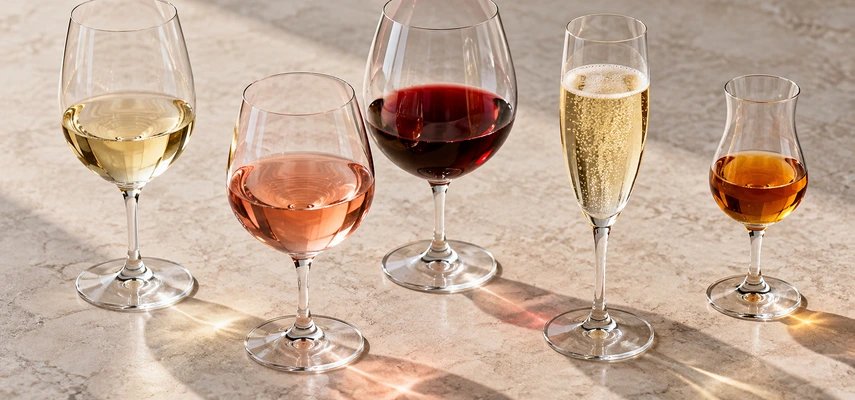

A wine can smell like ripe strawberries and still be dry. Another can be pale, sweet and full-bodied without being red or strongly tannic. These combinations stop seeming contradictory once each descriptive word is given its own job.
The different types of wine are easier to navigate with two questions. What kind of wine is it: still, sparkling or fortified? What is its style: colour, sweetness, acidity, tannin, alcohol, body and flavour? The first question puts it on a shelf; the second explains what drinking it might feel like.
What WSET Level 1 expects you to know
Learning Outcome 2 in the official Issue 1.2 specification gives the principal wine types and the characteristics that combine into styles. This lesson covers assessment criterion 1 and supplies the vocabulary used throughout the grape lessons.
Learn still, sparkling and fortified; white, red and rosé; sweetness, acidity, tannin, alcohol and body; and fruit, oak and other aroma/flavour characteristics. Numerical tasting scales and advanced conclusions aren’t necessary. This is an independent TFE guide, with original questions and no WSET affiliation.
Still, sparkling and fortified: three principal types
Still wines don’t have the obvious bubbles associated with sparkling wine. Sparkling wines contain dissolved carbon dioxide that produces bubbles when the bottle is opened and the wine is poured. Bubble size or price alone doesn’t define the whole category.
Fortified wine has had additional alcohol added. Port and Sherry are familiar examples. The addition makes fortification a production distinction; it isn’t simply a synonym for a red wine that happens to contain relatively high alcohol.
WSET’s guide to wine types and styles provides this basic framework. A useful consequence follows: sparkling doesn’t mean sweet, and fortified doesn’t mean sweet either. Sweetness is a separate question to ask after identifying the type.
Colour tells part of the story
White wines are generally pale lemon to deeper gold. Red wines range through ruby and other red shades; rosé wines are pink, with considerable variation in depth and hue. For Level 1, the main task is recognizing white, red and rosé rather than memorizing an enormous paint chart.
Skin contact helps explain the differences. Black grape skins supply colour for red and many rosé wines. Most white wine comes from white grapes, although black grapes can also supply pale juice when colour extraction is avoided.
Colour doesn’t measure sweetness. A pale rosé can be dry, while White Zinfandel is a named example commonly associated with a sweeter pink style. Nor does darker colour automatically prove better quality. Appearance describes something useful, but it cannot answer every tasting question.
Sweetness: sugar, not the smell of fruit
A dry wine doesn’t taste sweet. A medium wine has noticeable sweetness without sweetness dominating to the same degree as in a sweet wine. These are practical style descriptions, not permission to infer sugar from a fruity aroma.
Fruitiness concerns smells and flavours resembling fruit. Sweetness concerns sugar perceived in the mouth. A wine can smell intensely of peach, cherry or blackcurrant while being dry because yeast consumed most of its fermentable sugar.
Imagine smelling an unsweetened fruit-flavoured drink before tasting it. The fruit association can suggest sweetness that isn’t actually present. The analogy helps separate aroma from taste; it doesn’t claim wine is manufactured like that drink.
When writing a description, give fruitiness and sweetness separate places. “Dry, with ripe black-fruit flavours” makes sense. “It smells fruity, therefore it must be sweet” skips the very distinction the vocabulary is designed to preserve.
Acidity: the refreshing, mouth-watering dimension
Acidity creates a sour or tart impression and encourages salivation. Lemon juice is a familiar reference point for tartness, although wine contains its own acids rather than necessarily containing added lemon. High acidity can make a wine feel particularly fresh.
Sweetness can balance the impression of acidity, so a sweet wine needn’t seem simply soft or dull. Riesling is a useful example of a grape capable of combining substantial acidity with different sweetness levels. These features can coexist.
WSET’s acidity explanation connects acid perception with growing conditions and the rest of a wine’s balance. In beginner terms, assess the tart, mouth-watering sensation rather than trying to read acidity from the colour.
Tannin: drying grip, especially in red wine
Tannins from grape material, particularly skins, contribute a drying, grippy sensation. Strong black tea provides a useful comparison for the texture. This isn’t the same as a wine being dry in the sweetness sense: two meanings of dry can cause one very avoidable misunderstanding.
A wine can be dry and low in tannin, as many white wines are. It can also be dry and high in tannin, as Cabernet Sauvignon often is. Saying only “dry” doesn’t tell a reader whether the description concerns sugar or mouthfeel.
Acidity and tannin may both feel forceful, but they aren’t the same ingredient or sensation. Acidity tends to make the mouth water; tannin tends to create a drying grip. The distinction becomes especially helpful when comparing Pinot Noir with more tannic reds.
Alcohol: warmth and contribution to weight
Alcohol can contribute a warming sensation and help shape a wine’s fullness. Higher alcohol isn’t automatically higher quality. It is one component of balance, alongside sweetness, acidity, fruit and other characteristics.
More grape sugar can produce more alcohol if fermentation consumes it. That connection links the vineyard lesson with the glass: growing conditions influence ingredients, and fermentation changes those ingredients into the finished drink.
Serving temperature can affect the impression of alcohol. A warm glass of wine may seem more alcoholic than the same wine served appropriately. The actual alcohol content hasn’t changed because the glass sat on the table; perception has.
Body: how much weight the wine seems to have
Body describes the overall weight or fullness of wine in the mouth. Light-bodied wines feel relatively delicate; full-bodied wines feel more substantial. Medium-bodied wines sit between those reference points.
Think of the difference in mouthfeel between water and a richer liquid such as milk. It is an analogy about weight, not a literal ingredient list. In wine, alcohol, sugar and other components influence the combined impression.
Body isn’t another word for tannin. A full-bodied white wine can have little obvious tannic grip. Likewise, an intensely aromatic wine can be light-bodied: the strength of a smell and the weight of a liquid describe different experiences.
Italian Pinot Grigio is a useful light-bodied reference. An oaked, ripe Chardonnay can provide a fuller white-wine comparison. These are typical examples, not rules requiring every wine with either grape name to behave identically.
Fruit, oak and other aromas and flavours
Fruit vocabulary ranges from apple and citrus to berries, plums and tropical fruit. The point is communication: a familiar comparison helps another person imagine the wine. There is no award for inventing the most obscure fruit in the market.
Oak can contribute notes such as vanilla, toast or spice. Those characteristics aren’t proof that the grape naturally tastes of wood, and not every wine is oaked. Separate grape-associated fruit from winemaking-associated character when the distinction is clear.
Other descriptors may include floral or herbaceous notes. Sauvignon Blanc can suggest grass or herbs; Riesling can be floral. Avoid treating one aroma as a conclusive identification test. Typical profiles provide a useful starting point, while real bottles vary.
Build a description that answers useful questions
Compare “nice fruity white” with “still white, dry, high acidity, light body, citrus fruit, no obvious oak.” The second description tells someone what to expect without claiming a quality judgment that hasn’t been explained.
A similarly useful red-wine description might be “dry, medium body, red-cherry flavours, fresh acidity and relatively gentle tannin.” Each term adds information. Repeating powerful, strong and intense three times would add much less.
Common misconceptions and exam traps
Fruitiness isn’t sweetness; body isn’t tannin; sparkling isn’t automatically sweet; fortified doesn’t mean merely strong-tasting. Pink colour doesn’t establish sugar, and vanilla doesn’t have to come from the grape itself.
For a knowledge question, identify which dimension is being tested before answering. A question about mouth-drying grip concerns tannin. A question about lack of sweetness concerns dryness. Keeping those meanings separate does more work than memorizing a long list of adjectives.
Separate observation from judgement
Saying a wine has high acidity is an observation about a characteristic. Saying it is enjoyable is a judgement that depends on balance and preference. A person who likes refreshing styles may welcome the same acidity another finds too sharp. The descriptive vocabulary lets both discuss the wine without pretending their preferences are identical.
The same applies to oak. A vanilla note can be clearly present without being desirable to every drinker. Record what is there before deciding whether it suits the situation. That habit keeps tasting vocabulary informative rather than turning every fuller, darker or more aromatic wine into an automatic winner.
Knowledge check: 10 original questions
1. Which list contains the three principal wine types?
- Still, sparkling, fortified
- White, lemon, oak
- Dry, medium, glass
- Light, bottle, cork
2. What defines fortification?
- The bottle is unusually heavy
- Additional alcohol is added
- The wine is always red
- The wine is always sparkling
3. A wine is dry but smells strongly of strawberries. Is that possible?
- Only if it is fortified
- Only if it is faulty
- Yes, fruitiness and sweetness differ
- No, all fruit aromas mean sugar
4. Which sensation best indicates acidity?
- Drying grip alone
- Bubbles alone
- A larger glass
- Tart freshness and mouth-watering
5. Which sensation best indicates tannin?
- Drying, grippy texture
- Sugar sweetness
- Refrigerator cold
- Carbon dioxide bubbles
6. What does body describe?
- Only the grape’s skin thickness
- Overall weight or fullness in the mouth
- The height of the bottle
- Only the wine’s colour
7. Which note can come from oak influence?
- Bottle sediment by definition
- Grape flowering
- Vanilla
- Carbon dioxide pressure
8. What produces the bubbles in sparkling wine?
- Tannin crystals
- Added cork fragments
- Acidity turning into oxygen
- Dissolved carbon dioxide
9. Can a full-bodied white have little obvious tannic grip?
- Yes, body and tannin are different
- No, full body requires high tannin
- Only if it is red
- Only if it has no alcohol
10. Which statement correctly separates colour from sweetness?
- All pale wine is dry
- Rosé can be dry or sweet
- All pink wine is sweet
- All red wine is sweet
Answers and explanations
1. A — Still, sparkling, fortified. Still, sparkling and fortified classify types; colour and sweetness describe other features.
2. B — Additional alcohol is added. Added alcohol is the production distinction, not colour or packaging.
3. C — Yes, fruitiness and sweetness differ. Dryness concerns sweetness, while strawberry character describes aroma/flavour.
4. D — Tart freshness and mouth-watering. Acidity is associated with tartness and salivation rather than tannic drying grip.
5. A — Drying, grippy texture. Tannin contributes drying grip, particularly in red wine.
6. B — Overall weight or fullness in the mouth. Body is a combined mouthfeel impression rather than packaging or one isolated ingredient.
7. C — Vanilla. Oak can contribute vanilla, toast or spice characteristics.
8. D — Dissolved carbon dioxide. Dissolved carbon dioxide emerges as bubbles when pressure is released.
9. A — Yes, body and tannin are different. Body and tannin describe different sensations, so the combination is plausible.
10. B — Rosé can be dry or sweet. Colour does not establish how much sweetness a wine has.
One-page revision summary
| Dimension | Ask this question |
|---|---|
| Type | Still, sparkling or fortified? |
| Colour | White, red or rosé? |
| Sweetness | Dry, medium or sweet? |
| Acidity | How tart and mouth-watering? |
| Tannin | How much drying grip? |
| Alcohol and body | How warming and weighty? |
| Aroma/flavour | Which fruit, oak or other characteristics? |
A style is the combination. Assess each dimension separately, then put the pieces together into a description someone else can understand.











