










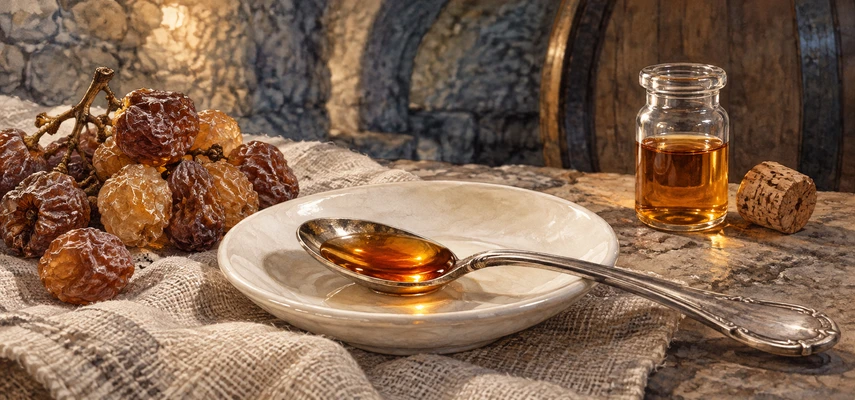

Tokaj offers a useful lesson in why “sweet” isn’t a complete wine description. A late-harvest white, an Aszú and a tiny serving of Eszencia may all contain substantial sugar, yet they begin with different selections of fruit and follow different production paths. Their textures, alcohol levels and aromatic profiles needn’t be identical.
The key is to follow the grape. Where did it grow? What happened to it before picking? Was it harvested in a bunch or berry by berry? What happened next in the cellar? Those questions make Tokaj’s unfamiliar names much less formidable.
This is article 21 of The TFE Guide to WSET Level 3 Wine. The official specification assigns Hungary’s sweet Tokaj wines here. Dry wines provide useful context, but this lesson concentrates on the required grapes, noble rot, Aszú and Eszencia. All practice material is original and independent of WSET.
Tokaj: A place where moisture and ripeness can meet
Tokaj lies in northeastern Hungary, near the meeting of the Bodrog and Tisza rivers and the southern foothills of the Zemplén Mountains. Continental influences bring warm summers and cold winters. Warm air from the Great Plain supports ripening, while hills and differing exposures create local contrasts.
Autumn river mist can supply the humidity needed for botrytis to develop. Subsequent dry, sunny conditions allow affected berries to lose water rather than simply deteriorate. The national wine organisation’s regional account explains the rivers, mountain setting and warm-air influence. The useful connection is a sequence of conditions, not “fog makes sweet wine.”
Aspect, elevation and position relative to humid air affect individual parcels. A sheltered, sunny slope may ripen differently from lower, damper ground. Warmth helps grapes develop sufficient sugar and flavour before concentration begins. If the underlying fruit is unsuitable, botrytis doesn’t automatically transform it into a great wine.
Soil and vineyard work still matter
Volcanic geology is important across much of the region, with different weathered materials and some loess-covered sites. Don’t translate “volcanic” directly into a prescribed smoky flavour. Soil depth, drainage and water availability influence vine growth and ripening; the same broad rock description can cover quite different vineyard conditions.
Growers need enough healthy leaf area to ripen the crop. An excessively dense canopy shades fruit and restricts air circulation, increasing the difficulty of managing disease. Opening the canopy can improve exposure and drying, but removing too much protection can increase sunburn. Crop size should match the vine’s resources rather than assuming that either maximum yield or minimum yield is always best.
Harvest timing becomes especially demanding when fruit must remain on the vine for a concentrated sweet style. Rain, hail, destructive rot and loss to wildlife can reduce the usable crop. Growers monitor berry development, not just a calendar date. Favourable autumn conditions create an opportunity; achieving the intended fruit requires repeated observation and selection.
Furmint, Hárslevelű and Sárga Muskotály
Furmint is the central grape reference. It can develop considerable sugar while retaining high acidity, making it valuable for balancing sweet wines. Typical flavour references include apple, quince and stone fruit, with dried-fruit and honeyed complexity developing through botrytis and maturation. The national Furmint profile also identifies dry and sweeter expressions. Its high acidity is useful potential, not a guarantee that every wine will be balanced.
Hárslevelű contributes a more fragrant, floral character, often with linden-blossom or honeyed associations. It can complement Furmint in blends and also make varietal wines. The grape profile describes this role. Blending different parcels and varieties lets a producer adjust aromatic character and structure, provided the components themselves are suitable.
Sárga Muskotály, also encountered as Sárgamuskotály or Muscat Lunel, is Muscat Blanc à Petits Grains. Its grapey and floral aromas can add perfume. The national Muscat account identifies both dry and sweet uses. Don’t confuse it with Muscadelle, and don’t infer sweetness simply from a Muscat aroma. These three grapes are key study references, rather than the region’s entire permitted variety list.
Noble rot changes more than the sugar reading
Under suitable conditions, Botrytis cinerea affects ripe berries and promotes water loss through their skins. Dehydration increases the concentration of sugar and other constituents, while the fungus also changes the aromatic profile. Honey, dried apricot, candied citrus and spice can become useful references in the resulting wines.
Concentration is a change in proportions. Losing water doesn’t mean the berry simply manufactures unlimited extra sugar. Nor does it make every constituent behave identically: botrytis and the berry’s metabolism complicate a simple evaporation model. For an examination answer, explain dehydration, concentration and flavour change without claiming that all acidity inevitably rises by the same amount as sugar.
The distinction between noble and destructive rot depends on fruit and conditions. Persistent wet weather can undermine berry health. Suitable drying periods and careful selection are therefore essential. A raisin-like appearance alone doesn’t prove that every berry belongs in an Aszú lot.
Picking Aszú berries is slow work
Aszú berries are individually selected, botrytised and shrivelled grapes. They don’t necessarily reach the desired condition at the same time, so pickers may return through the vineyard several times. That requires judgement as well as labour: usable berries must be separated from those that are unripe, insufficiently concentrated or damaged.
A producer’s 2017 Aszú account documents successive picking passes and separate berry lots. It is a practical example, not a universal harvest timetable. Dehydration reduces juice volume, and rejection reduces the saleable crop further. Those are separate from the extra time spent making selective passes.
Meanwhile, other grapes provide the juice or wine used in the next production stage. The producer must therefore coordinate berry condition with an appropriate base liquid. Harvest decisions shape both parts of the process, rather than simply filling a press with one uniform load.
How Tokaji Aszú is made
Highly shrivelled berries don’t yield their concentrated contents as readily as ordinary fresh grapes. Producers soak the selected Aszú berries in must, fermenting must or young wine, depending on their method. This extracts sugar, flavour and other constituents into the liquid. Pressing and fermentation then produce the sweet wine, followed by maturation.
The important distinction is extraction, not the image of a fixed bucket recipe. Berry condition, base liquid, contact time and pressing all influence the result. Too much extraction can increase bitterness; insufficient extraction may leave desirable material behind. Fermentation must also cope with the concentrated conditions. The berries aren’t simply added to an otherwise finished retail wine and stirred once.
Disznókő’s Aszú production explanation describes soaking in fermenting must or new wine. Its single-vineyard technical example shows different base-liquid choices within one wine. These examples help explain the mechanism without prescribing one exact contact time for every estate.
Maturation and blending shape the finished balance
Barrel maturation can develop texture and add complexity to concentrated sweet fruit. Wood size, age and handling affect how much overt oak flavour appears. Controlled oxygen exposure can contribute to development, while excessive oxidation can diminish freshness. “Aged in oak” doesn’t mean every wine should taste strongly of vanilla or toast.
Blending lots can balance fruit, acidity, sweetness and aromatic development. A more perfumed component may change the nose, while a fresher component can influence the palate’s balance. The aim is a coherent wine, not simply the largest sugar figure. Time in cellar also uses space and delays income, which helps explain production costs.
Tokaji Aszú isn’t a fortified wine. Its richness comes from concentrated grapes and its production process, with fermentation leaving substantial sugar. Fresh acidity is crucial to keeping that richness satisfying rather than heavy. Assess how the parts work together before deciding whether more concentration would be an improvement.
Puttonyos: Read current labels in their vintage context
Historically, puttonyos referred to baskets of selected berries in relation to a base quantity of wine. Modern labels shouldn’t be interpreted as a promise that an estate literally followed that historical basket count. Origin and analytical requirements now govern the category.
The national organisation’s regulatory history explains the changes introduced from 2013. Current Aszú requires at least 120 grams per litre of residual sugar; a 6 puttonyos indication requires at least 150 grams per litre. Older 3- or 4-puttonyos bottles belong to an earlier framework. Puttonyos isn’t the same thing as alcohol strength or an independently verified quality score.
Very sweet wines need sufficient acidity, fruit intensity and length to remain balanced. More residual sugar alone doesn’t prove greater complexity. When comparing bottles, check vintage and designation first, then assess the wine rather than assuming one number answers every question.
Eszencia: Free-run nectar with a different fermentation challenge
Eszencia comes from the extraordinarily concentrated juice that trickles from stored Aszú berries under their own weight. It is collected separately rather than made by the same maceration-and-pressing process as Aszú. Producers may retain and bottle suitable lots; the tiny volumes help explain its rarity.
The very high sugar concentration makes fermentation exceptionally difficult. Yeasts work slowly, and fermentation may continue for years while producing very little alcohol. The result can have a syrup-like texture, intense sweetness and striking acidity. This is why a tiny tasting portion is more useful than assuming it behaves like an ordinary glass of table wine.
The producer’s Eszencia technical account documents free-run collection and ageing in glass containers. It illustrates a particular lot, not a fixed alcohol figure for all Eszencia. The name also shouldn’t be confused with the discontinued historical category Aszúeszencia. Similar-looking words can conceal substantially different definitions.
Late harvest, Szamorodni and dry wines provide context
Late-harvest wines can use concentrated or botrytised fruit without following the full individually selected Aszú process. Szamorodni uses bunches containing varying proportions of healthy and affected berries rather than separating every Aszú berry for the same soaking method. Sweet examples are labelled édes; dry examples száraz. The national introduction explains that distinction.
Dry Szamorodni may develop through maturation involving oxygen and a surface yeast film, creating a different style from a fresh dry Furmint. Ordinary dry Furmint or Hárslevelű, meanwhile, can emphasise primary fruit and acidity, with vessel and lees choices shaping texture. These contextual styles demonstrate why neither Tokaj nor Furmint is a synonym for one compulsory sweetness level.
Quality, origin and the reasons behind price
Tokaj is a protected origin with permitted grapes and category-specific production requirements. A grape grown elsewhere doesn’t gain that origin merely because noble rot developed on it. Likewise, a highly concentrated sweet wine isn’t automatically Aszú or Eszencia: the relevant fruit selection and process matter.
Assess quality through balance, intensity, complexity and length. Sweetness needs freshness; botrytis character shouldn’t obscure the whole wine; oak and age should support rather than dominate. A costly, rare bottle can still be assessed critically. High sugar or an unfamiliar label doesn’t replace evidence from the glass.
For price, identify the production chain. Crop losses, hand selection and small volumes influence grape costs. Separate lots, difficult fermentation, barrels and stock holding add cellar expense. Transport, storage, applicable taxes and trade margins contribute to retail prices. Demand, reputation and rarity can add premiums. Keep these commercial mechanisms separate from the sensory explanation of quality.
Knowledge check: 10 original multiple-choice questions
Choose one correct answer per question. These are independent practice questions.
1. Which conditions can support noble rot in Tokaj?
2. Why is Furmint useful in concentrated sweet wines?
3. Which is a useful Hárslevelű contribution?
4. What is Sárga Muskotály?
5. What distinguishes the Aszú berry harvest?
6. Why are selected Aszú berries soaked in a base liquid?
7. What is the source of Eszencia?
8. Why can Eszencia remain very low in alcohol?
9. What does a modern puttonyos indication require you to consider?
10. Which factor can raise production cost per bottle?
Answers and explanations
1. C — A suitable sequence. Humidity can encourage botrytis, followed by drying that promotes concentration. Persistent wetness may instead damage the crop. Tokaj’s rivers and autumn conditions provide an opportunity, while site, fruit health and selection determine whether it becomes useful material.
2. A — Acidity balances richness. Furmint can achieve considerable ripeness while retaining high acidity. That acidity supports balance in concentrated sweet styles. It doesn’t guarantee quality alone: fruit intensity, complexity, integration and length still need to be assessed.
3. D — Fragrance and blending. Hárslevelű can contribute floral, linden-blossom and honeyed associations, complementing Furmint or appearing as a varietal wine. Its role isn’t to add red colour or eliminate the need for sound fruit and appropriate cellar decisions.
4. B — A Muscat identity. Sárga Muskotály is Muscat Blanc à Petits Grains, also known as Muscat Lunel. Its grapey and floral perfume is useful in regional wines. That aroma doesn’t independently establish sweetness, and the variety isn’t Muscadelle.
5. C — Berry-by-berry selection. Aszú berries develop unevenly, so suitable fruit may be selected through repeated vineyard passes. This adds labour and requires judgement. Picking whole mixed bunches for Szamorodni represents a different selection approach rather than the same process with another name.
6. A — Extraction from shrivelled fruit. Soaking helps transfer sugar, flavour and other constituents from highly concentrated berries into must, fermenting must or young wine. Pressing and fermentation follow. Producer choices vary, so a historical basket image isn’t a complete modern production explanation.
7. D — Free-run nectar. Eszencia is collected from juice released by Aszú berries under their own weight. It isn’t the same product as the wine obtained through the Aszú soaking process. Its concentration and extremely limited volume help explain its distinctive character and rarity.
8. B — A difficult fermentation environment. Very high sugar makes yeast activity demanding, so fermentation can proceed extremely slowly and produce little alcohol. A sweet, viscous result therefore doesn’t imply fortification or a lack of fermentable material; the concentration creates the challenge.
9. C — Read the legal and vintage context. Puttonyos has historical roots in berry baskets, but modern category requirements govern its use. Older labels can reflect earlier rules. The indication isn’t an alcohol measurement, an instruction to count present-day baskets or an automatic sensory quality grade.
10. A — Labour and small output. Repeated selection takes time, while dehydration and rejection reduce the volume available for sale. Those physical mechanisms can raise unit costs. Demand and reputation may affect retail price too, but through a separate commercial mechanism.
Written exercise 1: Explain the conditions for concentration in five marks
Question: Explain five linked natural and vineyard factors that can support suitable Aszú berries in Tokaj. Give five distinct points. This is an original five-mark practice exercise.
Model answer: Warmth and favourable exposure help fruit reach adequate ripeness before concentration. Autumn humidity associated with the rivers can support botrytis development. Subsequent drying promotes water loss from affected berries rather than persistent destructive rot. Suitable canopy management balances ripening leaf area with fruit exposure and air circulation. Repeated selective harvesting separates appropriately developed berries from unsuitable fruit as their condition changes.
Why it earns credit: Award one practice mark each for initial ripeness, humidity, drying, canopy balance and selection, with the relevant consequence explained. “Tokaj has fog” alone doesn’t explain why the whole sequence works. These are original study points, not an official WSET marking scheme.
Written exercise 2: Distinguish Aszú and Eszencia in five marks
Question: Explain five distinct production or style differences between Tokaji Aszú and Eszencia. Don’t describe either as fortified merely because it is sweet.
Model answer: Aszú uses selected berries soaked in a base liquid to extract their contents. Pressing and fermentation then produce the Aszú wine. Eszencia instead begins as free-run juice released from Aszú berries under their own weight. Its exceptionally high sugar concentration makes fermentation very slow. Consequently, Eszencia can remain extremely sweet and viscous with very little alcohol, differing from the more conventionally wine-like balance of Aszú.
Why it earns credit: Award one practice mark each for Aszú soaking, its subsequent pressing/fermentation, Eszencia collection, the fermentation challenge and the resulting style contrast. Those are separate stages and effects. Simply saying “Eszencia is better” earns no additional credit. This independent rubric isn’t an official examination answer.
One-page revision summary
| Clue or category | Explanation to practise |
|---|---|
| Tokaj | Northeastern Hungary, with river humidity, warm-air influences and varied foothill sites. Suitable sequences matter more than one climate word. |
| Furmint | High acidity can balance considerable ripeness and sweetness. It also makes dry wines. |
| Hárslevelű | Floral and honeyed aromatic contribution, as a blend component or varietal wine. |
| Sárga Muskotály | Muscat Blanc à Petits Grains, with grapey and floral perfume. Aroma doesn’t establish sugar level. |
| Noble rot | Botrytis plus appropriate drying promotes concentration and flavour change. Persistent wetness can damage fruit. |
| Aszú berries | Individually selected, shrivelled botrytised berries, often harvested in repeated passes. |
| Tokaji Aszú | Berry soaking extracts contents into a base liquid before pressing, fermentation and maturation. It isn’t fortified. |
| Puttonyos | Historical basket terminology now interpreted through category requirements and vintage. It isn’t an alcohol or quality score. |
| Eszencia | Very concentrated free-run juice from stored berries, with difficult, slow fermentation and often very little alcohol. |
| Szamorodni | Whole-bunch selection with healthy and affected berries. Édes is sweet; száraz is dry. |
| Quality | Assess acidity-sweetness balance, fruit intensity, complexity, integration and length. Rarity alone isn’t enough. |
| Price | Explain selection, crop losses, reduced juice, cellar handling, stock, transport, margins and demand. |
A practical tasting exercise
Compare a late-harvest Tokaj wine with an Aszú using small pours. Record sweetness, acidity, alcohol, body, dried-fruit character and finish before consulting the production notes. Ask whether differences are consistent with fruit selection and concentration, while acknowledging that producer and vintage also matter. Eszencia is optional context rather than a necessary purchase for this exercise; a production comparison can be made from a technical sheet.
Sources and course context
Linked primary sources comprise the WSET specification, Hungary’s national wine organisation and producer production or technical descriptions. Individual wines illustrate mechanisms rather than universal harvest dates, fermentation times or alcohol levels. The modern Aszú label discussion is separated from historical categories. No official WSET question or answer is reproduced.
Continue your studies: Article 7 explains sweet-wine concentration, and article 8 covers maturation and finishing. Articles 10 and 20 offer Sauternes and Burgenland comparisons. Article 22 introduces Greece, while article 49 compares origin and classification systems.












