










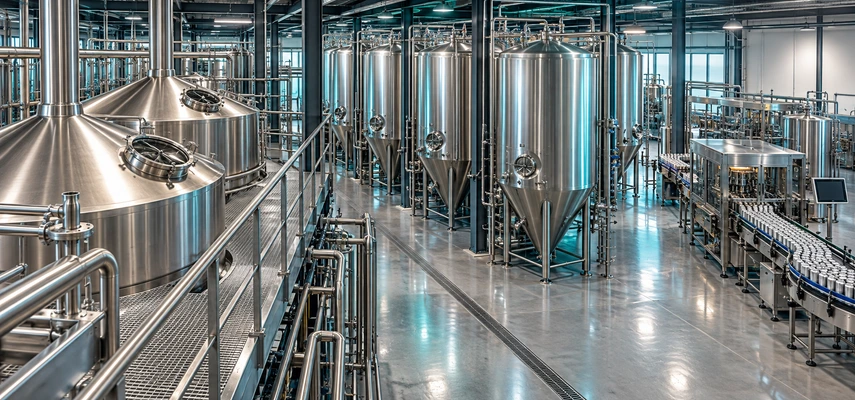

A brewery can look like a collection of impressive metal containers joined by very determined plumbing. The sequence becomes easier to understand when the question changes from “what is that tank called?” to “what job happens to the liquid here?” How beer is brewed is a story of materials changing form and purpose.
The core route runs from milling and mashing to wort boiling, fermentation, carbonation and packaging. Breweries vary in equipment and detail, but the central jobs remain recognizable. This chapter follows that route without repeating the full grain and microorganism lessons.
Start with the prepared ingredients
The brewer begins with a recipe and materials suited to it. Malt has already been prepared through malting; water is selected or treated for the process; hops and fermenting organisms have intended roles. The ingredients are not interchangeable simply because they eventually share a vessel.
Planning also means choosing the desired result. A comparatively clean pale lager and a strongly aromatic ale can require different ingredients and handling. However, both still need a way to obtain fermentable material, conduct fermentation and protect the finished beer. Style differences sit within a broadly shared production framework.
The official specification names the major steps and key conversions required at Level 1. Use that list as the backbone. Advanced filtration systems, detailed vessel engineering and recipe calculations can wait until the purposes and order are secure.
Milling produces grist
Milling crushes the malt, exposing the grain interior so water can reach material needed in the mash. The crushed material is grist. This is a physical preparation stage rather than the biological transformation that produces alcohol. A mill opens access; it doesn’t ferment the grain.
The crush must suit the brewery’s process. Making every grain into the finest possible powder is not automatically the best decision because later handling and separation matter too. The Level 1 principle is straightforward: milling makes prepared grain more accessible for the next stage.
Imagine trying to make an infusion from an unopened sealed packet compared with exposed material. The analogy isn’t a complete description of brewing, but it shows why contact matters. Grist gives water and enzymes a practical route into the grain’s useful reserves.
Mashing creates a useful sugary liquid
Mashing mixes the grist with water under controlled conditions. Enzymes help convert grain starch into smaller carbohydrates, including fermentable sugars. Water also carries dissolved substances from the grain. These activities prepare the liquid that yeast will later use.
This is a concise recap of the previous chapter, not a second malting lesson. Remember the stage boundary: malt is already prepared before it reaches the mash. Germination belongs to malting, while the mash belongs to brewing. Neither is the same as alcoholic fermentation.
The resulting sugary liquid is wort. The brewer separates it from the spent grain so it can move into the following stages. The American Homebrewers Association process overview illustrates the progression from mash to wort, boil and fermentation. Keeping track of the material name is a useful way to avoid losing the sequence.
Wort boiling performs several jobs
The wort is then boiled. Heating helps prepare the liquid for subsequent fermentation and is a major opportunity for hop additions. It also reduces many unwanted microorganisms and allows changes in the liquid, including the removal of some volatile substances. Boiling is an active processing stage, not just a wait for yeast to arrive.
Hop bittering compounds can change under heat, contributing bitterness to the final beer. Timing matters because prolonged hot treatment and later additions can give different balances of bitterness and aroma. Hop variety matters too. The process therefore joins the ingredient choices explained earlier with a particular treatment.
There isn’t one universal boil duration that defines all beer. A recipe and equipment determine the practical details. For revision, remember the purpose and position: wort boiling follows preparation and separation of the sugary liquid, and it precedes normal yeast fermentation after cooling.
Cooling makes the next stage possible
Freshly boiled wort is too hot for ordinary brewing yeast to perform its intended fermentation. The brewer cools it to suitable conditions before the yeast is introduced. This transition makes clear why adding conventional yeast to a boiling kettle is not the standard route to beer.
Cooling also introduces a need for careful handling. The liquid is being prepared for a particular population of organisms, so unwanted contamination can undermine the plan. Clean equipment and controlled transfers support the intended fermentation rather than leaving the result to whatever happens to arrive.
At Level 1, the key connection is between conditions and microbial work. A brewer doesn’t merely add yeast at any moment and expect the same outcome. Selection and treatment work together, with temperature and hygiene among the practical controls.
Fermentation changes wort into beer
During fermentation, yeast consumes suitable sugars and produces alcohol and carbon dioxide. It also forms aroma compounds that can be prominent or restrained depending on the organisms and process. This is the central biological transformation, distinct from starch conversion in the mash.
The Cicerone introduction to brewing explains how this stage contributes to the characteristic flavors of beer. The liquid is not just gaining an alcohol number; its sensory balance is changing. A particular yeast can create recognizable fruit-like or spicy impressions without those foods being added.
Most conventional production uses selected added cultures, but some traditions use other approaches, including spontaneous fermentation. The earlier yeast chapter explains that distinction. For the sequence here, focus on the same causal question: how does the prepared liquid become the intended fermented drink?
Time and finishing help shape the result
Beer commonly receives further time and handling after its principal fermentation. These decisions can help it reach the desired flavor, clarity and stability. Different breweries use different approaches, so avoid declaring that every beer must be filtered, pasteurized or aged for the same duration.
Some styles are deliberately hazy; others are expected to be clear. Some beers are designed for freshness, while certain stronger or traditional beers may develop during suitable storage. A finishing decision serves the intended product rather than following one universal aesthetic rule.
The term lager is associated with cold storage or maturation, but the broader ale/lager distinction also involves yeast and usual fermentation practice. A single finishing step should not be used to overwrite everything else known about a beer’s ingredients and production.
Carbonation sets the fizz
Carbonation concerns carbon dioxide dissolved in the beer. Yeast produces this gas during fermentation, but that doesn’t guarantee the final level in the package. Gas can escape, be retained under controlled conditions, or be introduced later by the brewer. These routes help explain different production methods.
In force carbonation, carbon dioxide is added under controlled conditions. In a conditioning approach, further fermentation can generate gas within a closed setting. The Brewers Association educational course describes fermentation-derived gas and force carbonation as ways of creating the finished beer’s carbonation.
Do not confuse carbonation with strength. A highly sparkling beer is not necessarily highly alcoholic, and a comparatively gentle fizz doesn’t prove low alcohol. They are different features, even though fermentation connects them at one point in the process.
Packaging protects and presents the beer
Packaging places beer into a suitable container, such as a keg, bottle or can, and closes it for distribution and service. The package needs to preserve the intended condition. A beautiful label cannot compensate for poor handling of the liquid inside.
Oxygen exposure, contamination and loss of gas are among the concerns controlled during packaging and sealing. The details vary with equipment and product. For the beginner, connect the package with protection: it helps retain the beer’s intended character until someone opens or serves it.
Some beers undergo further conditioning in their package, so packaging isn’t always the end of all microbial activity. That doesn’t reverse the overall logic of the main sequence. It adds a finishing method whose purpose should be explained rather than treated as an exception that makes order meaningless.
Follow causes instead of memorizing tank shapes
Here is a compact process map. Milling exposes grain. Mashing obtains sugars. Separation produces a usable liquid stream. Wort boiling processes that liquid and offers hop additions. Cooling prepares suitable fermentation conditions. Fermentation produces alcohol, gas and aromas. Carbonation sets fizz; packaging protects the result.
Now test the order by deliberately swapping two stages on paper. If fermentation comes before the mash, where are its sugars coming from? If ordinary yeast is added before cooling, what conditions would it meet? Asking what each stage needs helps recover the correct sequence when a memorized list slips.
An optional exercise is to trace a hypothetical recipe through the process without consuming anything. Choose one malt, one hop and one yeast from their descriptions. Identify where each enters and where its main contribution develops. Mark which final characteristics remain uncertain without more production information.
One-page revision summary
The named core steps are milling, mashing, wort boiling, fermentation, carbonation and packaging. Grist is crushed grain; wort is the sugary liquid prepared before principal fermentation. Enzymes help make sugars in the mash; yeast later consumes fermentable sugars and creates alcohol, carbon dioxide and aroma compounds.
Boiling and carbonation must not disappear from a shortened process description. Neither is merely another name for fermentation. Learn the purpose and dependencies of each stage, and the order becomes a consequence of how brewing works rather than an arbitrary line of vocabulary.
Knowledge check: 10 original practice questions
Independent TFE questions, not official WSET examination items. Choose one answer per question; explanations follow separately.
1. Which stage physically exposes the malt interior?
- Fermentation
- Milling
- Packaging
- Force carbonation
2. Which material is called grist?
- Milled grain
- Finished bottled beer
- A selected bacterial culture
- Dissolved carbon dioxide
3. Which stage obtains fermentable sugars from starch?
- Capping bottles
- Refrigerating finished kegs
- Opening a can
- Mashing
4. Where are many conventional bittering hop additions made?
- Inside the bottle cap
- Before the barley grows
- During wort boiling
- Only after every container is opened
5. Why is boiled wort cooled before normal yeast fermentation?
- Cooling creates the grain bill
- The yeast needs suitable conditions for its work
- Cold temperatures mill the malt
- Every aroma must be removed first
6. What happens during alcoholic fermentation?
- Yeast consumes suitable sugars and produces alcohol and carbon dioxide
- Grain is first germinated
- Bottles are sealed mechanically
- All hops become malt
7. Why can carbonation be needed after principal fermentation?
- Fermentation never makes gas
- Carbonation must always add alcohol
- Packaging always removes every dissolved gas
- Some fermentation gas escapes and the final level needs control
8. Which container can be used for beer packaging?
- Only an open mash tun
- Only a grain sack
- A keg
- Only a germination floor
9. Which statement about finishing is accurate?
- Every beer must be filtered clear
- Methods depend on the intended beer
- Every beer must be pasteurized
- Every beer must mature for the same time
10. Which sequence is sensible for conventional brewing?
- Milling, mashing, boiling, cooling, fermentation
- Fermentation, boiling, mashing, milling, cooling
- Packaging, milling, fermentation, steeping, cooling
- Carbonation, germination, packaging, mashing, milling
Answers and explanations
1. B — Milling. Milling crushes malt to make its interior accessible in the mash; it does not itself create alcohol. Mapping: LO1.
2. A — Milled grain. Grist names the crushed grain entering the mash, rather than a later liquid or microorganism. Mapping: LO1.
3. D — Mashing. Mash enzymes convert starch into smaller carbohydrates before yeast fermentation uses suitable sugars. Mapping: LO1.
4. C — During wort boiling. Wort boiling provides heat that develops bittering contributions, with timing affecting the result. Mapping: LO1.
5. B — The yeast needs suitable conditions for its work. Ordinary brewing yeast cannot conduct its intended fermentation in boiling wort; cooling enables the next stage. Mapping: LO1.
6. A — Yeast consumes suitable sugars and produces alcohol and carbon dioxide. This transformation is distinct from starch conversion and from physical packaging operations. Mapping: LO1.
7. D — Some fermentation gas escapes and the final level needs control. Gas production and retained dissolved carbonation are different matters; brewers control the finished level. Mapping: LO1.
8. C — A keg. Kegs, bottles and cans can protect and present finished beer, using suitable filling and sealing methods. Mapping: LO1.
9. B — Methods depend on the intended beer. Clarity, stability and maturation choices vary; the intended style and process determine appropriate handling. Mapping: LO1.
10. A — Milling, mashing, boiling, cooling, fermentation. Each stage supplies material or conditions required by the next, making the sequence causally meaningful. Mapping: LO1.












