











A beer can deliver a firm bitter finish and barely a whisper of hop aroma. Another can smell extravagantly fruity while seeming softer on the palate. Hops explained properly therefore need two questions: what kind did the brewer choose, and how were they used?
Those questions prevent a common shortcut. “Hoppy” is useful conversationally, but it can mean bitter, strongly aromatic, or both. If someone asks for a hoppy beer, a follow-up about the experience they want is more useful than immediately reaching for the most bitter option.
Meet the hop cone
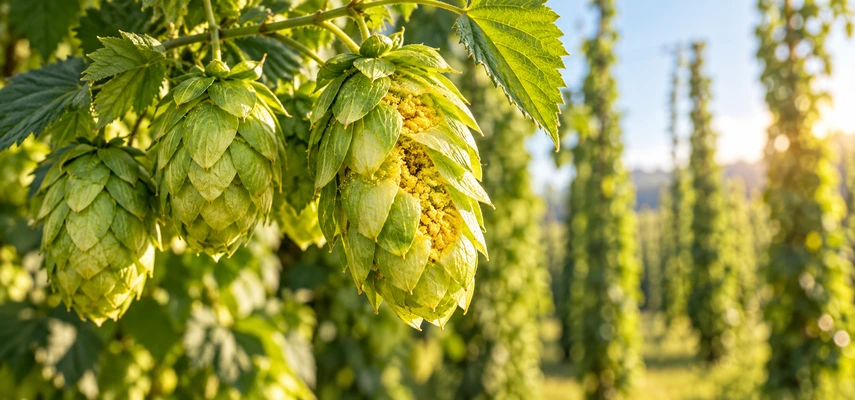
Hops are the cone-like flowers harvested from female hop plants. The climbing stems are commonly called bines. Inside hop cones are lupulin glands containing substances valuable to brewers, including bittering compounds and aromatic oils. The flower is small; its contribution to a glass can be remarkably conspicuous.
Brewers may use whole cones, processed pellets or hop extracts. These are different practical forms of hop material, not different basic brewing purposes. For Level 1, recognize the cone as the plant source and connect hops with bitterness and aroma. Knowing every extract technology is unnecessary for understanding the foundation.
The American Homebrewers Association ingredient overview connects hop material with aroma, flavor and bitterness. Those are overlapping contributions, but they aren’t interchangeable sensations. Smelling a citrus impression is different from tasting bitterness, even when both originate partly from the same addition.
Why boiling can create bitterness
Hop alpha acids can change during heating into more soluble bitter compounds. Boiling wort is therefore an important opportunity to develop hop bitterness. Amount, variety and time all matter. A small dose of one hop cannot be assumed equivalent to a large dose of another just because both are green.
This is a mechanism, not a recipe calculator. The beginner doesn’t need equations for extracting bitterness. Remember that a brewer can influence the final result through material selection and process. A longer boil exposure commonly supports bittering, while the treatment of aroma is a separate consideration.
Bitterness also needs context in the finished beer. Malt character and sweetness can change its perceived balance. Two beers with similar analytical bitterness may not seem equally bitter. A tasting note should report the experience instead of pretending that one ingredient measurement explains every sensation.
Aroma behaves differently from bitterness
Hop oils can produce floral, herbal, spicy, citrus-like, pine-like or other fruit-like impressions. Some aromatic substances are volatile: they can leave with steam or otherwise change during processing. That helps explain why adding hops late in the hot process can preserve a different aroma impression from boiling them for a long time.
Dry hopping means adding hops to beer outside the main wort boil, commonly during or after fermentation. It is particularly associated with building hop aroma. Dry describes the addition technique, not a promise that the beer will lack sweetness. The hops can affect several aspects of the beer, but the introductory purpose to remember is aroma enhancement.
Avoid the opposite oversimplification that late additions can never affect perceived bitterness. Brewing interactions are more complicated than a pair of sealed switches. At this level, early-boil bittering and later aroma emphasis are helpful tendencies, provided they are not turned into universal laws.
Traditional German and Czech hops
Traditional German hops are often associated with delicate floral, herbal or spicy impressions. Hallertau-area varieties and Tettnanger are useful examples, although regional names and variety names are not always the same thing. The point is the restrained, familiar European aroma profile used in many classic lager traditions.
Traditional Czech hops, especially Saaz, are similarly associated with refined herbal and spicy character. This can make a pale lager aromatic without making it smell like tropical juice. A traditional pilsner’s hop identity therefore involves more than the fact that it is bitter.
However, Germany also produces modern varieties with more conspicuous fruit-like characters. Country of origin doesn’t freeze plant breeding in the past. The official syllabus deliberately refers to traditional German and Czech hops when drawing this comparison, so keep that qualifier attached to the idea.
British hops have their own range
Traditional British hops commonly bring earthy, herbal, floral or spicy associations. Goldings and Fuggle are useful reference names. They can support a beer whose hop presence feels quite different from a modern citrus-led pale ale, without being absent or inferior.
The British Hop Association variety directory shows why a national label is only a broad starting point. It lists different aroma descriptions for different varieties, including British-grown Cascade with grapefruit associations. Even within one growing country, hop character is not a single flavor.
For revision, learn the broad traditional comparison, then leave room for individual exceptions. A statement such as “traditional British hop character often seems earthy or herbal” is defensible. “Every British hop is earthy and none is fruity” makes an unjustified leap from tendency to rule.
American hops and conspicuous fruit
Many American hop varieties associated with modern pale ale and IPA can produce citrus, pine, resin or tropical-fruit impressions. Cascade is a familiar example associated with citrus and floral character. Other varieties bring different combinations and intensities. American is therefore a useful family resemblance, not one fixed aroma.
These aromas help explain why a beer can suggest grapefruit peel without grapefruit appearing in the recipe. The resemblance comes from what our senses recognize in the volatile mixture. It doesn’t justify telling someone that the beer contains citrus fruit, especially if the question concerns an ingredient they need to avoid.
Neither does fruit-like aroma tell us the sweetness. A highly aromatic American hop-driven beer may finish comparatively dry. Write separate observations for aroma and taste. That habit is more reliable than allowing the word fruity to do two unrelated jobs.
Australian and New Zealand possibilities
Australian varieties can deliver pronounced fruit-like aromas, with Galaxy a familiar example associated with passionfruit, peach and citrus. Other Australian hops have different profiles. Growing origin helps orient the learner, but variety and brewing treatment remain essential to predicting the glass.
New Zealand varieties can likewise range widely. Nelson Sauvin is particularly useful because its producer describes gooseberry and white-wine-like associations. The NZ Hops variety description makes clear that this is a particular variety’s character, not evidence that wine has been added to the beer.
Group American, Australian and New Zealand hops together only for the broad syllabus contrast with traditional European hop character. Don’t memorize “all taste tropical.” Citrus, pine, stone fruit, herbal notes and other associations can appear in different combinations. Blending varieties adds another layer of possibility.
Use changes the result
Consider a hypothetical brewer using the same hop variety in two batches. In one, most is added early in the boil. In the other, a significant portion is reserved for later additions or dry hopping. The finished beers may differ in aroma and bitterness even though the variety name on the recipe is identical.
Now change the variety but hold the broad process constant. The aroma profile can change again. This gives a practical way to understand recipes: separate the choice of material from its treatment. “Which hop?” and “when and how much?” are both necessary questions.
The Cicerone brewing guide places hop additions within the process rather than treating them as a label on the bottle. Later style articles apply this idea to traditional pilsner and bitter, American pale ale, American IPA and hazy IPA. Here the objective is to understand the tool before comparing its finished work.
Other flavourings are possible
The syllabus also recognizes other flavourings. Brewers may use fruit, herbs or spices to shape a beer, depending on the style and intended result. Coriander and orange peel in some witbier recipes are useful examples of actual additions that should be distinguished from aroma resemblance alone.
Different ingredients can produce similar sensory words. A citrus-like impression might arise from hops, actual fruit, or their interaction with other beer characteristics. Description identifies what is perceived; verified ingredient information helps explain its source. Neither should be substituted carelessly for the other.
When comparing two descriptions, underline aroma words in one color and bitterness words in another. If both notes say citrus but only one says firmly bitter, the shared aroma should not erase the difference in taste. This simple separation makes recommendations more precise.
For an optional exercise without alcohol, compare producer descriptions of three named hop varieties. Sort the words into broad aroma families, then note where the categories overlap. This trains comparison without requiring you to identify a hop blindly or taste raw hop material.
One-page revision summary
Hop cones supply important bittering and aromatic substances. Boiling can develop bitterness; later additions and dry hopping often emphasize aroma. Traditional German, Czech and British hops offer useful floral, herbal, spicy or earthy comparisons, while many American, Australian and New Zealand varieties provide pronounced citrus, pine or fruit-like characters.
Remember the qualifications: variety matters, country is not destiny, and process changes the result. Hoppy doesn’t necessarily mean extremely bitter. Fruit-like doesn’t necessarily mean sweet or fruit-added. The official specification asks for ingredient purpose and use; keep the mechanism attached to the vocabulary.
Knowledge check: 10 original practice questions
Independent TFE questions, not official WSET examination items. Choose one answer per question; explanations follow separately.
1. Which plant material is harvested as a hop?
- The root of malted barley
- The cone-like flower of a female hop plant
- The dried body of brewing yeast
- The fruit of the grapefruit tree
2. What is a major purpose of early-boil hop additions?
- Developing bitterness
- Converting grain starch into sugar
- Sealing the package
- Removing every aroma from the finished beer
3. What is dry hopping principally associated with at this level?
- Making every beer completely dry
- Milling the grain bill
- Removing carbon dioxide
- Enhancing hop aroma
4. Which description best fits a traditional European hop comparison?
- Every variety smells exactly like passionfruit
- No aroma contribution is possible
- Herbal, floral or spicy tendencies
- Only sweetness is affected
5. Why should country descriptions be qualified?
- Hops have no varieties
- Individual varieties within a country differ
- Aroma is unaffected by plant choice
- All hops are grown in one country
6. What can Nelson Sauvin illustrate?
- A hop can suggest white wine without wine being added
- All New Zealand beers contain wine
- Gooseberries must be in every IPA
- Hop aroma measures alcohol strength
7. Which two questions most usefully explain a hop contribution?
- Which bottle color, and what is its price?
- Which grain grew tallest, and who filled the keg?
- Which glass is largest, and how old is the bar?
- Which variety, and how was it used?
8. A citrus-smelling beer tastes dry. Is that possible?
- No, citrus aromas always require sugar
- No, dry hopping makes beer sweet
- Yes, aroma and sweetness are different observations
- Only if the beer contains no yeast
9. Which is an example of another beer flavouring?
- Carbon dioxide used only as a gas
- Coriander added to a suitable recipe
- A bottle cap
- A refrigeration thermostat
10. Why might the same hop variety produce different impressions in two beers?
- Different additions and processing can alter its contribution
- Variety names determine every final flavor
- Yeast prevents all hop aroma
- All brewing methods extract identical results
Answers and explanations
1. B — The cone-like flower of a female hop plant. Hop cones supply material used for bitterness and aroma; they are not grain or yeast. Mapping: LO1.
2. A — Developing bitterness. Heat changes hop bittering compounds, making boil timing relevant to the resulting bitterness. Mapping: LO1.
3. D — Enhancing hop aroma. Dry hopping describes a hop addition outside the main wort boil, not a guarantee of low sweetness. Mapping: LO1.
4. C — Herbal, floral or spicy tendencies. Traditional German and Czech varieties often offer refined herbal, floral or spicy impressions. Mapping: LO1.
5. B — Individual varieties within a country differ. Origin provides context, but breeding, variety and process prevent a single universal national flavor. Mapping: LO1.
6. A — A hop can suggest white wine without wine being added. The name and aroma associations concern a hop variety; they do not prove wine is an ingredient. Mapping: LO1.
7. D — Which variety, and how was it used?. Material selection and timing or quantity both influence the final balance of aroma and bitterness. Mapping: LO1.
8. C — Yes, aroma and sweetness are different observations. Fruit-like aroma can coexist with little perceived sweetness; sensory dimensions must be recorded separately. Mapping: LO1.
9. B — Coriander added to a suitable recipe. Spices can be deliberate flavoring ingredients, whereas packaging and temperature equipment perform other functions. Mapping: LO1.
10. A — Different additions and processing can alter its contribution. Hop use interacts with variety and beer context, so the ingredient name alone is not a complete prediction. Mapping: LO1.












