










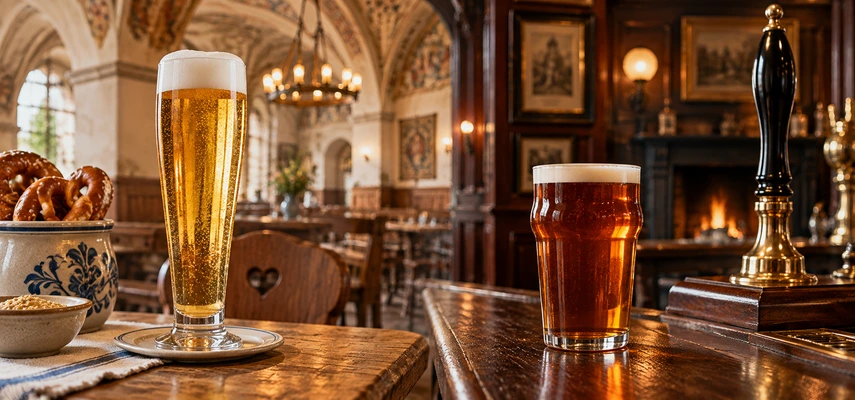

The name bitter sounds like a warning, while pilsner can sound like a synonym for any pale lager. Both impressions miss the interesting part. Pilsner and bitter show how traditional European hops can lead a beer’s balance in different ways, with very different fermentation and malt backgrounds.
These styles don’t need tropical-fruit intensity to count as hop-driven. Herbal, floral, spicy or earthy character can be just as distinctive. Bitterness also belongs in the comparison, but it should be considered alongside aroma, malt and the way the beer finishes.
Hop-driven is about emphasis
The official specification groups traditional Czech or German pilsner and bitter among hop-driven styles brewed with traditional Czech, German or British hops. This structure connects the ingredient lesson to finished beer. It is not a claim that these styles contain no malt or that every modern producer uses an identical hop bill.
Traditional hop varieties often provide the herbal, floral, spicy or earthy associations discussed earlier. The brewer’s use of them influences both aroma and bitterness. Two styles can therefore share a broad hop tradition without sharing color, yeast character, carbonation or overall texture.
Think of the category as asking what helps the beer stand apart. In helles, rounded malt may take the leading role. In a traditional pilsner, hop character and bitterness are more prominent. The ingredients overlap; the arrangement changes.
Traditional pilsner: a pale lager with a hop identity
Pilsner is a lager tradition, typically pale yellow to gold and clear, with white foam. Its aroma commonly combines pale malt with floral, spicy or herbal hops. Fermentation character is usually restrained, allowing those grain and hop contributions to remain distinct.
Flavor follows the same relationship. Bread-like or grain-like malt supports noticeable hop flavor and bitterness. Sweetness is generally restrained in the finish, although a rounded malt impression can be present. Body and texture vary between familiar Czech and German examples, rather than fitting one universal picture.
The characteristic ingredients include pale malt, traditional regional hop varieties and lager yeast. Cooler fermentation and subsequent maturation help achieve a comparatively clean profile. Pale color alone doesn’t identify this pattern; the hop emphasis separates it from some other pale lagers.
Czech examples often feel rounder
A traditional Czech pilsner-type example can be a deeper gold, with a dense white head and a rich bread-like malt contribution. Spicy or herbal hop character is important, and bitterness can be pronounced while feeling rounded rather than harsh. Hop-led doesn’t require an empty malt background.
Body is commonly medium, with a more rounded palate than a very lean German example. Sweetness may be suggested by malt richness, but the beer still needs balance and a satisfying finish. Recording “rich malt” is more informative than automatically translating the aroma into a high sugar claim.
The BJCP Czech premium pale lager reference provides a useful technical comparison. Its category name differs from the simple WSET wording, so treat it as supporting context rather than a demand to memorize a separate classification system. The beginner’s focus remains the familiar traditional Czech pilsner pattern.
The production influence to remember is the combination: pale malt richness, traditional Czech hops and lager fermentation. No single element guarantees the result on its own. An intensely fruity ale made with one Czech hop does not automatically become pilsner.
German pils often finishes drier and crisper
A German pils commonly appears straw to yellow, brilliantly clear, with white foam. Hop aroma can be conspicuously floral, spicy or herbal over a lighter grain or cracker-like malt impression. The overall balance generally feels more sharply defined by hops than the rounded malt center of helles.
Flavor typically moves toward firm bitterness and a comparatively dry, crisp finish. Body is commonly medium-light, with carbonation contributing to the brisk impression. Sweetness is low in the finished balance, although pale malt remains present. Dry doesn’t mean the beer has no flavor.
The BJCP German pils description compares it with both Czech examples and helles. The broad contrast is useful: German examples often seem leaner and crisper than Czech examples, while still varying by producer and region. These are tendencies, not a rule that every German beer is more bitter than every Czech one.
Production again combines pale malt, traditional German hop character and clean lager fermentation. Water and brewing choices can affect the perceived finish, but advanced mineral targets aren’t required here. Remember the sensory consequence before considering the specialist chemistry behind it.
Bitter: an ale with a different background
Bitter is a traditional British ale family rather than a lager. Appearance commonly ranges from gold or amber to copper, usually clear, with white to off-white foam. The exact shade depends on the example and malt choices, so the style name doesn’t identify a single color chip.
Aroma can combine bread, biscuit, light toast or caramel-like malt with floral, earthy, herbal or gently fruity hop character. Ale fermentation can contribute fruit-like notes. This gives bitter a different sensory background from the comparatively restrained fermentation profile of traditional pilsner.
Flavor commonly shows a noticeable bitter balance with supporting malt rather than roast or lactic sourness. Sweetness can be modest, with a comparatively dry finish. Body is often medium-light to medium, making a beer that can be flavorful without being especially dense or strong.
Ingredients typically include a pale malt foundation, sometimes other malts or brewing sugars, traditional British hop character and a suitable ale yeast. The BJCP best bitter reference illustrates one part of the family. Ordinary, best and stronger examples differ, but learning a long substyle hierarchy is not the priority for this course.
Service can make bitter feel different
Traditional cask service can produce a gentler carbonation impression than many packaged lagers. That doesn’t mean every bitter is flat, nor that a bottled example must reproduce cask presentation exactly. Serving format influences texture without rewriting the style’s entire ingredient identity.
This matters when comparing two descriptions. One may emphasize soft, low-carbonation cask texture; another may describe a more lively bottled version. Both still need to be evaluated through malt, hops, fermentation and balance. A difference in fizz isn’t proof that one has become pilsner.
Similarly, the word bitter in the name does not establish that it is the most bitter beer available. A modern IPA may be more assertive. Style vocabulary develops within traditions, and the useful comparison is the actual sensory profile rather than a literal competition between names.
Compare the major dimensions
| Feature | Traditional pilsner | Bitter |
|---|---|---|
| Broad fermentation | Lager | Ale |
| Usual color direction | Pale yellow to gold | Gold or amber to copper |
| Hop associations | Herbal, floral, spicy | Earthy, floral, herbal or gently fruity |
| Malt background | Grain, bread, cracker | Bread, biscuit, toast, possible caramel |
| Fermentation fruitiness | Generally restrained | May be noticeable |
| Texture | Often brisk, with Czech/German variation | Often gentler in cask service |
The table gives several independent clues. A description mentioning copper color, biscuit malt, mild fermentation fruitiness and a bitter finish points toward a different pattern from clear pale gold, herbal hops and clean lager character. Neither needs a blast of mango aroma to be hop-driven.
Use contrast to remember the styles
Compare pilsner with helles to understand hop emphasis within pale lager. Compare bitter with brown ale to understand a more bitter balance against a related ale background. Then compare both with American pale ale or IPA to hear how changing hop traditions can change the aroma vocabulary.
This is more efficient than memorizing every style as an isolated paragraph. The categories become a network of differences: lager versus ale, pale grain versus biscuit-like malt, traditional herbal character versus more conspicuous citrus or tropical fruit. The next chapter develops the modern American-hop comparison.
An optional paper exercise is to write a recommendation for someone who wants bitterness but dislikes strong tropical aromas. Offer a traditional pilsner or bitter as possibilities, then explain what further preference would choose between them. A request for crisp lager character differs from a preference for fruitier ale character and softer service texture.
For example, a request for something bitter but softly textured may lead toward a suitable cask bitter. A request for pale, brisk and clean may favor pilsner. These are conditional recommendations, not promises about every brand. Ask what the person enjoyed previously, then explain which characteristic supports the suggestion.
One-page revision summary
Traditional pilsner combines pale lager production with meaningful hop aroma and bitterness. Czech examples often show richer bread-like malt and a rounder impression; German pils often feels leaner, drier and crisper. Bitter combines a traditional British ale background with a noticeable bitter balance and possible fruity fermentation character.
Don’t confuse pale lager with every use of the pilsner label, or the word bitter with a guaranteed maximum bitterness. Use appearance, aroma, flavor, body and production together. Traditional European hops can be distinctive without being tropical, and hop-driven beer still needs its malt foundation.
Knowledge check: 10 original practice questions
Independent TFE questions, not official WSET examination items. Choose one answer per question; explanations follow separately.
1. Traditional pilsner belongs to which broad fermentation family?
- Only spontaneous sour fermentation
- Lager
- Always wheat ale
- Unfermented malt drink
2. Which hop associations fit traditional Czech or German pilsner?
- Herbal, floral and spicy
- Only cocoa and coffee
- Only lactic sourness
- Mandatory passionfruit juice
3. Compared with helles, traditional pilsner generally places more emphasis on what?
- Dark roast
- Added fruit sweetness
- Absence of carbonation
- Hops and bitterness
4. Which is a useful tendency in Czech versus German pilsner comparisons?
- All Czech examples are sweeter than all German examples
- German pils contains no malt
- Czech examples can feel rounder and more malt-rich
- Czech pilsner never uses hops
5. Bitter is traditionally which type of beer?
- A compulsory sour lager
- A British ale family
- A barley wine made without hops
- A non-fermented drink
6. Which note best fits a traditional bitter?
- Copper, biscuit malt, mild fruitiness and a bitter finish
- Black, intense roast and no hop balance
- Pale, strongly lactic and spontaneously fermented by definition
- Purple, grape-only fermentation
7. Does the name bitter prove it is more bitter than every IPA?
- Yes, the strongest word always means highest bitterness
- Yes, all IPAs are sweet
- Only bottle size determines that ranking
- No, names do not establish a universal intensity ranking
8. Why might cask bitter feel gentler than a packaged lager?
- It contains no water
- It has never fermented
- Its service can give a lower carbonation impression
- All its sugars have become hops
9. Which feature can help distinguish bitter from a clean pilsner?
- A bottle cap
- A noticeable fruity ale fermentation contribution
- The presence of any malt
- The existence of any bitterness
10. What does hop-driven mean in this chapter?
- Hops importantly shape the beer’s identity and balance
- Every beer must smell tropical
- Malt is excluded
- Every example has identical bitterness
Answers and explanations
1. B — Lager. The typical production combines lager yeast and maturation with pale malt and traditional hops. Mapping: LO2.
2. A — Herbal, floral and spicy. These traditional hop profiles differ from the strong tropical associations of some modern varieties. Mapping: LO2.
3. D — Hops and bitterness. Both may be pale lagers, but their characteristic malt-hop balance differs. Mapping: LO2.
4. C — Czech examples can feel rounder and more malt-rich. The comparison concerns broad sensory patterns; producer variation prevents absolute rankings. Mapping: LO2.
5. B — A British ale family. Ale fermentation can add fruit-like character against a bread or biscuit-like malt background. Mapping: LO2.
6. A — Copper, biscuit malt, mild fruitiness and a bitter finish. Several independent observations support the bitter pattern rather than identifying it from one word. Mapping: LO2.
7. D — No, names do not establish a universal intensity ranking. Compare actual balance and intensity; historical style names are not analytical measurements. Mapping: LO2.
8. C — Its service can give a lower carbonation impression. Presentation influences mouthfeel without making the beer a different broad fermentation family. Mapping: LO2.
9. B — A noticeable fruity ale fermentation contribution. Both use malt and hops; fermentation character can provide an additional comparative clue. Mapping: LO2.
10. A — Hops importantly shape the beer’s identity and balance. Traditional hop aroma and bitter balance can lead a beer without tropical fruit or absent malt. Mapping: LO2.












