










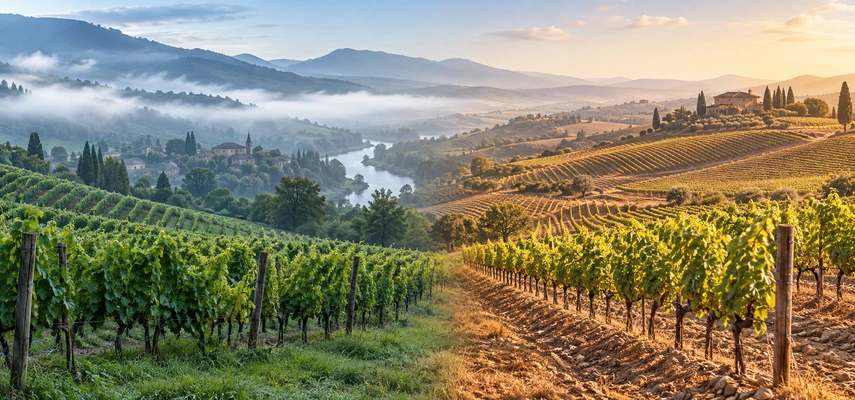

Two wines can carry the same grape name and feel like distant cousins. One tastes brisk and lemony; the other seems rounder, warmer and full of ripe fruit. The winemaker matters, but part of the explanation may have happened months before either wine reached a tank.
How climate changes wine begins with ripening. Grapes growing in cooler conditions generally retain more acidity and accumulate less sugar than comparable grapes in warmer conditions. Those differences give the winery different starting ingredients. Climate doesn’t write the entire recipe, but it helps stock the kitchen.
What WSET Level 1 expects you to know
The official Issue 1.2 specification asks candidates to recognize cool and warm growing climates and how they influence grapes. This is Learning Outcome 1, assessment criterion 3. Focus on ripeness, sugar and acidity, then connect those features to likely wine styles.
Detailed temperature classifications, latitude bands and vineyard engineering are supplementary context. There is no need to memorize a global weather atlas. This independent TFE guide is not affiliated with WSET, and its questions are original practice material.
Climate is a pattern, weather is an event
Climate describes the usual growing conditions of a place over time. Weather describes what happens on a particular day or during a particular season. A normally warm region can have an unusually cool year. A cool region can have a hot afternoon without changing its long-term identity.
That distinction prevents a common reasoning error. A photograph of brilliant sunshine doesn’t establish a warm growing climate. Sunshine and temperature are related growing influences, but they aren’t interchangeable. A clear day in a cool region can look glorious while still delivering modest warmth.
Think of climate as the usual pace of a journey and weather as the traffic encountered today. The expected journey gives a useful starting point; the actual trip still needs attention. Neither description alone tells the complete story of a particular harvest.
What changes as grapes ripen?
The basic pattern is rising sugar, declining acidity and developing fruit characteristics. The vine supplies sugars to the berries, while the fruit’s composition changes through the growing season. Warmer conditions generally encourage ripening, provided the vine has suitable conditions to function.
Acid loss is part of that process. WSET’s explanation of acidity describes how warmer ripening conditions encourage the loss of malic acid. For Level 1, learn the direction rather than the chemistry: warmer growing conditions tend to leave less acidity in the grapes.
The word generally matters. Variety, picking date and conditions at the vineyard also influence the result. Climate is a tendency to interpret, not a promise printed on every bottle from a country. A fresh wine from a warm region isn’t breaking the laws of wine.
Cool-climate grapes: freshness and a ripening challenge
Cool growing climates tend to produce grapes with lower sugar and higher acidity. Their fruit characteristics may seem less ripe than those from warmer growing conditions. In a finished white wine, that can suggest fresh apple or citrus rather than very ripe tropical fruit.
Those descriptions are comparisons, not claims that lemons or pineapples were added. Wine vocabulary borrows familiar smells to describe what the grape and winemaking process produce. Fresh-fruit character also doesn’t establish whether the wine is sweet or dry.
Insufficient warmth can prevent suitable ripening. Higher acidity isn’t automatically a badge of quality if the grapes haven’t developed appropriately. The grower’s aim is fruit suited to the intended wine, not the lowest possible temperature or the sharpest possible juice.
Cool regions can produce excellent red wines as well as white wines. Pinot Noir is a useful reminder that black grapes aren’t confined to hot places. At this level, recognize the overall ripening tendency without turning it into a rule about which colours are permitted.
Warm-climate grapes: more ripeness, different balance
Warmer growing conditions generally make it easier for grapes to reach higher sugar levels. Acidity tends to be lower, and fruit characteristics may become riper. Depending on the grape, descriptions can move toward ripe stone fruit, tropical fruit or ripe black fruit.
More heat isn’t endlessly helpful. Excessive heat and unsuitable conditions can interfere with grape growing, while excessive ripeness can reduce freshness. A vine isn’t a kettle that improves whenever someone turns up the setting.
WSET’s guide to geography and wine style connects grape ripeness with potential alcohol, acidity and fruit expression. The useful comparison is between growing situations, rather than between countries treated as single giant vineyards.
Parts of California and Australia offer familiar warm-climate examples, but both contain cooler growing areas. Germany and northern France provide familiar cool-climate reference points, while individual sites and seasons still differ. Country names help orientation; they don’t replace the climate concept.
From grape sugar to wine alcohol
Higher sugar in grapes means more potential alcohol if yeast ferments that sugar. This is why a warm-climate dry wine may feel warmer and fuller than a comparable cool-climate example. The sugar can become alcohol rather than remaining as sweetness.
Imagine two hypothetical batches of Chardonnay juice. One starts with less sugar and higher acidity; the other has more sugar and lower acidity. If both ferment dry, both can lack perceptible sweetness. Their alcohol and freshness may nevertheless differ substantially.
The conditions in that example matter. Fermentation choices affect the final result, and comparing different varieties adds another variable. The lesson is a causal connection, not a guarantee that every warm-climate wine contains more alcohol than every cool-climate wine.
Reading fruit character without confusing sweetness
A wine described as ripe peach or pineapple can be dry. Fruitiness concerns aroma and flavour; sweetness concerns sugar perceived on the palate. The distinction makes climate comparisons much clearer because ripeness often changes fruit character without leaving sugar behind.
Similarly, a wine with fresh lemon-like aromas needn’t contain more acid than every wine smelling of peach. Aromas offer clues, while acidity is a separate feature to assess. A useful beginner description keeps fruit, sweetness, acidity and alcohol in separate mental boxes.
Consider two invented tasting notes. “Dry, high acidity, fresh apple, light body” suggests a different experience from “dry, softer acidity, ripe peach, fuller body.” Both are internally plausible. Neither identifies a vineyard conclusively, and both are more informative than simply calling one wine fruity.
Why local growing conditions matter
A vineyard at higher altitude or near a cooling ocean can be cooler than the surrounding regional reputation suggests. This is helpful context for understanding exceptions, not an extra list of Level 1 geography facts to memorize.
Harvest timing provides another influence. Picking earlier generally retains more acidity and less sugar than leaving comparable fruit longer. The producer therefore works within the growing conditions rather than receiving an entirely predetermined finished wine.
Winemaking also matters. Oak, blending and other choices can affect the experience of a wine after the grapes are picked. Climate comparisons work best when the question asks about tendencies in grapes, or when the examples keep other important variables reasonably similar.
Common misconceptions and exam traps
Warm climate doesn’t mean sweet wine. Follow the missing step: more grape sugar can ferment into more alcohol. Cool climate doesn’t mean sparkling wine either; producers make several wine types in cooler regions.
Avoid replacing “tends to” with “always.” Don’t confuse acidity with tannin, or hot service temperature with warm growing conditions. A wine chilled in an ice bucket doesn’t become a cool-climate wine. Temperature in the vineyard and temperature at the table are separate topics.
For a question about the basic comparison, state the relationship directly: cooler conditions generally mean less sugar and more acidity; warmer conditions generally mean more sugar and less acidity. Then apply the relationship to the particular example rather than inventing exceptions the question hasn’t introduced.
Apply the climate clue carefully
Suppose a question compares two dry wines made from the same variety, with one described as having riper fruit and greater alcoholic warmth. Warmer growing conditions could help explain that description. The reasoning needs both steps: riper grapes can contain more sugar, and fermented sugar can contribute more alcohol.
Now suppose the question says only that one wine is more expensive. That provides no reliable climate answer. Cost can involve many things beyond ripeness, so the original causal chain cannot be replaced with a price shortcut.
This distinction is useful outside study. A wine list mentioning ripe fruit, fresh acidity and moderate alcohol is communicating features to evaluate together. The most useful response is a connected explanation, rather than forcing every bottle into a national stereotype.
Knowledge check: 10 original questions
1. Compared with similar grapes in warmer conditions, cool-climate grapes generally retain what?
- More acidity
- More added alcohol
- Less natural acidity
- No water
2. What does higher grape sugar provide if fermentation consumes it?
- Lower potential alcohol
- More potential alcohol
- Guaranteed sweet wine
- Guaranteed sparkling wine
3. Which description concerns climate rather than one weather event?
- Yesterday’s hailstorm
- A single hot lunchtime
- The usual growing conditions of a region
- A shower this afternoon
4. Which typical grape combination fits warmer growing conditions?
- Lower sugar and higher acidity
- No sugar and no acid
- Alcohol already present before fermentation
- Higher sugar and lower acidity
5. A dry wine smells of ripe peach. What can be concluded about sweetness?
- Fruit aroma alone does not establish sweetness
- It must be sweet
- It must be fortified
- It cannot be dry
6. What can happen if a growing season is too cold?
- Fermentation occurs on every vine
- Grapes may fail to ripen suitably
- Every grape becomes sweeter
- All wine becomes red
7. Which statement about heat is most accurate?
- Heat guarantees low alcohol
- Only white grapes need warmth
- Excessive heat is not automatically beneficial
- More heat always improves quality
8. What might explain freshness in a vineyard within a warmer region?
- A heavier bottle
- A darker label
- Serving its grapes on ice
- A local cooling influence
9. A wine is served cold. What does that establish about its growing climate?
- Nothing by itself
- It grew in a cool climate
- It grew in Germany
- It contains no alcohol
10. Which comparison best controls the basic climate lesson?
- Two wines judged only by price
- The same variety under cooler versus warmer conditions
- Different bottle sizes on one shelf
- A red bottle beside a water glass
Answers and explanations
1. A — More acidity. Cool growing conditions generally preserve more acidity during ripening.
2. B — More potential alcohol. Fermentation can convert grape sugar into alcohol, rather than leaving it as sweetness.
3. C — The usual growing conditions of a region. Climate concerns the longer-term pattern; weather describes individual conditions or events.
4. D — Higher sugar and lower acidity. Greater ripeness generally increases sugar while acidity tends to decline.
5. A — Fruit aroma alone does not establish sweetness. Fruitiness describes aroma/flavour; sweetness concerns the finished wine’s sugar impression.
6. B — Grapes may fail to ripen suitably. Insufficient warmth can make suitable grape ripening difficult.
7. C — Excessive heat is not automatically beneficial. Vines need suitable growing conditions; excessive heat is not an unlimited benefit.
8. D — A local cooling influence. Altitude or ocean influence can cool a site relative to the surrounding region.
9. A — Nothing by itself. Service temperature and growing climate describe separate stages of a wine’s life.
10. B — The same variety under cooler versus warmer conditions. Holding the variety comparable makes the climate/ripeness tendency easier to understand.
One-page revision summary
| Growing conditions | Typical grape tendency | Possible finished-wine consequence |
|---|---|---|
| Cooler | Less sugar, more acidity, less-ripe fruit character | Lower potential alcohol and fresher style |
| Warmer | More sugar, less acidity, riper fruit character | Higher potential alcohol and a riper style |
| Too cold or excessively hot | Suitable development can be difficult | More heat or more cold is not automatically better |
Remember the chain: growing conditions influence ripening; ripening influences sugar, acidity and fruit character; fermentation helps turn those ingredients into wine. Climate gives a direction, not a verdict on quality.












