










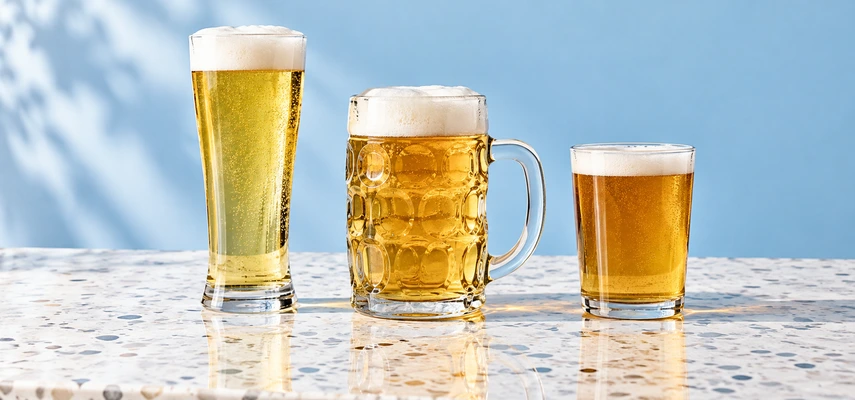

Put three pale golden beers beside one another and color may offer very little help. The differences could sit in a bread-like aroma, a softer malt impression or the way bitterness finishes. Pale lagers and blonde ales are a useful lesson in looking beyond the shade of the liquid.
The styles here are American or international pale lager, Munich helles and blonde ale. The Level 1 framework places them among malt-driven styles brewed with base malts. That doesn’t mean they are syrupy or hop-free. It means that gentle grain and malt character provide an important part of their identity.
A shared foundation, not identical beers
Pale base malts help make a light-colored foundation without the deep roast associated with some dark beers. Yeast and fermentation management then influence how prominently fruit-like or spicy aromas appear. Hops provide balance even when their aroma is not the central attraction.
The official specification supplies the style grouping for this course. Supplementary style references describe broader real-world variation. Their detailed numerical limits are not extra Level 1 memorization requirements, and a competition category should not be mistaken for the complete syllabus.
For this comparison, hold three questions in mind. How much malt character is evident? How assertive is the bitterness? How noticeable is fermentation-derived fruitiness? These questions separate the styles more usefully than deciding which looks the palest under one particular light.
American or international pale lager: restrained and refreshing
Appearance is generally pale yellow to gold and clear, with white foam. Aroma is usually restrained, perhaps showing gentle cereal, grain or bread-like malt. Hop aroma is low rather than extravagantly fruity, and fermentation character is typically comparatively clean. Quiet character is part of the intention, not proof that nothing has happened in production.
Flavor commonly follows that restrained pattern. Sweetness is low to modest in impression, while bitterness ranges with the example but avoids the assertive hop emphasis expected from a traditional pilsner or American IPA. Body is often light to medium-light, with noticeable carbonation contributing a brisk feel.
Characteristic ingredients include pale malt, with some recipes using other grains or sugar sources to shape a lighter profile. Lager yeast and cooler fermentation practice help keep the fermentation aroma comparatively subdued. Ingredient choices and production work together; a rice or maize addition alone doesn’t identify the final flavor of every example.
American lager and international pale lager are related broad teaching references rather than perfectly identical recipes. The BJCP international pale lager description helps illustrate the clean, approachable balance. Some international examples show more malt or bitterness than a very restrained American example, so use comparative tendencies rather than one rigid picture.
The distinguishing point is the modest overall intensity. It can be useful for introducing someone to basic grain character and carbonation. It is less useful to dismiss it as flavorless, because that stops observation precisely where subtle differences begin.
Munich helles: pale beer with a bread-like center
Munich helles is also a pale lager, commonly clear and yellow to gold with a white head. Its appearance can resemble the preceding group closely. The useful difference is often a more expressive, rounded bread-like malt aroma and flavor, presented without a deep roast or caramel-heavy profile.
Hop aroma can provide a delicate floral, herbal or spicy background. Bitterness supplies enough balance to keep the beer drinkable, but the overall emphasis favors malt rather than a sharply hop-led finish. Helles therefore illustrates why a beer can taste distinctly malty while remaining pale.
Body is generally medium rather than thick or chewy, and sweetness is restrained or softly suggested by malt character. A rounded malt impression is not necessarily a large amount of residual sugar. Carbonation and a clean fermentation profile help the beer feel composed rather than heavy.
Pale base malt is central to the ingredients, with suitable traditional hop character and lager fermentation supporting the profile. The BJCP helles reference emphasizes this malt-led balance. The production goal is to present those ingredients clearly, not to create the banana or clove signature associated with some yeast-driven wheat beers.
The most useful comparison is with traditional pilsner. Both can be pale lagers, yet pilsner places more emphasis on hops and bitterness. When deciding between them, color may say little; the malt-versus-hop balance says much more. Helles also differs from Munich dunkel, whose darker malt character belongs in the next chapter.
Blonde ale: approachable malt with room for variation
Blonde ale commonly appears clear and light yellow to gold, with white foam. Aroma can show gentle grain, bread or biscuit-like malt, alongside low or moderate hop character. Some examples have a little fermentation fruitiness, while others are very clean. It is not intended to require an aggressive yeast signature.
Flavor is usually soft and approachable. Bitterness is present but typically lower than in American pale ale, with the balance around malt-led to fairly even. Sweetness can seem modest or softly malty rather than dessert-like. Body is commonly medium-light to medium, with enough carbonation for a refreshing rather than weighty impression.
The ingredients generally center on pale malt, sometimes with other grain or sugar choices. Hop varieties can vary, and production typically seeks a clean or lightly fruity fermentation character. The BJCP blonde ale reference allows a broader range of ingredients and fermentation approaches than a simple beginner shorthand might suggest.
For the Level 1 comparison, remember it as the approachable pale ale in this malt-driven group. Avoid turning that into an absolute statement that every commercial blonde ale uses exactly one yeast or grain bill. Style names describe recognizable patterns, while producers can make individual choices within or around them.
Compared with helles, blonde ale offers the possibility of more lightly fruity fermentation character or a different hop accent. Compared with American pale ale, it generally reduces hop assertiveness. The distinction is a matter of balance, not a claim that blonde ale has no hops at all.
Compare the patterns together
| Style | Useful malt impression | Hop emphasis | Fermentation impression |
|---|---|---|---|
| American or international pale lager | Gentle cereal or grain | Restrained to moderate by example | Typically clean |
| Munich helles | More rounded bread-like malt | Supportive rather than leading | Clean lager character |
| Blonde ale | Soft grain, bread or biscuit | Gentle to moderate | Clean or lightly fruity |
Read the table as a set of directions rather than a blind-identification machine. A single bottle might overlap with a neighboring style. What matters is whether a collection of observations fits the overall pattern, not whether one aroma word produces an instant verdict.
This approach also makes recommendations clearer. Someone seeking a pale beer with a bread-like center may enjoy helles. Someone wanting a restrained, brisk profile may prefer a pale lager. Someone open to an approachable ale with a mild hop or fruit accent may find blonde ale a useful starting point. Preferences still decide the final choice.
What the category doesn’t tell us
Malt-driven doesn’t mean high sweetness, and pale doesn’t mean low alcohol. Nor does ale automatically mean highly fruity or lager automatically mean characterless. Those shortcuts confuse broad families with individual sensory dimensions. Describe sweetness, bitterness, body and fermentation character separately before joining them into a conclusion.
The base-malt grouping is likewise an educational simplification, not a demand to audit every brand against one inflexible recipe. Real blonde ale descriptions may allow a small character-malt contribution or other variations. Keep the prescribed central profile clear without pretending the wider beer world has signed a single recipe agreement.
In an examination question, use the characteristic combination actually supplied. A pale clear lager with a rounded bready emphasis and supportive bitterness points in a different direction from a pale lager described as conspicuously hop-driven. The two can share a color while telling different sensory stories.
An optional side-by-side exercise
If you choose to taste, compare small samples of helles and a restrained pale lager under similar conditions. Follow local age rules. This is optional education rather than a separate examination task; comparing current producer descriptions is a useful alcohol-free alternative.
Write only three observations for each: malt character, bitterness and fermentation character. Then add body and carbonation separately. Resist deciding which is better until the descriptions are complete. Disliking a feature doesn’t make it absent, and liking a beer doesn’t make its style easier to identify.
For a paper exercise, imagine a sample described as clear gold, bread-like, gently bitter and clean. List two styles it could resemble, then identify what additional information would improve the comparison. Learning where evidence is insufficient is as valuable as learning the headline characteristics.
One-page revision summary
The shared foundation is pale color and an important malt contribution, not deep roast or extreme sweetness. American or international pale lager generally emphasizes restraint, clean fermentation and a brisk impression. Munich helles gives rounded bread-like malt more space. Blonde ale provides an approachable pale profile with clean or lightly fruity fermentation and variable gentle hop accents.
Learn the contrasts rather than three isolated definitions. Helles is usually less hop-led than traditional pilsner; blonde ale is generally less assertively hoppy than American pale ale. All three still depend on malt, water, hops, yeast and production choices. Their resemblance is the beginning of the comparison, not the end.
Knowledge check: 10 original practice questions
Independent TFE questions, not official WSET examination items. Choose one answer per question; explanations follow separately.
1. Which style commonly emphasizes rounded bread-like malt within a pale lager?
- Geuze
- Munich helles
- American IPA
- Berliner weisse
2. What does malt-driven mean here?
- Malt contributes importantly to the balance
- The beer must be very sweet
- No hops are used
- The beer must be dark
3. Which appearance is typical across this group?
- Always opaque black
- Always red from fruit
- Always sediment-free because all beers are filtered
- Pale yellow to gold, commonly clear
4. Compared with traditional pilsner, helles generally gives more emphasis to what?
- Lactic acidity
- Dark roast
- Malt rather than assertive hop bitterness
- Intense clove-like yeast character
5. Which is a reasonable blonde ale profile?
- Strong sourness as its defining feature
- Soft malt, moderate or lower bitterness, clean or lightly fruity character
- Mandatory intense roast
- No carbonation permitted
6. Which feature is often comparatively restrained in pale lager?
- Fermentation-derived fruitiness
- The presence of water
- All dissolved gas
- Every grain-derived flavor
7. Can a pale beer taste malty?
- No, malt character requires black color
- Only if caramel syrup is added
- Only if it contains no yeast
- Yes, pale malt can contribute grain and bread-like character
8. What does pale color alone establish?
- Low alcohol in every case
- High sweetness in every case
- Appearance, not a complete measure of strength or sweetness
- The exact yeast strain
9. Compared with American pale ale, blonde ale is generally what?
- More strongly sour by definition
- Less assertively hop-driven
- Always darker and stronger
- Made without any malt
10. What is the best use of a style comparison table?
- A guide to characteristic combinations
- A guarantee that every bottle is identical
- A replacement for observing the sample
- Proof of a specific producer recipe
Answers and explanations
1. B — Munich helles. Helles combines pale color and clean lager fermentation with a comparatively rounded bread-like malt center. Mapping: LO2.
2. A — Malt contributes importantly to the balance. The category concerns sensory emphasis, not an absence of hops or a compulsory sugar level. Mapping: LO2.
3. D — Pale yellow to gold, commonly clear. Pale appearance is shared, but it does not identify the balance or production details on its own. Mapping: LO2.
4. C — Malt rather than assertive hop bitterness. The useful comparison separates two pale lagers through malt and hop balance rather than color. Mapping: LO2.
5. B — Soft malt, moderate or lower bitterness, clean or lightly fruity character. Blonde ale is approachable and pale, with some real-world variation in mild hop and fermentation accents. Mapping: LO2.
6. A — Fermentation-derived fruitiness. Clean fermentation lets malt and hops show without a prominent fruit-like yeast signature. Mapping: LO2.
7. D — Yes, pale malt can contribute grain and bread-like character. Malt character covers gentle pale grain flavors as well as darker roasted associations. Mapping: LO2.
8. C — Appearance, not a complete measure of strength or sweetness. Several ingredients and process choices influence strength and sweetness independently of color. Mapping: LO2.
9. B — Less assertively hop-driven. The usual distinction is hop emphasis, not a universal rule about strength, darkness or absent ingredients. Mapping: LO2.
10. A — A guide to characteristic combinations. Styles overlap and producers vary, so combine observations instead of identifying a beer from a single clue. Mapping: LO2.











