










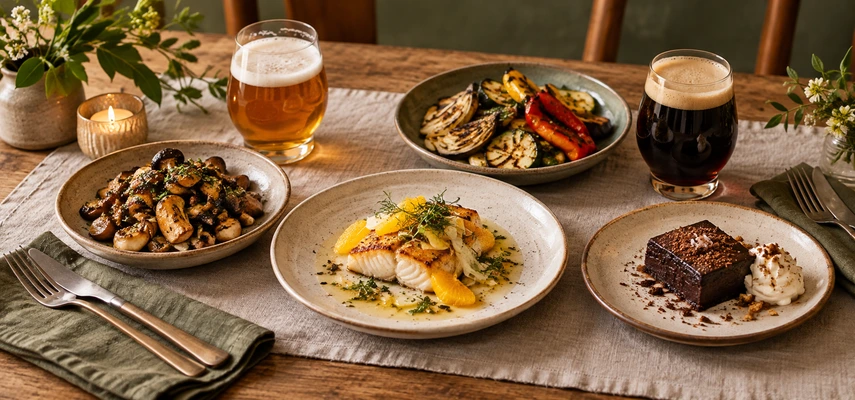

The same beer can seem different before and after a bite of food. It hasn’t changed its recipe at the table; the sensory context has changed. Food and beer pairing becomes more useful when it explains those interactions instead of announcing a supposedly perfect match for every dish.
Begin with the person, then the food and beer. Preferences and sensitivities influence enjoyment, while sweetness, umami, acidity, salt, bitterness and chili heat can alter the experience. Flavor intensity and aroma connections help turn those effects into practical choices.
Preferences come before a pairing rule
Some people enjoy firm bitterness; others find it unpleasant at much lower levels. The same is true of sweetness, sourness, heat and certain aromas. A pairing that creates an exciting contrast for one person may produce exactly the sensation another person wanted to avoid.
The WSET pairing introduction places personal preference alongside intensity and sensory interactions. This is a better starting point than telling someone their dislike is evidence of an untrained palate. Technical understanding should improve the recommendation, not overrule the person who will drink it.
Ask about previous preferences, desired alcohol level and relevant dietary requirements. Ingredient suitability needs verified product information rather than inference from style or aroma. A citrus-like hop note doesn’t establish added citrus, and a creamy impression doesn’t establish the presence or absence of dairy ingredients.
Intensity is more useful than color
Match the broad impact of the food and beer so one does not erase the other. Intensity includes more than alcohol: aroma, roast, sweetness, bitterness, acidity, body and carbonation can all contribute. A pale but forceful IPA can overwhelm food more readily than its color suggests.
Food intensity depends on preparation and sauce as well as the main ingredient. Poached vegetables and deeply browned vegetables need not call for the same partner. A delicate fish with a mild dressing differs from the same fish beneath a strong chili sauce.
The Brewers Association beer-and-food course treats pairing as a combination of sensory features. Use the whole plate rather than just the word chicken, cheese or chocolate. The sauce may be doing more of the sensory work than the item named first on the menu.
Sweetness can change the comparison
Sweet food can make a less-sweet drink seem comparatively drier or less fruity, potentially emphasizing bitterness or other sharp edges. This is one reason a highly sweet dessert can leave a dry beer feeling unexpectedly severe. The beer’s composition hasn’t changed; its position in the comparison has.
A beer with sufficient sweetness or rich complementary character may work more comfortably with that dessert, depending on the person and dish. Don’t convert this into a requirement for maximum sugar. The practical question is whether the pairing leaves the beer pleasant rather than stripped of its appealing balance.
Imagine chocolate cake with two different beers. A dry, firmly bitter example may create a striking contrast that some people enjoy, while a richer malt-led example may feel more harmonious. Describe the likely effect and ask about preference instead of declaring one arrangement universally correct.
Umami can make an assertive beer feel harsher
Umami is the savory taste associated with foods such as mushrooms, aged cheeses and some rich stocks. In a pairing, savory intensity can bring challenging features of a drink forward, including bitterness in some contexts. The complete food matrix matters, particularly accompanying salt, fat and sauce.
Therefore a mushroom dish is not automatically a safe match for the strongest IPA. A heavily browned mushroom preparation also offers roast-like aromas and richness, so a different beer may connect through malt or fermentation while avoiding an unwanted bitter edge.
Use conditional language because the effect depends on the actual samples and taster. Predicting a possible clash gives a reason to test a pairing; it is not a claim that all umami foods and bitter beers are incompatible. This is where observation improves a general guideline.
Acidity can brighten or rebalance
Acidity in food changes the context for the beer’s own balance. A sharp dressing may make a low-acidity beer feel softer or less lively by comparison. An acidic beer can provide a complementary or contrasting briskness with rich food, depending on the other features present.
Sourness is distinct from hop bitterness. Choosing Berliner weisse for a tart interaction and choosing American IPA for bitter contrast are different decisions, even if both feel refreshing in some settings. Explain which feature is doing the work.
For example, a rich dish with a citrus dressing already contains an acidic element. Taste or describe that element before adding another strong sour component. The objective is a pleasing whole, not a rule that every rich food must be paired with the most acidic beer available.
Salt can soften some bitter impressions
Salt can influence how sweetness and bitterness are perceived. In some combinations it makes sweetness more noticeable and can make a bitter edge seem less severe. This helps explain why the same beer may behave differently with a salted snack than on its own.
However, salt is one part of a dish, not an eraser for every possible clash. A salty food can also be intensely savory, fatty, sour or aromatic. Those dimensions remain active. A pairing should consider their combined effect rather than choosing only the most convenient interaction.
An alcohol-free reasoning exercise is to compare written descriptions of a plain and a salted preparation of the same food. Identify which beer feature might become more comfortable and which other food elements still need attention. The exercise encourages a prediction rather than an unsupported promise.
Bitterness can contrast with richness, or become the problem
Beer bitterness can provide a useful counterpoint to rich food and an interesting connection with bitter vegetables. But more bitterness isn’t automatically a stronger pairing. It may clash with some flavors or become unpleasant when combined with an individual’s sensitivity.
The Cicerone pairing guidance discusses both complementary interactions and possible clashes, including harsh or metallic effects with some foods. Those are reasons to evaluate a particular combination carefully, not to ban entire categories of food.
For a grilled vegetable dish, assess char, sweetness, oil, salt and sauce. A citrus-forward beer may connect through fresh aroma, while a maltier beer may connect with browning. The preferred bitterness level depends on the resulting balance rather than a simple rule that grilled means IPA.
Chili heat is a sensation to manage
Chili heat is not one of the basic tastes. It is a pungent heat sensation, and alcohol, carbonation or bitterness can make a spicy pairing feel more intense in some circumstances. A cold beer isn’t automatically a neutral extinguisher simply because it feels refreshing initially.
Some sweetness can soften the perceived heat, but the actual beer and person’s tolerance matter. The WSET discussion of drinks and spice emphasizes balancing heat rather than applying a single drink to every spicy dish. Someone who loves amplified heat may choose differently from someone trying to reduce it.
Ask whether the goal is to intensify or soften the experience. A lower-alcohol, gentler-bitter beer may offer a different route from a strong, sharply bitter IPA. Don’t prescribe a supposedly universal cooling effect without considering the features that can amplify the sensation.
Aroma can create a memorable bridge
Similar aroma associations can connect food and beer: bread-like malt with browned pastry, roasted beer character with chocolate, or citrus-like hops with citrus-accented food. These are sensory bridges, not evidence that the ingredients are identical.
Fermentation fruit and spice can create connections too. A peppery saison might meet a herb-and-spice preparation through a different route from a hop-led pale ale. The official specification includes aromas among the pairing considerations, so explain the association rather than simply matching two names.
Contrast can be equally useful. A lively, dry beer may offer a different texture alongside rich food. Carbonation doesn’t chemically remove all fat; describing a refreshing contrast is more accurate than claiming the beer cleans the food away through a literal washing reaction.
Practical application: reason through the whole plate
Consider a hypothetical roast-mushroom dish with a salty sauce. Start with intensity, then savory taste, browning and salt. A beer with a bread-like or toasted malt connection might work; a strongly bitter option needs attention to possible harshness. The sauce could change the conclusion.
Now consider a citrus-dressed dish with chili. Aroma may suggest a citrus-hop connection, but heat tolerance and bitterness become equally important. A shared orange-like note doesn’t override a pairing that becomes too hot or bitter for the person eating it.
Record what happened or what you predict, and why. If a pairing fails, adjust one feature at a time: sweetness, bitter intensity, alcohol or overall weight. This creates reusable knowledge rather than another list of supposedly infallible matches.
One-page revision summary
Begin with preferences and sensitivities, match broad intensity, then examine the primary interactions. Sweetness and umami can change the balance of a beer; acidity and salt can rebalance a combination; bitterness and chili heat need careful attention. Aroma resemblance and texture provide additional routes to harmony or contrast.
For examination preparation, connect each recommendation with a reason. The goal is not to memorize that one beer always belongs with one dish. It is to explain what the food may change, what the person enjoys, and which features make the proposed pairing plausible.
Knowledge check: 10 original practice questions
Independent TFE questions, not official WSET examination items. Choose one answer per question; explanations follow separately.
1. What should come first when recommending a pairing?
- A rule that personal taste is irrelevant
- The person’s preferences and relevant requirements
- The darkest beer available
- The largest serving glass
2. What does matching intensity consider?
- The overall impact of both beer and complete dish
- Only matching color
- Only matching alcohol percentage
- Only the food’s main ingredient name
3. How can sweet food affect a comparatively dry beer?
- It always adds sugar to the beer
- It always removes bitterness completely
- It changes the beer’s actual ABV
- It may make the beer seem drier or emphasize sharpness
4. What is umami?
- The amount of carbonation
- The color of roasted malt
- A savory taste
- A synonym for chili heat
5. Which statement about salt is reasonable?
- It solves every possible pairing clash
- It can soften some bitter impressions and affect sweetness perception
- It is identical to acidity
- It removes all alcohol
6. Why might a strong bitter beer be challenging with chili?
- Alcohol or bitterness can amplify the heat impression
- Cold beer always neutralizes all heat
- Chili has no interaction with drinks
- Only color affects spice
7. Which is an aroma bridge?
- A claim that every stout contains chocolate
- Matching only bottle size
- Assuming a beer’s strength from its color
- Roasted beer associations alongside chocolate
8. What can make the same main ingredient need a different pairing?
- Only the spelling of the menu item
- Only the glass logo
- A different sauce or cooking method
- Nothing can change the pairing
9. What is the best explanation of carbonation with rich food?
- It chemically removes all fat
- It can provide a refreshing sensory contrast
- It guarantees compatibility with every dish
- It makes alcohol disappear
10. What should follow an unsuccessful pairing trial?
- Identify the likely interaction and adjust a relevant feature
- Declare the taster wrong
- Repeat a universal rule without observation
- Assume all beer and food are incompatible
Answers and explanations
1. B — The person’s preferences and relevant requirements. Pairing knowledge supports the individual rather than overriding preferences, sensitivities or verified suitability needs. Mapping: LO3.
2. A — The overall impact of both beer and complete dish. Sauces, preparation, aroma, body and taste all contribute to the impact of the pairing. Mapping: LO3.
3. D — It may make the beer seem drier or emphasize sharpness. The interaction changes sensory context rather than physically rewriting the drink’s composition. Mapping: LO3.
4. C — A savory taste. Savory foods can interact with beer balance; salt, fat and other dish components also influence the result. Mapping: LO3.
5. B — It can soften some bitter impressions and affect sweetness perception. Salt can modify perception, but the full food matrix and personal sensitivity still matter. Mapping: LO3.
6. A — Alcohol or bitterness can amplify the heat impression. The goal and heat tolerance matter; a refreshing initial sensation does not guarantee a gentler pairing overall. Mapping: LO3.
7. D — Roasted beer associations alongside chocolate. Similar sensory associations can connect food and beer without proving shared ingredients. Mapping: LO3.
8. C — A different sauce or cooking method. Preparation, seasoning and sauce can change intensity, acidity, sweetness and heat substantially. Mapping: LO3.
9. B — It can provide a refreshing sensory contrast. Describe the perceived interaction rather than inventing a literal cleansing or chemical removal mechanism. Mapping: LO3.
10. A — Identify the likely interaction and adjust a relevant feature. Adjusting one factor such as bitterness or sweetness builds understanding that transfers to later choices. Mapping: LO3.












