










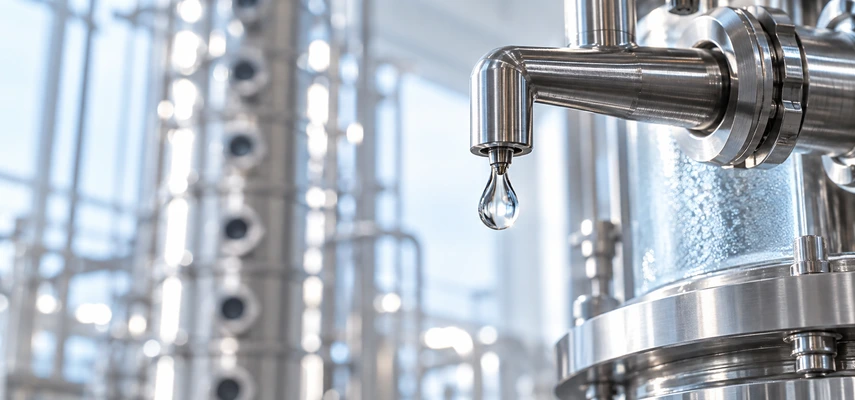

If vodka is associated with neutrality, why do labels spend so much time talking about grain, potato and the number of distillations? The question exposes a useful distinction. A raw material can matter to production even when the producer works hard to reduce its most obvious aromatic fingerprints.
Here is vodka explained as a sequence of choices rather than a claim that every clear spirit tastes the same. Fermentation creates alcohol from a suitable starting material. High-strength distillation produces a relatively light base. Later preparation brings it towards the intended bottled style. The restraint is deliberate, but restraint and total sensory identity aren’t the same thing.
Potato is an example, not the definition
Grains and potato are traditional vodka raw materials. They aren’t the only possible starting points. The Level 1 syllabus describes vodka as capable of using any suitable raw material, with grains and potato as the familiar examples. Applicable market rules still govern the production and labelling of the finished drink.
That means a potato image on one bottle cannot define the entire category. Grain-based vodka is not an exception to a potato-only rule. Nor should a student assume that an unfamiliar agricultural starting point makes a spirit automatically ineligible. First identify the applicable definition, then examine how the material is fermented and distilled.
The word “suitable” does useful work. A raw material must support a legitimate alcoholic production route and meet the rules that apply. The syllabus is not suggesting that a producer can distil arbitrary objects into beverage alcohol. Its point is that vodka isn’t limited to one agricultural ingredient in the way some other categories are.
Different ingredients, the same need for sugar
Grain and potato contain starch that must be made available as fermentable sugars. Processing and conversion therefore come before yeast can make the alcoholic base. Enzyme activity helps break down starch; fermentation yeast then uses the resulting sugars. Confusing those roles makes vodka sound as though it comes directly from boiling a potato.
Other agricultural materials can offer sugars in different forms. The practical preparation changes with the starting material, but the requirement for an alcoholic feed remains. Fermentation produces ethanol before distillation begins. A still concentrates that ethanol rather than creating it from an unfermented ingredient or a vessel of water.
Raw material can also influence the composition of the fermented liquid. It supplies more than an abstract quantity of potential alcohol. Nutrients and other compounds form part of the fermentation environment. What remains noticeable after high-strength distillation is a separate question from whether the starting material had any role at all.
A useful comparison is a photograph whose contrast has been deliberately reduced. The original scene mattered, but the treatment changes which details remain prominent. The analogy isn’t chemistry, of course. It simply helps distinguish the existence of an ingredient influence from a guarantee that a drinker can identify that ingredient by smell.
High-strength distillation is the central decision
The official WSET specification places vodka at 95% or 96% ABV distillation in its introductory framework. These figures concern the highly concentrated spirit or alcohol base, not the strength normally shown on a retail bottle. Later dilution is essential to understanding the difference.
Repeated separation concentrates ethanol while reducing many aroma contributions from the fermented base. Column distillation can provide that high-strength output efficiently. Rising vapour and descending liquid interact through separation stages, allowing the producer to pursue a light or relatively neutral result. The mechanism matters more than simply remembering that the equipment is tall.
High strength does not mean all water disappears or that every other compound becomes absent. “Neutral” describes the restrained style in this context. It isn’t an assertion that the liquid consists of chemically pure ethanol, nor that every sensory difference between products has been erased.
The current US neutral-spirits standard uses a minimum distillation strength of 95% ABV. The WSET syllabus also identifies 96% in its production framework. Neither figure is a claim that a retail vodka bottle should display that alcoholic strength.
For an introductory examination, remember the high-strength association and its aroma consequence. For a legal labelling question, read the definition applying to the market and product. Mixing the two tasks can turn a helpful syllabus simplification into an overconfident statement about every bottle sold anywhere.
Why relatively neutral does not mean identical
A drinker may describe subtle differences in aroma, texture or finish among vodkas. Those impressions are compatible with a generally restrained category. “Light” is a comparison, especially beside a strongly aromatic spirit. It doesn’t require every sample to be indistinguishable under every condition.
Equally, a sensory claim shouldn’t outrun the evidence. A person noticing a soft texture cannot reliably infer an exact ingredient, the number of distillations or a particular filtration treatment from that impression alone. Description and production identification are different exercises. It is perfectly useful to describe what is perceived without pretending to reverse-engineer the entire process.
The practical revision habit is to qualify tendencies. Vodka is associated with a light or neutral aroma profile. A particular sample might show subtle grain-like or other impressions, but those aren’t guaranteed signatures of every product using the same ingredient. Avoid turning one tasting note into a compulsory category characteristic.
This also prevents a misleading quality hierarchy. A pronounced spirit isn’t automatically better because it supplies more obvious aromas. A restrained vodka may be exactly what a producer intended and what a particular drink requires. The appropriate question is whether the product achieves its intended style, not whether it wins a competition for the loudest smell.
Filtration is a method, not a magic word
Some vodka production includes filtration or other permitted treatment. Activated carbon is a familiar example in industry descriptions and US labelling provisions. Such treatment can help shape the resulting spirit. It should not be presented as one identical compulsory recipe applied to every vodka worldwide.
A label’s filtration language may describe a real process without supplying a complete sensory prediction. The material used, the conditions and the spirit being treated all matter. A large number printed beside “filtered” doesn’t by itself establish better balance, greater neutrality or a universally smoother texture.
The same caution applies to a distillation count. One producer’s way of counting passes may not provide a meaningful comparison with another producer’s continuous rectification system. For Level 1, learn what high-strength distillation does. That causal explanation is more useful than treating a marketing number as a universal measure of quality.
Water connects the base to the bottle
A high-strength base is reduced with water to reach the intended finished alcoholic strength. The production figure and the bottling figure therefore answer different questions. Seeing 40% ABV on a hypothetical bottle does not mean its base was distilled at only 40%, or that its earlier concentration failed.
Water changes the proportion of ethanol and the concentration of other compounds. It can also affect perception of aroma and texture. Producers manage dilution as part of the finished style, while following applicable composition requirements. “Only water was added” can still describe a consequential production decision.
For simple reasoning, imagine a high-strength base before and after dilution. The amount of liquid has increased relative to the ethanol it contains, so ABV falls. There is no need for a new fermentation or a barrel to produce that change. It is a later adjustment, separate from the still’s concentration stage.
Unaged is part of the introductory picture
The syllabus presents vodka as unaged. It doesn’t rely on years in oak to acquire the amber colour and wood aromas familiar from whisky or Cognac. This makes vodka a useful contrast when learning which characteristics arise from maturation and which can arise earlier.
Do not confuse unaged with unfinished or inferior. Fermentation, high-strength distillation, suitable treatment and dilution can be deliberate work towards a complete product. Oak maturation is a requirement for some categories and a different stylistic decision elsewhere; it isn’t a compulsory final chapter for every spirit.
Market-specific terminology can become more detailed than this beginner framework. The current US standard, for example, tightly restricts wood storage for vodka. If an unusual product claims an oak-related treatment, its category and label need checking. A novelty bottle shouldn’t silently replace the core examination model.
Vodka, flavoured vodka and gin
Plain vodka’s restrained base differs from a product deliberately flavoured with another ingredient. Flavoured vodka belongs in the later flavoured-spirit lesson. Gin also uses flavouring, with juniper required to predominate. A neutral starting base doesn’t make the resulting botanical drink plain vodka simply because the base once resembled it.
This is another reason to follow the whole chain. Two producers might begin with similar high-strength alcohol and take different routes afterwards. One prepares a relatively neutral vodka; another builds a juniper-led gin. What happens after the base is made is part of the category story, not an optional footnote.
Compare vodka’s restrained foundation with distillation strength and gin’s botanical construction.
What to remember
Attach five ideas to vodka: a range of suitable raw materials, traditional grains and potato, fermentation before distillation, a high-strength light or neutral base, and the unaged introductory style. Then distinguish distillation strength from bottling strength and a restrained profile from an assertion that every vodka is identical.
When evaluating a label claim, ask which operation it actually describes. An ingredient statement, a filtration claim and a bottling ABV each tell you something different. Together they may illuminate production, but none substitutes for the full sequence or proves quality on its own.
Knowledge check: 12 original practice questions
Independent TFE questions, not official WSET examination items. Choose one answer per question; explanations follow separately.
1. Which statement about vodka raw materials is correct?
- Only potato can be used
- Grains and potato are traditional examples among suitable materials
- Only malted barley can be used
- Only blue agave can be used
2. Which statement about neutrality is most accurate?
- A restrained profile does not require every vodka to be sensorially identical
- Every vodka must be chemically pure ethanol
- Neutral vodka cannot contain water
- All vodka ingredients are detectable by smell
3. Which description fits the Level 1 vodka framework?
- Compulsory ten-year oak ageing
- Compulsory juniper predominance
- A wine-based aromatised drink
- An unaged spirit
4. What does a vodka bottle’s ABV establish directly?
- The number of still passes
- The exact raw material
- Its filtration medium
- The alcoholic proportion in the finished liquid
5. What distinguishes gin from a plain vodka-style base?
- Gin requires predominant juniper flavour
- Gin never undergoes fermentation
- Gin must be made from potato
- Gin is always aged
6. What can the number of advertised distillations establish by itself?
- A guaranteed quality ranking
- The exact texture
- The raw material with certainty
- No universal quality ranking
7. Why is high-strength distillation relevant to vodka’s style?
- It tends to reduce many fermentation-derived aroma contributions
- It guarantees added oak flavour
- It removes the need for fermentation
- It makes the spirit sweet
8. Which operation commonly reduces the high-strength base towards bottling strength?
- Starch conversion
- Dilution with water
- A second fermentation
- Adding barrel labels
9. What must happen to grain starch before yeast can use it effectively?
- It must become oak
- It must be bottled
- It must be converted into fermentable sugars
- It must be coloured
10. Which equipment is capable of producing a high-strength neutral base?
- An oak barrel
- A column still
- A grape press alone
- A bottling line alone
11. What does the syllabus figure of 95% or 96% ABV refer to?
- The required retail bottle strength
- The proportion of potato
- High distillation strength or alcohol-base strength
- A required tasting score
12. Which statement about charcoal filtration is reliable?
- It is one identical compulsory recipe worldwide
- It replaces distillation
- It is a treatment used in some production and governed by applicable rules
- It proves ten years of ageing
Answers and explanations
1. B — Grains and potato are traditional examples among suitable materials. Vodka is not limited to potato; the syllabus identifies grain and potato as traditional starting points. Mapping: LO2.
2. A — A restrained profile does not require every vodka to be sensorially identical. Relative neutrality describes a light style without proving the complete absence of sensory differences. Mapping: LO2.
3. D — An unaged spirit. Vodka is presented as unaged, unlike categories requiring oak maturation such as Cognac or Scotch. Mapping: LO2.
4. D — The alcoholic proportion in the finished liquid. Bottling ABV measures the finished drink, not earlier equipment choices or production strength. Mapping: LO2.
5. A — Gin requires predominant juniper flavour. Botanical flavouring with juniper predominance defines gin rather than merely sharing a neutral base. Mapping: LO2.
6. D — No universal quality ranking. Counting practices and equipment differ, so a numerical marketing claim alone cannot rank all products. Mapping: LO2.
7. A — It tends to reduce many fermentation-derived aroma contributions. Greater concentration of ethanol generally produces a lighter or relatively neutral aromatic base. Mapping: LO2.
8. B — Dilution with water. Water reduces alcoholic strength after distillation and can influence the perception of the finished liquid. Mapping: LO2.
9. C — It must be converted into fermentable sugars. Preparing fermentable sugar from starch is part of creating the alcoholic base before distillation. Mapping: LO2.
10. B — A column still. Column distillation can repeatedly separate components to achieve the high-strength lighter base associated with vodka. Mapping: LO1.
11. C — High distillation strength or alcohol-base strength. These high figures concern production concentration, while the finished drink is subsequently diluted. Mapping: LO2.
12. C — It is a treatment used in some production and governed by applicable rules. Filtration may shape vodka, but its use and labelling should not be generalised into one universal method. Mapping: LO2.












