










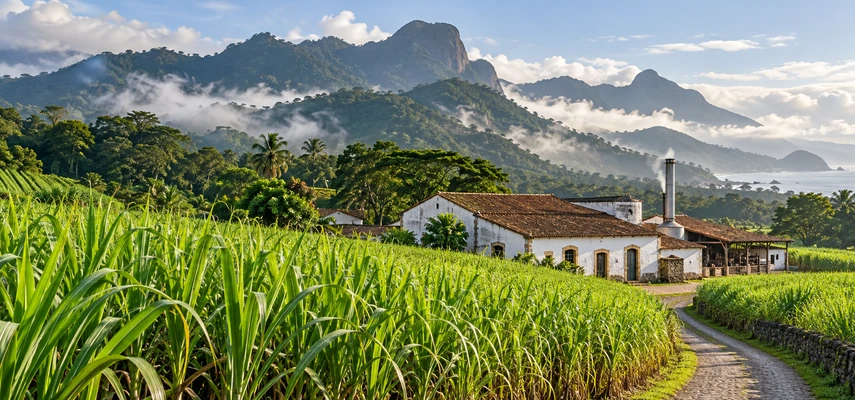

Cachaça is often introduced as the spirit in a Caipirinha, which is rather like introducing a musician only through their best-known chorus. The cocktail is a useful landmark, but the spirit has a much larger production story. Fresh sugar cane juice, Brazilian origin, fermentation and a remarkable range of maturation choices all belong in that story.
For Level 2 study, begin with a precise distinction: cachaça is a Brazilian spirit made from fermented sugar cane juice. It belongs alongside other cane spirits in a production comparison, but it should not be flattened into a generic synonym for rum. The shared crop does not erase differences in category, origin or practice.
Once that starting point is secure, the rest becomes a familiar set of questions. How was the juice handled? What happened during fermentation? Which still route was used? Did the spirit rest in a neutral vessel or spend time in wood? Those decisions explain why two cachaças can be recognisably related yet quite different.
Cachaça begins with fresh sugar cane juice
Sugar cane stores fermentable sugar in its stalks. Crushing extracts juice, sometimes called garapa, while leaving fibrous bagasse. The producer is not starting with a grain mash that needs starch conversion, nor with molasses remaining after sugar crystallisation.
That distinction affects production logistics. Fresh juice changes after extraction, so harvesting, transport and crushing need to be coordinated with fermentation. A distillery working close to its cane supply can move from field to press quickly, though proximity alone does not guarantee good fermentation or good spirit.
Molasses has already passed through sugar-manufacturing stages. Cane syrup has been concentrated by removing water. Fresh juice provides a different starting composition, even though all three materials originate in the same crop. Remembering those routes makes it easier to explain cachaça without relying on a tasting stereotype.
Fresh cane can contribute to grassy, herbal or vegetal associations in a finished spirit, but the aroma is not simply a photograph of the field. Yeast activity, distillation and later handling reshape what eventually reaches the glass. Agricultural origin and technical control work together.
The juice is not already spirit
Sweet pressed juice contains sugar, not the alcoholic strength required in the finished drink. Fermentation must first produce ethanol. Yeast uses the available sugars and generates carbon dioxide and many secondary compounds along the way.
Distillation follows fermentation. It concentrates alcohol and selects volatile components from the fermented liquid. Reversing those stages would leave the explanation without a source of alcohol. This simple sequence is worth holding onto when a colourful description of a traditional process becomes less clear than it sounds.
Brazilian origin is part of the identity
Brazil’s 2025 federal beverage decree identifies cachaça as a distinctive Brazilian cane spirit with 38–48% alcohol by volume at 20°C. It also recognises a specific copper-pot production designation for cachaça de alambique under the relevant implementing framework.
For this lesson, the essential exam connection is Brazil plus cane juice. A cane-juice spirit made in another country does not become cachaça simply because it resembles one aromatically or appears in the same kind of cocktail. National origin is doing real classificatory work here.
Likewise, the broader expression aguardente de cana should not automatically be treated as perfectly interchangeable with cachaça in every legal context. Shared raw material can sit within a wider category that has different limits. Read the precise designation before transferring a numerical rule from one product to another.
Rules and summaries also change over time. Older educational documents may contain terms or label restrictions that a newer framework has amended. The useful habit is to identify the current authority for an exact legal claim while keeping the central production explanation easy to follow.
Fermentation builds more than alcoholic strength
Some producers cultivate or maintain yeast populations associated with their own production environment. Others use selected cultures and different process controls. The term traditional does not establish one compulsory yeast, one fermentation duration or one identical microbial community across Brazil.
Temperature, juice composition, yeast condition and handling influence both fermentation performance and the compounds available to the still. Fruity aromas can develop during this stage without adding fruit to the drink. A banana-like impression therefore need not mean that banana was an ingredient.
At Novo Fogo, the producer describes prompt pressing, fermentation with yeast cultivated from its cane and small-batch copper-pot distillation. Treat this as a concrete production example. Its particular fermentation timing and sourcing practices should not be converted into requirements for every cachaça.
A cleanly managed fermentation and an expressive fermentation are not opposites. A distiller can deliberately seek a lively aromatic profile while controlling the process carefully. Unwanted contamination is not a necessary ingredient in character, and a pungent aroma alone does not establish how the fermentation was managed.
Pot still and column routes both exist
Pot still production works in batches. Heating the fermented cane liquid generates vapour that is condensed into distillate, with collection decisions shaping the resulting spirit. Copper contact can influence sulphur-related compounds; it is not simply decorative evidence of craftsmanship.
The distiller selects appropriate fractions rather than keeping every drop from the run indiscriminately. Heads, heart and tails decisions affect both character and suitability. The desired heart is a controlled selection, not proof that more of every aroma compound would necessarily improve the drink.
Rio 40 supplies another producer example of fresh-juice fermentation and copper-pot production. Alongside other examples, it helps connect an equipment description to a real method without suggesting that all distilleries share one still size or shape.
Column distillation also forms part of cachaça production. Continuous equipment permits repeated vapour-liquid contact and can support efficient, consistent production. The amount of rectification and the operating decisions matter when assessing the resulting character; column does not automatically mean completely neutral.
For comparison, ask about actual distillation strength and the character retained rather than assuming that pot equals good and column equals poor. Equipment gives the producer options. Raw material, fermentation, operation, selection and later handling determine how well those options are used.
Unaged spirit and neutral-vessel rest
An unaged cachaça can preserve a relatively direct view of fermentation and distillation character. Neutral vessels such as stainless steel do not supply the oak-derived vanilla, tannin and brown colour associated with wood maturation.
Resting still takes time and can be part of a producer’s deliberate handling before bottling. Time in stainless steel should not, however, be explained as the same process as extraction from an active wooden cask. State both the time and the vessel when the information is available.
Clear appearance alone supplies limited evidence. Some woods can contribute relatively little colour, and filtration or other permitted handling can complicate the picture. Where a producer provides a maturation history, that is more informative than guessing the history from a photograph of the liquid.
In a comparison exercise, an unaged sample might show fresh vegetal, floral, fruity or savoury impressions. Record what is present rather than ticking every descriptor because the category suggests it. A broad style expectation should sharpen observation, not replace it.
Wood ageing creates a different set of choices
Cachaça has a notable tradition of maturation in woods beyond conventional oak. Different species can contribute distinctive aromatic compounds, colour and texture. A wood name is therefore potentially useful production information, although it still does not reveal every detail of the vessel’s history or activity.
Oak can contribute familiar vanilla, spice and toasted notes. Other woods can move the profile in different directions, sometimes with particularly assertive spice or aromatic impressions. Producers may combine maturation stages or use more than one wood in a finished expression.
The relevant question is how those contributions fit the cane spirit underneath. More obvious wood is not automatically better. An active vessel can overwhelm a delicate distillate, while a quieter maturation may preserve the characteristic fruit and vegetal elements the producer wants to retain.
Cask size, previous use, climate and time remain important, just as they do for rum or whisky. Two spirits aged for the same period need not have identical extraction or development. A year is a measure of time, not a universal unit of wood flavour.
Do not import Scotch or Bourbon maturation rules into cachaça merely because all three can appear in amber bottles. The category and the precise label designation determine the applicable framework. For Level 2 comparison, focus first on the contrast between neutral rest and optional wood influence.
Compare cachaça with rum and rhum agricole
With a molasses rum, the first contrast is raw-material preparation. Molasses follows sugar crystallisation; cachaça begins with cane juice. Fermentation and distillation can widen or narrow their sensory differences, so a correct production contrast need not become an absolute tasting prediction.
With rhum agricole, the shared fresh-juice route becomes the starting similarity. Then distinguish Brazil and its cachaça framework from the French Caribbean traditions and, where relevant, the specific Martinique appellation. Similar raw material does not confer the same geographical identity.
A useful explanation can therefore contain both agreement and difference. These spirits share a plant and may share a juice-based starting point, yet their traditions, rules, equipment and finishing decisions can diverge. That is more informative than calling them either identical or entirely unrelated.
The Caipirinha illustrates balance, not the entire category
A Caipirinha combines cachaça with lime, sugar and ice. The spirit provides alcohol and character, lime supplies acidity and aroma, sugar balances sourness, and melting ice provides dilution. Cachaça’s aromatic identity remains relevant even after those other ingredients are introduced.
Replacing the spirit changes the drink rather than proving that all clear spirits are interchangeable. A more herbal or fruity cachaça can create a different result from a restrained vodka, even at a similar alcoholic strength. The base contributes flavour as well as ethanol.
This cocktail is a useful classroom illustration, but tasting or mixing alcohol is not necessary to understand the production sequence. A process diagram and a written comparison can demonstrate the same distinction between juice, fermentation, distillation and finishing.
What to remember
Cachaça connects Brazil, fermented fresh sugar cane juice and distillation. Both pot and column routes exist, and the category should not be reduced to one producer’s recipe. Fermentation develops character; distillation selects it; neutral rest and wood ageing create different finishing paths.
Use the Caipirinha as a familiar reference, then look beyond it. Explain cachaça through its raw material, origin and production choices before reaching for broad flavour words. That approach makes its relationship with rum and rhum agricole much clearer.
Continue your study
To compare juice with syrup and molasses routes, read How Rum Is Made: Sugar Cane, Molasses, Fermentation, and Distillation. To place cachaça alongside regional rum traditions, read Rum Regions Explained: The Caribbean, Central America, and South America. To analyse the balance behind a Caipirinha, read Cocktail Balance Explained: Strong vs. Weak, Sweet vs. Sour and Bitter.
Knowledge check: 10 original practice questions
Independent TFE questions, not official WSET examination items. Choose one answer per question; explanations follow separately.
1. Which ingredients give a Caipirinha its basic structure?
- Scotch, cream, coffee and salt
- Brandy, quinine and milk
- Vodka, vermouth and olives
- Cachaça, lime, sugar and ice
2. Which distillation statement is accurate for the wider category?
- Every column produces neutral vodka
- Distillation is optional
- Both pot and column production exist
- Only one universal pot design is permitted
3. Which origin is essential to cachaça identity?
- Brazil
- Mexico only
- Any tropical country
- Martinique only
4. Why should cachaça wood species receive attention?
- Wood changes cane into grapes
- Only Scotch can use wood
- All woods taste identical
- Different woods can contribute different aromas and texture
5. Which sequence is correct?
- Bottle juice, then distil the bottle
- Crush cane, ferment juice, distil
- Age molasses, bottle cane, ferment oak
- Distil cane, grow yeast, crystallise whisky
6. Why must fermentation precede distillation?
- Wood must first remove all alcohol
- The bottle produces alcohol
- Yeast must first produce alcohol from the juice sugars
- The still must create cane starch
7. Which comparison with rhum agricole is most useful?
- Both must taste exactly alike
- Shared juice route, different origin and category frameworks
- Both must be made in Brazil
- Both are necessarily molasses spirits
8. Which starting material defines the central cachaça production connection?
- Malted rye only
- Grape pomace
- Fresh sugar cane juice
- Molasses only
9. What does a banana-like aroma necessarily prove?
- The spirit was never fermented
- The product is rum rather than cachaça
- No specific added fruit ingredient by itself
- Bananas were added
10. What does stainless-steel rest avoid compared with active oak maturation?
- Extraction of oak-derived compounds
- All elapsed time
- All handling before bottling
- Any strength adjustment
Answers and explanations
1. D — Cachaça, lime, sugar and ice. Cachaça supplies strength and character, lime acidity, sugar sweetness and melting ice dilution. Mapping: LO2.
2. C — Both pot and column production exist. Cachaça production includes batch pot and continuous column routes; operating decisions shape retained character. Mapping: LO2.
3. A — Brazil. Brazilian origin is part of the category, not merely a common marketing association. Mapping: LO2.
4. D — Different woods can contribute different aromas and texture. Cachaça has varied wood traditions, and species choice can materially change the maturation contribution. Mapping: LO2.
5. B — Crush cane, ferment juice, distil. Crushing extracts juice, fermentation creates alcohol and distillation selects and concentrates the volatile components. Mapping: LO2.
6. C — Yeast must first produce alcohol from the juice sugars. Fresh juice supplies sugar; fermentation produces ethanol that distillation can subsequently concentrate. Mapping: LO2.
7. B — Shared juice route, different origin and category frameworks. Fresh cane juice can be a similarity while geographical identity and production frameworks remain distinct. Mapping: LO2.
8. C — Fresh sugar cane juice. Cachaça begins with cane juice, which distinguishes its raw-material route from molasses-based rum. Mapping: LO2.
9. C — No specific added fruit ingredient by itself. Fermentation can generate fruity aromas, so a familiar fruit descriptor does not establish added fruit. Mapping: LO2.
10. A — Extraction of oak-derived compounds. A neutral vessel does not supply the wood extraction that occurs during oak maturation. Mapping: LO2.











