










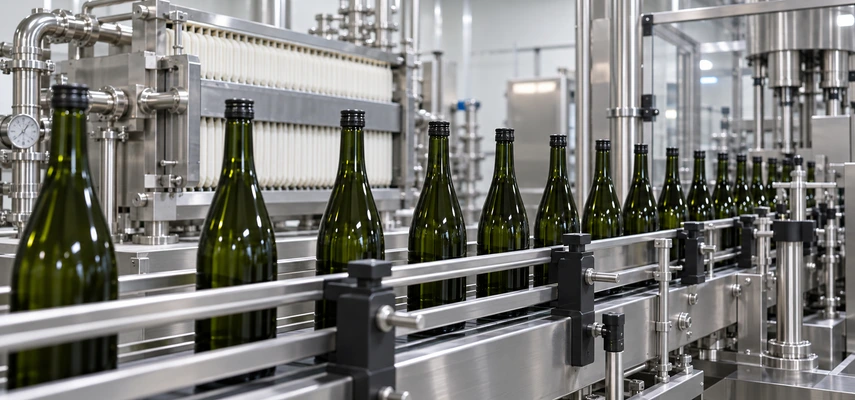

The fermenting tank contains rice material, yeast, liquid and the products of weeks of brewing. The bottle on a restaurant table contains a carefully prepared drink. Sake finishing connects those two states, and each decision answers a different question: what should remain, how concentrated should it be, and how should it keep?
It is easy to compress everything after fermentation into filtering. That loses useful distinctions. Alcohol addition changes the composition; filtration separates material; dilution adds water; pasteurisation applies heat; bottling packages the result. Understanding those verbs makes specialty styles and label terms much easier to remember.
Sake finishing begins with a mixed mash
During main fermentation, kōji enzymes release sugars while yeast produces alcohol and carbon dioxide. The result still contains undissolved rice and other solids. Turning that working mash into sake involves separating liquid from much of that material. The separation is not the same event as fermenting the sugar.
Think of making a broth and then deciding what to strain out. That kitchen comparison explains physical separation, not the chemistry of sake. A strainer changes which particles reach the serving bowl; it does not perform the cooking that happened earlier. Similarly, pressing and filtration do not create the alcohol that fermentation already produced.
The official Level 1 range groups the finishing steps under filtration and bottling. Real breweries may use several pieces of equipment and more than one clarification decision. Learn the purposes before trying to memorize a factory floor plan.
Optional alcohol addition has a specific role
High-strength distilled alcohol may be added where the sake classification permits it. This is typically considered around the end of fermentation, before pressing. It can assist the expression and extraction of aroma compounds and influence the finished balance and texture.
Junmai categories prohibit this addition. Other principal premium categories permit it within their controlled production conditions. For the beginner classification table, the important distinction is permitted versus prohibited, rather than teaching that every sake must receive it. The fuller legal framework includes conditions beyond this introductory summary.
Do not equate alcohol addition with a producer trying to conceal a mistake. In premium sake it can be a deliberate stylistic tool. A light, clean finish or lifted aroma can be an intended result. Whether a particular drinker prefers that expression is a separate question from whether the method is legitimate.
Added alcohol does not make sake a distilled spirit
The base drink is made by fermentation. A permitted addition of distilled alcohol does not mean the whole mash was run through a still. Distillation separates volatile components through vaporisation and condensation; sake fermentation uses yeast to transform sugar. They are different operations.
The distinction also prevents confusion with shōchū, a distilled beverage. A clear appearance does not identify a spirit: water, white wine and sake can all look clear without sharing a production method. The process, not the liquid’s transparency, determines the relevant description.
Nor does the strength of the added alcohol establish the final bottle’s strength. The amount added, the base liquid and any later water addition all matter. The simple statement high-strength alcohol is added describes an ingredient, not an instruction to serve a high-strength spirit by the wine glass.
Sake filtration: first separate liquid from solids
The mash is separated to obtain liquid sake and retain much of the rice material and other solids. Pressing through suitable material is one way to accomplish this. Different methods influence what passes through and how the liquid is handled, but the basic function remains physical separation.
After this primary separation, brewers may choose further clarification or filtration. These additional operations can remove finer suspended material and, depending on the method, affect color and flavor. It is therefore useful to distinguish the essential separation of mash solids from every optional polishing-up treatment afterward.
The JSS professional production account describes pressing and post-fermentation processing separately. For examination purposes, avoid saying filtration converts starch into sugar. That is the enzyme job. Filtration changes the contents of the liquid by separating material already present.
Nigori explains why clarity is a choice
Nigori is cloudy sake with fine rice material remaining after coarser separation. Calling it completely unfiltered can be misleading because separation has still occurred. The difference is that more small particles reach the finished drink than in a clear style.
Those particles influence appearance and can contribute a creamy or textured sensation. They do not establish sweetness. Some nigori styles are sweet, but cloudiness is not a sugar measurement. Record the visual fact first, then assess sweetness separately if tasting.
This is a useful example of production reaching the glass. Coarser separation allows fine material to remain; remaining material produces cloudiness and texture. The causal chain is more memorable than treating nigori as an isolated Japanese word. It also explains why cloudy sake is not automatically faulty.
Optional water dilution adjusts concentration
Fermentation can produce sake at a higher alcohol concentration than the producer intends for sale. Adding water reduces that concentration. This dilution changes not only the number on the alcohol label but also the concentration of other dissolved components in the finished drink.
Water dilution is optional, not a universal stage imposed on every bottle. Undiluted sake may be described as genshu, a useful wider-context term beyond the four specialty styles prescribed here. Do not use that term as a guarantee of one exact alcohol percentage; fermentation outcomes vary.
An arithmetic example makes the mechanism tangible. Adding water to a measured volume containing alcohol increases total volume without adding alcohol. The alcohol therefore occupies a smaller fraction of the mixture. Commercial adjustment uses precise measurement; the example explains the direction rather than providing a production formula.
Dilution and alcohol addition are not opposites in purpose
It can sound odd that a brewer might add distilled alcohol and later add water. Yet the two steps can serve different goals. An alcohol addition near pressing can affect aroma extraction and balance; later dilution can set the intended final concentration. Asking why each step occurs resolves the apparent contradiction.
Imagine adjusting a sauce with an aromatic ingredient and then setting its final consistency. The second adjustment does not prove the first was pointless. Likewise, sake finishing is a sequence of choices about a complete sensory result, not a contest to minimize the number of operations.
For study, keep the verbs anchored to their effects. Adding distilled alcohol introduces alcohol. Diluting with water lowers alcohol concentration. Filtering removes selected material. None of these actions alone proves that a sake is good, poor, sweet, dry or suitable for every serving temperature.
Pasteurisation stabilizes rather than distils
Pasteurisation is a controlled heat treatment used to improve stability, including managing microorganisms and enzyme activity. It is commonly part of sake production, but it is optional within the syllabus. The process does not aim to boil off alcohol and collect a spirit in another vessel.
Breweries can apply heat treatment at different points, including before or after bottling depending on the production design. Do not insist that every sake receives exactly the same number of treatments in exactly the same order. The beginner needs the purpose and the key unpasteurised exception.
Heating can also affect the sensory result. Producers balance stability and style when deciding how to handle a sake. Pasteurisation is therefore more than an invisible administrative step, yet calling every pasteurised sake cooked or inferior would be equally misleading. A method can be carefully chosen and well executed.
Nama shows the consequence of omitting heat treatment
Nama is unpasteurised sake. Because it has not received that stabilizing heat treatment, it needs particularly careful storage, especially refrigeration following the producer’s instructions. It can present a lively, fresh expression, although there is no single aroma shared by every nama bottle.
Nama is not a premium grade. It describes a production treatment, so it can appear alongside a grade name. A junmai ginjō nama combines ingredient and polishing information with the absence of pasteurisation. Different label terms can answer different questions without competing to be the one true category.
Poor handling can lead to deterioration, including the fault studied as nama-hine. Do not assume that more fresh-sounding terminology makes a bottle immune to storage damage. Omitting pasteurisation changes the handling needs; it does not remove them.
Bottling preserves the intended result
Bottling packages the prepared sake for storage, transport and sale. Clean handling, closures and the chosen package help maintain the producer’s intended condition. Packaging is not a substitute for suitable storage afterward; light, heat and oxygen can still affect the contents.
The order of finishing operations can vary, and some are optional. Use a flexible map: near the end of fermentation, a permitted alcohol addition may occur; liquid is separated from solids; clarification, dilution and heat treatment are chosen as appropriate; the drink is packaged. Then check the particular producer’s method rather than forcing every bottle into one rigid diagram.
One-page revision summary
Alcohol addition, filtration, dilution, pasteurisation and bottling have separate purposes. Added alcohol is prohibited in junmai categories and permitted elsewhere under relevant rules. Filtration separates material; nigori retains fine rice particles. Water dilution lowers concentration. Pasteurisation is stabilizing heat treatment, not distillation; nama omits it. Bottling packages the chosen result. Remember which steps are optional and connect each decision to its possible sensory or storage consequence.
Continue your sake studies
Knowledge check: 10 original practice questions
Independent TFE questions, not official WSET examination items. Choose one answer per question; explanations follow separately.
1. Which action lowers alcohol concentration by adding water?
- Dilution
- Polishing
- Inoculation
- Alcohol addition
2. What is the central purpose of filtration?
- Turn starch directly into alcohol
- Separate selected material from the liquid
- Create the rice grain
- Set examination weighting
3. Which category prohibits added distilled alcohol?
- Every sake category
- All basic sake only
- Junmai categories
- Every sparkling beverage
4. What does pasteurisation mean here?
- Collecting distilled spirit
- Adding rice particles
- Changing the polishing ratio
- Controlled stabilizing heat treatment
5. Which style omits pasteurisation?
- Nama
- Every daiginjō
- Every nigori
- All honjōzō
6. Why is “completely unfiltered” an imprecise description of nigori?
- It cannot contain rice
- Separation occurs, but fine rice material remains
- It is always distilled
- It must be colorless
7. Does added distilled alcohol prove inferior quality?
- Yes in all cases
- Only in premium sake
- No; it can be a deliberate stylistic tool
- Yes if later diluted
8. Which statement about processing is accurate?
- Every step is compulsory
- Every sake receives the same heat treatments
- Dilution and filtration are identical
- Some finishing steps are optional and order can vary
9. Why might alcohol addition and later water dilution both occur?
- They can serve different purposes
- They cancel all fermentation
- Water becomes alcohol instantly
- The sake must become a spirit
10. What does cloudiness alone establish about sweetness?
- It must be very sweet
- Nothing certain; assess sweetness separately
- It must contain no sugar
- It is always faulty
Answers and explanations
1. A — Dilution. Water increases the total liquid without adding alcohol, reducing concentration. Mapping: LO1.
2. B — Separate selected material from the liquid. Filtration is physical separation, distinct from enzymatic conversion or fermentation. Mapping: LO1.
3. C — Junmai categories. The junmai distinction excludes the addition of high-strength distilled alcohol. Mapping: LO2.
4. D — Controlled stabilizing heat treatment. Pasteurisation manages biological and enzymatic activity; it is not distillation. Mapping: LO1.
5. A — Nama. Nama specifically describes unpasteurised sake, rather than a premium grade. Mapping: LO2.
6. B — Separation occurs, but fine rice material remains. Coarser separation permits small rice particles to remain and create cloudiness. Mapping: LO2.
7. C — No; it can be a deliberate stylistic tool. A permitted premium addition can influence aroma and balance without indicating poor production. Mapping: LO1.
8. D — Some finishing steps are optional and order can vary. The syllabus marks alcohol addition, dilution and pasteurisation as optional choices. Mapping: LO1.
9. A — They can serve different purposes. Aroma and balance effects of an addition differ from setting final concentration. Mapping: LO1.
10. B — Nothing certain; assess sweetness separately. Rice particles affect clarity and texture; they do not directly measure sugar. Mapping: LO2.











