










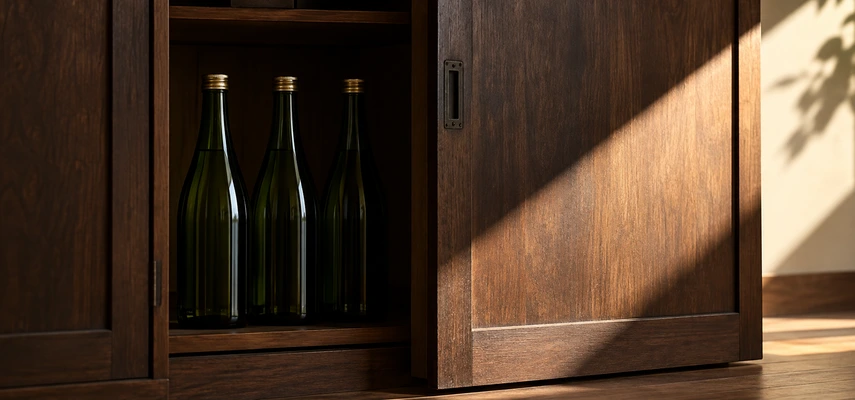

A sake bottle can look immaculate while the drink inside is losing the character its maker intended. Learning to store sake is therefore part of learning to serve it. The important changes are not always visible, and the most convenient display shelf may be the worst place for a delicate bottle.
The Level 1 storage principles are straightforward: keep sake at a low temperature, generally drink it young, store bottles upright and avoid bright light. Their value lies in preventing unwanted change. The exception for deliberately matured koshu does not turn every warm cupboard into a sake cellar.
Store sake cool to preserve its intended character
Higher temperatures accelerate changes that can dull fresh aromas and encourage undesirable developed notes. Delicate fruity ginjō styles and unpasteurised nama need particular attention. Refrigeration is a sensible choice for many bottles, especially when the producer requests it.
The NRIB storage guide identifies temperature, light and oxygen as important threats to quality. Follow its general principles alongside the manufacturer’s specific advice. Different products can have different storage needs, so one remembered number should not replace the label instructions.
Low-temperature storage does not mean freezing. A domestic freezer is not a shortcut to better preservation, and freezing can create packaging problems. The practical goal is a suitably low, stable storage environment that preserves the intended drink rather than exposing it to repeated extremes.
General rule: drink sake young
Most sake is sold for enjoyment while relatively young and fresh. Keeping it indefinitely does not automatically add value or complexity. A delicate aromatic bottle may simply lose the reason it was appealing in the first place.
Drink young is a broad principle rather than a universal expiry date. Product style, packaging, transport and storage history matter. Follow producer guidance when available, and avoid inventing one deadline that supposedly applies equally to every pasteurised, unpasteurised, sparkling or intentionally matured bottle.
Koshu is the deliberate exception. Its producer intends maturation and manages the product accordingly. Buying a fresh sake and neglecting it is not the same operation. Intention, suitable starting material and controlled conditions distinguish an aging plan from a calendar left running.
Store bottles upright
Upright storage reduces contact between the sake and its closure. Sake commonly uses screwcaps or stoppers rather than the natural cork situation that motivates familiar wine-storage habits. Do not import every wine rule without checking whether its reason applies.
Upright bottles also make leaks and sediment easier to manage. In nigori, fine rice material may settle at the bottom; follow the producer’s serving instructions when redistributing it. The visible sediment does not mean a fresh bottle has automatically become faulty.
The WSET public storage article explains the closure-contact reason. The simple study association is bottle upright, not bottle lying down because all alcoholic beverages supposedly need the same arrangement.
Keep bright light away
Strong sunlight and bright artificial light can damage sake. A display beside a window may combine light exposure with heat, giving two reasons to choose another location. Dark glass helps, but it does not make a bottle invulnerable.
Use shaded storage or suitable protective packaging. A carton can reduce light exposure while the bottle remains upright and suitably refrigerated. The goal is not merely to preserve a label’s appearance; it is to protect the liquid’s aroma, flavor and color.
Light damage is useful wider service knowledge, but the three faults named in this Level 1 specification are oxidation, out of condition and nama-hine. Do not replace that prescribed list with a different list from a general website. Additional learning should clarify the syllabus rather than silently change it.
Oxidation: unwanted oxygen-related change
Oxidation involves exposure to oxygen and associated changes in the sake. An opened bottle, particularly if poorly resealed or kept warm for too long, can lose freshness and balance. Color may deepen and aromas may become stale or unpleasantly developed.
Not every deeper color proves oxidation. Some matured sakes intentionally have gold or amber tones. Nor does the absence of an obvious color change prove perfect freshness. Assess the whole impression in relation to the intended style and the bottle’s handling history.
Practical prevention includes prompt resealing, refrigeration where appropriate and avoiding unnecessarily prolonged storage after opening. Leaving the cap off during a long meal is not a helpful aeration ritual for every sake. Keep the bottle managed while pouring the portion being served.
Out of condition: the intended appeal has faded
Out of condition describes a sake that has lost the freshness, balance or character it was intended to show. Excessive age or poor storage can contribute. A bottle may seem tired, with diminished fruit and unwelcome developed aromas rather than a coherent mature style.
For the Level 1 context, overly old sake may develop unwanted caramel-like, toffee-like or pickled-vegetable impressions. The descriptors must be interpreted carefully: caramel or nutty complexity can be desirable in intentional koshu. The same word can carry different implications depending on the style and balance.
Out of condition is therefore not a single chemical diagnosis. It is an assessment that the product has moved beyond its intended condition. Check storage, age and producer information before declaring that every unfamiliar aroma is a fault or that every old bottle must be valuable.
Nama-hine: give unpasteurised deterioration its own name
Nama-hine is an unpleasant storage-related change associated with unpasteurised sake. It can introduce stale malty, meaty or vegetal impressions and replace the intended lively expression. It deserves explicit attention rather than being hidden inside a general warning that sake can go bad.
The NRIB preservation resource distinguishes several storage-related off-odors. The mechanisms are more complex than a beginner needs to memorize. Do not reduce nama-hine to the inaccurate claim that all unpasteurised sake necessarily becomes infected as soon as it is opened.
The practical prevention is careful cold storage and timely use following the producer’s advice. The defining context is unpasteurised sake, not a compulsory polishing grade. A junmai ginjō nama can have excellent production credentials and still suffer if its handling needs are ignored.
Keep the three faults distinct
Oxidation emphasizes oxygen-related change. Out of condition describes loss of intended freshness or balance, commonly through excessive age or poor storage. Nama-hine identifies a particular unwanted deterioration context in unpasteurised sake. These can overlap in a disappointing bottle without becoming interchangeable definitions.
In an examination question, attend to the context provided. A long-open, poorly resealed bottle suggests oxygen exposure. A tired bottle well beyond its intended fresh period suggests out-of-condition character. A mishandled unpasteurised bottle with the relevant off-aromas points toward nama-hine.
Do not try to diagnose by one word alone. A savory note is not automatically rotten meat, and a lactic note is not automatically sour spoilage. The intended style, intensity and overall condition distinguish ordinary sensory variation from an unwanted fault impression.
After opening: create a repeatable routine
Pour what is needed, reseal the bottle and return it to suitable cold storage. Note the opening date if several bottles are in use. This small habit is particularly useful in a restaurant, where a bottle can otherwise drift between shifts with no one sure how long it has been open.
Avoid topping up an old bottle with a new one. Combining them hides the handling history and makes condition harder to assess. Keep each product’s identity and instructions clear rather than treating a fridge full of similar-looking bottles as interchangeable stock.
After the bottle returns to refrigeration, keep its opening date visible. Meanwhile, check that the cap is secure and that staff know which product requires priority use. A dated record therefore makes the general advice to drink young actionable without inventing one deadline for every sake.
Inspect before serving. Compare aroma and appearance with the intended style, and do not serve a clearly faulty bottle merely because its category sounds prestigious. When uncertainty remains, ask the producer or supplier. A responsible service decision can include replacing a doubtful bottle.
Work through a storage choice
Imagine three locations: a sunny kitchen shelf, an upright position in a suitable refrigerator, and a warm cupboard above the oven. For a fresh nama, the refrigerator is the sensible choice, subject to the producer’s instructions. Darkness alone does not solve the heat problem above the oven.
Now imagine a sealed koshu sold after controlled maturation. Store it according to the producer’s guidance rather than assuming it must continue aging indefinitely. Its deliberate mature character does not cancel the need to protect it from damaging heat, light or careless opening.
These examples reveal the reasoning behind the four principles. Each removes an avoidable source of unwanted change. The aim is to preserve the particular sake, not to force it into an imagined universal ideal of young, old, clear, cloudy, floral or savory.
One-page revision summary
Keep sake suitably refrigerated, generally drink it young, store bottles upright and avoid bright light. Refrigeration is especially important for nama and delicate aromatic styles. Reseal opened bottles and manage their dates and conditions. Distinguish oxidation, out of condition and nama-hine by cause and context. Intentional koshu maturation is not inherently a fault, and one developed aroma alone cannot establish a diagnosis. Preserve the producer’s intended style and verify uncertainty before service.
Continue your sake studies
- Start with sake and sensory description
- Separate the finishing decisions
- Compare nigori and sparkling styles
Knowledge check: 10 original practice questions
Independent TFE questions, not official WSET examination items. Choose one answer per question; explanations follow separately.
1. Which is one prescribed storage principle?
- Store upright
- Always keep in sunlight
- Always freeze
- Always remove the cap
2. Which sake needs especially careful refrigeration?
- Only anything with a wooden box
- Nama
- Only amber-colored sake
- Only bottles over one litre
3. What is the general age principle?
- All sake improves forever
- Always wait ten years
- Drink sake young unless intentionally matured
- The oldest bottle is always safest
4. Which storage position is especially poor for a delicate bottle?
- Shaded and refrigerated
- Upright and refrigerated as directed
- In its carton in suitable conditions
- A bright warm window
5. Which fault emphasizes oxygen-related change?
- Oxidation
- Nigori
- Sparkling
- Junmai
6. What does out of condition mean?
- A required premium grade
- The drink has lost its intended freshness or balance
- A particular serving cup
- Any deliberately matured sake
7. Which context is associated with nama-hine?
- Rice polishing alone
- New glassware
- Deterioration in unpasteurised sake during storage
- All intentional koshu maturation
8. Why does amber color alone not prove a fault?
- Sake never changes color
- Only bottles change color
- Amber always means junmai
- Intentional maturation can produce developed color
9. What is sensible after opening?
- Reseal promptly and refrigerate as appropriate
- Leave open in the sun
- Add a new bottle to hide the date
- Always boil the remainder
10. How should uncertainty about a doubtful bottle be handled?
- Serve because it was expensive
- Consult the supplier or producer and avoid serving clearly faulty sake
- Assume all unusual aromas are desirable
- Diagnose solely from one color word
Answers and explanations
1. A — Store upright. Upright storage is one of the four official principles alongside low temperatures, youth and avoiding light. Mapping: LO3.
2. B — Nama. Unpasteurised nama is particularly sensitive to poor storage and unwanted change. Mapping: LO3.
3. C — Drink sake young unless intentionally matured. Most sake is intended for relatively young consumption; koshu is a deliberate exception. Mapping: LO3.
4. D — A bright warm window. A sunny window exposes sake to both bright light and potentially damaging heat. Mapping: LO3.
5. A — Oxidation. Oxidation concerns oxygen exposure and can cause loss of freshness and balance. Mapping: LO3.
6. B — The drink has lost its intended freshness or balance. Excess age or poor handling can leave sake tired rather than true to its intended style. Mapping: LO3.
7. C — Deterioration in unpasteurised sake during storage. Nama-hine is specifically associated with unwanted change in unpasteurised sake. Mapping: LO3.
8. D — Intentional maturation can produce developed color. Color must be interpreted with the intended style, aromas, balance and storage history. Mapping: LO3.
9. A — Reseal promptly and refrigerate as appropriate. A clear opening routine reduces oxygen exposure and helps preserve intended condition. Mapping: LO3.
10. B — Consult the supplier or producer and avoid serving clearly faulty sake. Responsible service uses context and reliable information rather than prestige or a single observation. Mapping: LO3.












