










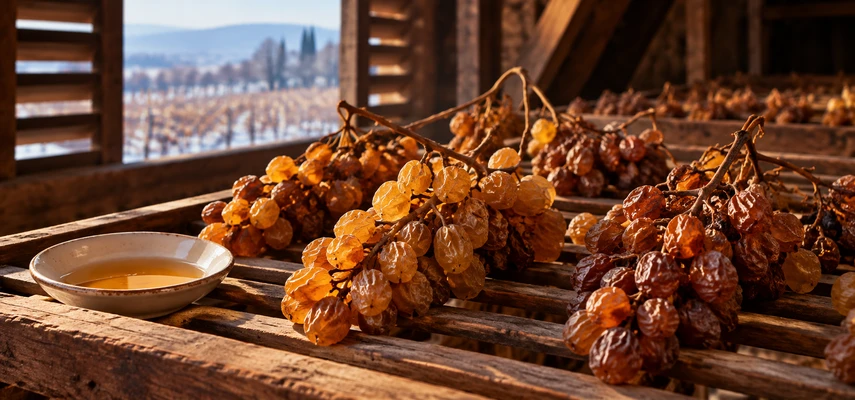

Concentrated grapes do not automatically make a sweet wine. Yeast can consume their sugar, producing a powerful dry wine instead. Sweet wine production therefore involves two separate questions: how the starting material acquires its character, and why sugar remains in the finished product.
Noble rot, drying and freezing create different raw materials. Retaining sugar during fermentation or adding a permitted sweetening component creates another set of choices. Keeping those decisions separate makes it easier to explain both a delicate, moderately alcoholic sweet wine and a richly concentrated example with substantial body.
The official D1 specification includes concentration techniques alongside stopping fermentation and adding sweetening components. The useful production argument follows the sugar, water and flavour through each stage, then asks whether the resulting wine is balanced and stable.
Sweet wine production starts with the source of sweetness
Residual sugar describes sugar remaining in the wine after the chosen fermentation and production process. A high initial grape-sugar reading establishes potential, not the final residual amount. Yeast strain, conditions, the intended endpoint and subsequent additions all influence the result.
Concentration often removes water relative to the constituents retained. This can increase sugar concentration without creating new sugar. It can also change flavour and other components, while reducing the volume of juice obtained from the original crop. The commercial and sensory implications extend beyond a sweeter starting liquid.
The balance of sweetness with acidity, alcohol, flavour intensity and texture matters more than a large sugar figure alone. Two wines with similar residual sugar can taste very different. One may seem lively and integrated while another feels heavy or thin, depending on the surrounding structure.
An evaluated recommendation should therefore name the intended wine before selecting the technique. A producer seeking clean fruit expression may prefer a different raw material from one seeking the distinctive character of botrytised grapes. There is no single concentration method that improves every variety or style.
Drying on the vine trades water for concentration
Leaving grapes on the vine beyond ordinary maturity can allow dehydration where conditions permit. As water is lost, the remaining juice becomes more concentrated. Continued exposure also brings risks from weather, disease, birds and other animals, while the quantity of recoverable material can decline.
More time does not guarantee that all components improve together. Fruit may lose acidity, develop a different flavour profile or suffer damage. Sugar concentration can rise while the material becomes less suitable for the proposed wine. Sampling must therefore follow health, composition and flavour rather than a sugar target alone.
The Ontario appellation authority’s category guidance makes a useful distinction: late-harvest wines can be sweet or dry. Its category rules are regional, but that conceptual lesson travels well. Harvesting late describes the grapes’ history; it does not establish how completely their sugars will ferment.
Drying after harvest creates another management stage
Off-vine drying moves harvested grapes into a suitable place or arrangement for water loss. Ventilation, spacing, temperature, humidity and fruit condition influence the process. The producer gains different handling options but needs drying space, monitoring and a plan for unwanted mould or uneven development.
Appassimento is associated with drying grapes before winemaking. The Valpolicella consortium’s Recioto account provides a regional example of dried fruit followed by a fermentation managed to retain sweetness. The drying step and the fermentation endpoint are both necessary parts of that explanation.
Do not treat the example’s specific loss figures or calendar as a global drying recipe. Different grapes and conditions yield different patterns of concentration and change. Compare useful juice recovery and flavour with the resources required, and distinguish a deliberately sweet wine from a dried-grape wine fermented dry.
Noble rot is a beneficial outcome under particular conditions
Botrytis cinerea can cause destructive rot as well as the condition called noble rot. Suitable ripe grapes, infection and subsequent drying conditions can allow water loss and distinctive changes to the fruit. Persistent wetness can instead favour deterioration. The fungus’s presence is not a quality certificate.
Noble-rot wines can combine concentration with characteristic aroma development, often described through honeyed, dried-fruit or related notes. These descriptors are possibilities within a wider profile rather than proof that any wine showing honey must be botrytised. Variety, maturity, fermentation and age also affect what is perceived.
Affected berries develop unevenly, so selective harvest and repeated passes may be needed. Pickers must distinguish useful fruit from unsuitable damage. Low recovery, labour and the chance of an unsuccessful season help explain costs. Delaying the crop in hope of noble rot is an economic risk as well as a stylistic choice.
AWRI’s Botrytis fact sheet explains that the organism can also bring laccase-related oxidative problems and undesirable characters. Desirable concentration does not remove processing challenges. Inspect and manage the actual material rather than applying the same reception plan used for sound, unaffected fruit.
Icewine concentrates juice through natural freezing
For naturally frozen-grape wine, fruit remains on the vine until suitable freezing conditions occur. It is harvested and pressed frozen so that much of the water remains behind as ice while concentrated liquid is recovered. The mechanism differs from dehydration, even though fruit may also lose water while waiting.
Waiting exposes the crop to losses and uncertain weather, while pressing frozen fruit produces limited recovery. Labour, equipment and winery capacity must be available during the appropriate window. A vineyard with sound autumn grapes is not automatically capable of making a successful frozen-grape wine.
Ontario’s Icewine category requires grapes frozen naturally on the vine and specifies local harvest and juice criteria. Other jurisdictions have their own product definitions. The general physical process should not be substituted for verification of a particular Icewine or Eiswein label.
Cryoextraction artificially freezes picked grapes before pressing. It is a distinct process and cannot simply inherit a protected naturally frozen-wine name. Similarly, partially freezing already extracted must is another operation. Explain what is frozen and when, because those details identify both the mechanism and the relevant rules.
Concentrated must can be difficult to ferment
Very high sugar creates an osmotically challenging environment for yeast. Later, increasing alcohol and other constraints can make fermentation more difficult. The producer needs a suitable culture and management plan, with progress measured rather than assumed from the sweetness of the starting juice.
An unintended stuck ferment is different from a deliberately chosen sweet-wine endpoint. Both may contain sugar, but the former can involve undesirable characters and uncertain stability. The OIV account of fermentation stoppages identifies interacting factors such as excess sugar, nutrition, temperature and yeast suitability. A sweet result alone does not establish a successful production process.
Monitor sugar, alcohol development and the wine’s sensory condition together. Assess whether the target balance is being reached and whether the process needs intervention. The aim is a stable, appropriate wine, not merely yeast exhaustion at an unpredictable point.
Stopping fermentation retains grape-derived sugar
Stopping fermentation for residual sugar requires identifying the desired endpoint and controlling yeast activity. Cooling can slow activity, while suitable separation methods can remove yeast; the complete strategy must protect against renewed fermentation. The OIV physical-interruption entry distinguishes arresting the process from making the sugar itself non-fermentable.
Chilling alone should not be treated as permanent biological stability. If viable organisms remain and conditions later become favourable, activity can resume. The producer must plan clarification, microbial control, storage and packaging around the retained substrate. A quiet tank today is not proof of a stable bottle months later.
Adding suitable alcohol during fermentation can stop yeast activity in fortified-wine production. That changes alcohol level as well as retaining sugar and belongs to a distinct style plan. Fortification is not a necessary feature of all sweet wines, and adding alcohol after fermentation has finished does not explain retained grape sugar in the same way.
A sweetening component changes the wine after fermentation
A sweetening component can adjust sweetness through blending, where the applicable product rules allow it. Examples can include suitable unfermented grape-derived material or concentrated grape must. The composition of the component affects more than sugar, potentially changing acidity, flavour, volume and balance.
This differs from enrichment before fermentation, where added fermentable material may be consumed to increase potential alcohol. Identify the point of addition and the subsequent biological plan. Adding sugar-containing material to an active or unstable wine does not guarantee that the sugar will remain as intended.
Use bench trials and calculation together. A target residual-sugar figure can guide proportions, but sensory assessment determines whether the blend fits the intended style. Verify that both the material and operation are permitted for the wine and destination market. A substance allowed in one beverage category is not automatically allowed in another.
Stability is part of making the wine
Fermentable sugar provides an opportunity for unwanted yeast activity. Filtration or other appropriate microbial controls, clean packaging and effective protection may therefore be central to the production plan. The chosen route must suit the wine and comply with applicable requirements.
AWRI’s microbiological-stabilisation resource explains why control depends on the organisms and wine conditions. Preservatives have specific roles and limits; they are not interchangeable and should not be treated as a universal way to stop an active ferment. No single addition replaces a complete strategy.
Check the final blend after any sweetening or other change. A wine verified before addition does not necessarily retain the same condition afterwards. Traceability and appropriate testing should follow the actual packaged product, while storage and distribution conditions remain relevant to its performance.
Compare style, quality and cost across the routes
Noble rot, drying and freezing can each provide distinctive material, but they impose different losses and uncertainties. Retaining sugar from a less concentrated must or blending an allowed sweetening component offers different possibilities. Compare the resulting aroma, acidity, alcohol, texture and intended market rather than ranking methods by difficulty alone.
Selective harvesting, drying facilities, low juice recovery and demanding fermentations can increase cost. High cost does not guarantee outstanding quality or a profitable price. Conversely, a simpler route can make a well-balanced wine suited to its purpose. The production argument should explain what the extra work contributes and whether that contribution matters to the buyer.
Connect this explanation with alcohol adjustment and production tradeoffs and rosé winemaking as linked parts of the same explanation. Trace the relevant growing or cellar decision through to its consequences, and identify the condition that could change the result rather than treating the relationship as automatic.
Original Diploma practice
These original exercises are not official WSET questions and have no official mark allocations.
Question 1: separate concentration from sweetness
A student says every dried-grape wine is sweet because drying increases sugar. Evaluate the explanation and compare two possible fermentation outcomes.
Indicative answer points: water loss versus new sugar; potential alcohol; yeast consumption; chosen endpoint; retained sugar; stability; dry and sweet routes.
Outline answer: Drying concentrates the starting material but does not establish how much sugar remains after fermentation. If suitable yeast consumes the fermentable sugar, the result can be dry and relatively alcoholic. A deliberately managed endpoint can instead retain sweetness, provided the wine is subsequently stabilised. Explain both the concentration step and the fate of sugar. A production description that stops at the drying rack leaves the crucial second question unanswered.
Question 2: compare noble rot and natural freezing
Compare the feasibility and costs of a noble-rot wine and a naturally frozen-grape wine from a proposed vineyard.
Indicative answer points: distinct mechanisms; suitable weather sequences; fruit survival; selective passes or freezing window; processing; recovery; rules; market.
Outline answer: Noble rot requires beneficial infection and drying rather than destructive decay, while natural freezing requires fruit to remain usable until the appropriate conditions and be processed frozen. Both expose growers to losses but demand different site and operational evidence. Compare likely recovery, labour, equipment availability and processing constraints. Verify the relevant product requirements and expected demand before projecting a return. A high selling price for a successful example does not remove the risk of an unsuitable season.
Question 3: assess a sweetening plan
A dry wine is blended with grape must and bottled after it remains quiet overnight. Evaluate the evidence for stability and the checks needed.
Indicative answer points: added fermentable substrate; organisms and conditions; short observation insufficient; allowed component; blend trials; post-addition microbial control; packaging verification.
Outline answer: The addition changes composition and introduces sugar that may ferment if viable organisms and suitable conditions remain. Overnight quietness does not establish long-term stability. Verify that the component and operation are permitted, evaluate the final balance and apply an appropriate microbial-control and packaging plan. Checks must reflect the final blend after addition. The earlier dry wine’s condition cannot be assumed to describe the newly sweetened product.












