










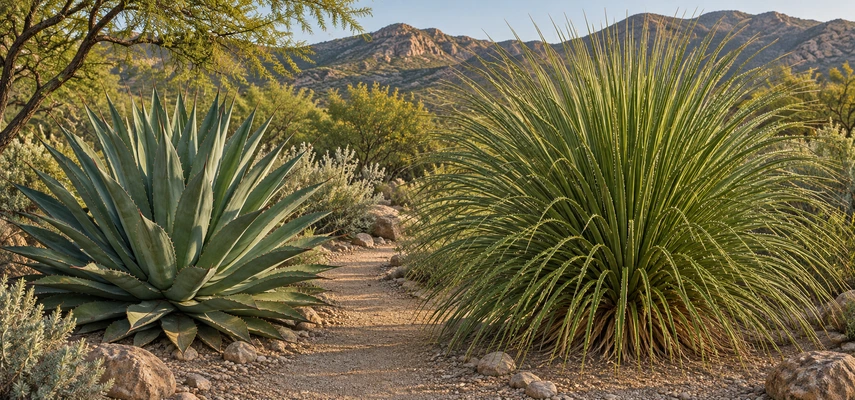

Bacanora, Raicilla and Sotol reward a closer look at the plant before the still. Bacanora and Raicilla are agave spirits, while Sotol begins with Dasylirion. The plants may share a spiky silhouette and dryland setting, but they are not interchangeable raw materials. That distinction is more useful than trying to arrange the bottles by how smoky they smell.
This lesson compares the traditions through identity, geography and production. Their methods overlap with familiar agave-spirit operations, including cooking, crushing, fermentation and distillation. The overlap helps explain the process, while the differences prevent an appealing family resemblance from turning into the wrong protected name. These are Learning Outcome 3 topics, assessed here through original MCQs.
Bacanora connects an agave with Sonora
Bacanora is associated with a protected production area in Sonora, in northwestern Mexico. Its agave identity is Agave angustifolia, often described locally as Pacifica. The Mexican standards catalogue lists NOM-168-SCFI-2004 as the relevant current standard, with the published production and labeling rule available through the official gazette.
Learn those anchors together: Bacanora, Sonora and the appropriate angustifolia material. A spirit made from another plant elsewhere does not acquire the name merely because its maker uses a similar oven or copper still. Protected geographical identity involves the permitted origin and production conditions as well as a recognizable general method.
Follow a named Bacanora producer through the stages
Rancho Tepúa’s brand partner describes its Aconchi production using a mesquite-fired cylindrical pit, mechanical and manual crushing, fermentation with fibers, and two copper-alembic distillations. This gives a tangible sequence to connect with the underlying ideas. Cooking prepares the harvested material; crushing opens the fibrous mass; fermentation provides alcohol; distillation selects and concentrates volatile compounds.
The details belong to that producer. They do not establish that every Bacanora uses precisely the same fuel, fermentation duration or still shape. The useful exam habit is to learn the core identity first, then attach a specific example to illustrate how a maker delivers its intended style.
Cooking does more than put smoke into a spirit
An agave heart stores carbohydrates that require preparation before yeast can use the resulting sugars effectively. Cooking helps break down stored fructans, while also changing the material’s flavor. The physical cooking environment can introduce roasted or smoky associations, but those associations should not become the entire explanation of the operation.
Compare two questions: why cook the heart, and why might the spirit show smoke? The first concerns making the material suitable for fermentation as well as flavor development. The second concerns a particular production environment and its consequences. Answering both with only the word traditional would leave the mechanism unexplained.
Fermentation and distillation retain their separate jobs
Once the cooked material has been crushed and prepared, yeast can develop ethanol and other compounds. Whether fibers remain present affects the working material, but the fibers are not a replacement for the microbial conversion. Fermentation establishes a mixture that the distiller subsequently heats and separates; the still does not create all the alcohol directly from an intact plant.
Two batch distillations are a familiar arrangement in named traditional examples. The first collects a more concentrated alcoholic liquid, and the subsequent run supports further selection. Apparatus, copper contact and cuts help determine the collected spirit. A count of distillations alone cannot establish the final aroma intensity or quality.
Raicilla has a western Mexican identity
The 2019 Raicilla declaration protects a defined area covering sixteen Jalisco municipalities and Bahía de Banderas in Nayarit. It describes a 100% agave spirit and specifically excludes blue Weber agave. The geographical relationship is therefore more precise than any agave spirit made somewhere near a Tequila producer.
The declaration allows several suitable agave species and distinguishes coastal and mountain traditions. Its framework gives a useful way to understand diversity within the name. A category can have protected identity without requiring every maker, growing environment and expression to deliver an identical sensory profile.
Costa and Sierra help organize Raicilla diversity
The Costa discussion includes Agave angustifolia and rhodacantha; the Sierra discussion includes maximiliana, inaequidens and valenciana. Learn the coast-versus-mountain distinction as a combination of geography and material. It is more informative than memorizing an isolated species list with no connection to where those plants enter the local production tradition.
Do not turn that useful comparison into a compulsory flavor prediction. Plant condition, cooking, fermentation and apparatus remain relevant. A fruity sample is not proof of one species, and a savory sample does not identify a municipality. The production information supports interpretation, while sensory observations should remain observations until there is enough evidence for a conclusion.
A Sierra producer gives the process a concrete shape
Auténtica de mi Pueblo describes its own maximiliana route with manual work in wooden troughs, fermentation in oak tubs and double distillation with a copper coil. These are helpful named details, especially because they distinguish the vessel holding the fermenting material from the apparatus collecting the distilled spirit.
An oak fermentation tub does not mean the finished spirit has necessarily received the same treatment as barrel-aged whisky. The contents, strength, duration and operation differ. Wood can appear at several stages of production, and its mere presence does not establish a maturation category. Ask which material was in the vessel and what the vessel was doing.
A proposed standard is different from an adopted rule
Raicilla has a protected declaration, while documents about further technical standardization have also circulated. A document marked PROY is a proposed norm, not automatically a final rule in force. For the core comparison here, use the protected identity and the actual producer accounts, rather than quietly presenting a draft standard as settled law.
This distinction transfers well beyond Mexican spirits. A consultation can show what authorities or industry participants are considering without changing current legal requirements. A study note should therefore record the status of its source as carefully as its headline number. Otherwise, a very precise-looking revision card can teach a rule that never took effect.
Sotol starts with Dasylirion
The official Sotol standard identifies Dasylirion as the plant genus. The Mexican protected territory covers Chihuahua, Coahuila and Durango. Learn those three states alongside the plant distinction. Sotol is neither an agave spirit nor a cactus distillate simply because a dry landscape and narrow leaves appear in its story.
The standard distinguishes Sotol 100% puro from a category permitting up to 49% other sugars in the fermenting formulation; it prohibits substituting a cold blend of separate alcohols for that operation. Its strength range is 35–55% ABV. These are specific category facts, not permission to transfer Tequila’s rules wholesale to another spirit.
A Sotol producer illustrates the shared production sequence
Sotol Por Siempre’s producer-partner account describes harvesting plant heads, pit cooking, shredding, fermentation and two copper-pot runs. Its apparatus includes stainless caps, a useful reminder that a still can contain more than one construction material. The published process supports this named example; it is not a universal blueprint for every Sotol producer.
The sequence looks familiar because stored plant material still needs preparation, fermentation and separation. Familiar operations do not erase the raw-material distinction. A roasted Dasylirion head remains a different starting material from an agave heart, just as a grape wine and a grain wash remain different even when both eventually enter copper pot equipment.
Plant sourcing belongs in the production discussion
Long-lived plant resources require attention to harvesting and regeneration. Mexico’s forestry commission publishes management work on Dasylirion cedrosanum, showing that sourcing is a practical production subject rather than a decorative story about wilderness. Species, population condition and the harvesting method all matter to future availability.
Avoid assuming that wild means unlimited, or that a plant’s ability to regrow under some conditions guarantees survival after every harvest. Nor does cultivation automatically describe every environmental consequence. A clear account identifies the producer’s actual sourcing and management measures, then keeps those specific observations separate from broader claims about sustainability.
Compare the three without relying on one aroma
Build a simple mental route for each: Bacanora links Sonora with angustifolia; Raicilla links the protected western territory with several permitted agaves and coast-versus-mountain traditions; Sotol links three northern states with Dasylirion. Add a named production example to each route, including cooking, fermentation vessel and distillation arrangement where verified.
When tasting, record cooked vegetal, herbal, floral, fruit, earthy or smoke-related characteristics only when actually present. Their intensity and combination can vary. A strongly smoky sample does not prove a particular protected name, and a clear appearance does not identify the plant. Production knowledge is most useful when it helps you interpret evidence without inventing certainty.
What to remember
Begin with the botanical and geographical identity, then follow the material through cooking, crushing, fermentation and distillation. Keep producer examples attached to their makers, and distinguish a proposed norm from a rule in force. Bacanora, Raicilla and Sotol share useful production connections while retaining different identities. The plant is a much better starting point than a smoke ranking.
Knowledge check: 12 original practice questions
Independent TFE questions, not official WSET examination items. Choose one answer per question; explanations follow separately.
1. Which pairing helps organize Raicilla traditions?
2. What is a good reason to study plant-resource management?
3. What genus supplies Sotol raw material?
4. Which state anchors Bacanora geography?
5. Which geographical pairing belongs to protected Raicilla?
6. Which plant is associated with Bacanora?
7. Which three states form the Mexican Sotol protected territory?
8. What does agave cooking help do?
9. What can a smoky aroma establish by itself?
10. What does PROY on a Mexican norm document indicate?
11. Which agave does the Raicilla declaration exclude?
12. What does an oak fermentation tub prove?
Answers and explanations
- B — Costa and Sierra. The coast and mountain distinction links geography with relevant agave materials. Mapping: LO3.
- A — Harvesting and regeneration affect future raw-material availability. Resource condition and the actual harvesting method need evidence rather than assumptions. Mapping: LO3.
- A — Dasylirion. Sotol plant identity is distinct from agave even though some production stages look similar. Mapping: LO3.
- D — Sonora. The protected identity is associated with its specified Sonoran production area. Mapping: LO3.
- B — Specified Jalisco municipalities and Bahía de Banderas in Nayarit. The protected territory is more precise than a general western Mexican location. Mapping: LO3.
- D — Agave angustifolia. The angustifolia identity must not be replaced by another raw material with a similar silhouette. Mapping: LO3.
- B — Chihuahua, Coahuila and Durango. The three northern states should be learned alongside the Dasylirion identity. Mapping: LO3.
- C — Prepare stored fructans for the fermentable-sugar route. Cooking prepares the carbohydrate material while also affecting its flavor development. Mapping: LO3.
- B — A sensory observation, not a unique protected origin. Smoke can occur through different production routes and does not uniquely identify a category. Mapping: LO3.
- D — A proposal rather than automatic proof of a final rule. Document status matters before proposed requirements are presented as current law. Mapping: LO3.
- D — Blue Weber agave. The declaration excludes the blue Weber identity familiar from Tequila rather than all agaves. Mapping: LO3.
- B — The fermenting material contacted that vessel. Vessel material has to be interpreted with its actual production stage and contents. Mapping: LO3.
Continue exploring this series
4. Fermentation Methods Explained: Liquid, Solid-State, Sequential, and Parallel Fermentation
6. Pot Still Distillation Explained: Design, Heating, Cuts, and Flavor
23. Agave Spirits Explained: Growing, Cooking, Crushing, and Fructan Conversion
24. Tequila Explained: Agave, Production Choices, and Legal Categories
25. Mezcal Explained: Agave Varieties, Traditional Methods, and Quality
39. Cachaça Explained: Brazilian Sugar Cane Spirits, Wood, and Classification
41. Flavored Vodka, Spiced Rum, and Flavored Whiskey Explained
50. WSET Level 3 Spirits Exam: Complete Revision Guide and Practice Examinations












