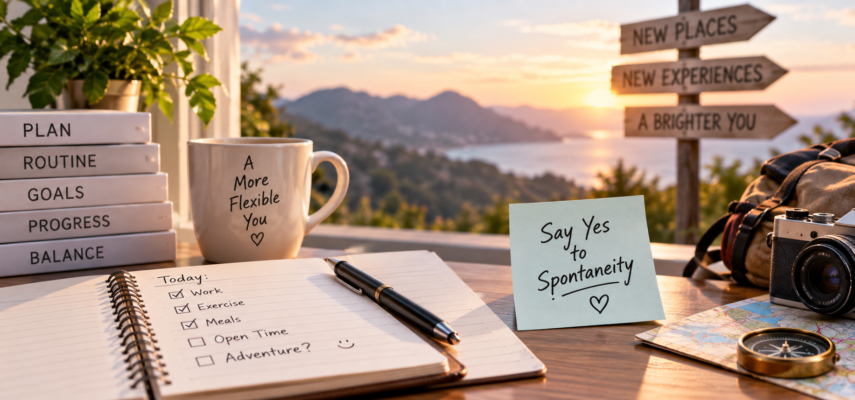
A structured lifestyle can make many aspects of daily life easier to manage. When you have routines, systems, and habits that work well for you, you can use your time more intentionally. It’s also often easier to stay on top of your responsibilities and make steady progress toward your goals. Having a plan does not mean you lack flexibility or curiosity; in many cases, structure creates the stability that allows you to pursue the things that matter to you.
At the same time, even helpful routines can sometimes become more fixed than they need to be. Spontaneity is often associated with abandoning plans or acting without consideration, but it can also mean allowing yourself to respond to new opportunities or changing circumstances when they arise. You don’t even need to give up the systems that support your life in order to experience this. Small adjustments can create more room for unexpected experiences while preserving the routines that provide you with stability.
This article explores how you can gently introduce more flexibility into a structured lifestyle. By making thoughtful changes to how you approach your time and choices, you can create more opportunities for spontaneity without losing the benefits of structure. Try these tips to start:
Start With Small Experiments
If you are used to planning carefully, making room for spontaneity may feel easier when you treat it as something to practice gradually. You can begin with small experiments that introduce flexibility without requiring major changes to your lifestyle. Try accepting a reasonable invitation without needing every detail planned in advance, or making a minor change to a familiar routine. These small steps can help you discover which forms of spontaneity fit naturally into your life.
One relatively simple experiment you can try has to do with simply exploring a new activity you’re curious about without researching everything about it beforehand. If you’ve been curious about online casino gaming, for example, you might start by asking someone you trust for their preferred platform and play casino here and there when you have some time. Take advantage of features like demo modes where they’re available so you can try out different titles without having to spend real money yet.
Leave Some Time Unassigned
A full schedule can make even enjoyable opportunities feel inconvenient because there’s no room left to accommodate them. If you’ve already planned every hour of your day in advance, an unexpected invitation or a sudden opportunity to try something new may just feel like a disruption. Consider setting aside occasional periods of unstructured time where you don’t decide ahead of time how you’ll spend those hours. This could be a free evening, an open weekend morning, or a short window after work. Leaving this space available gives you the freedom to make choices based on your mood, energy, or interests in the moment.
Allow for Flexible Decisions
Planning ahead can be useful, but not every choice needs to be settled as early as possible. Some decisions become opportunities for spontaneity when you give yourself permission to make them later. For example, you might wait until the day itself to decide what you want to do after work. You could choose what to eat based on your mood, or occasionally let someone else decide where you go. The key is to focus on low-stakes areas where flexibility will not create unnecessary stress. When you leave a few smaller choices open, you can become more comfortable with responding to the present moment instead of always following a predetermined plan.
Introduce Small Forms of Novelty
Familiar routines can be efficient and feel comfortable, but they can also make your days predictable when they rarely change. You can add variety without disrupting the parts of your lifestyle that already work by looking for small opportunities to do something differently. This might mean trying a new restaurant, exploring a different part of your neighborhood, picking up a beginner-friendly activity, or changing how you approach a familiar task. These changes do not need to be dramatic to feel refreshing. Little moments of novelty can help you stay open to new experiences while still maintaining the routines and commitments that remain important to you.
Protect Your Energy for Unplanned Moments
Having free time does not always mean you have the capacity to enjoy it. If your schedule leaves you constantly tired or mentally occupied, you may find yourself spending your leisure time engaged in easy activities you don’t fully enjoy. Pay attention to how you manage your energy as well as your time. Leave some breathing room between commitments and avoid unnecessary over-scheduling. When you give yourself enough time to rest, it often gets easier to say yes when something interesting comes up—and to appreciate what you’re doing to the fullest once you’ve already started.
A well-structured life does not have to account for every possibility before it begins. Leaving some room for uncertainty puts you in a good place to notice experiences that may not have fit neatly into your original plans. The occasional unplanned moment can be a reminder that flexibility is not a departure from the life you have built, but another way of engaging meaningfully with it.