










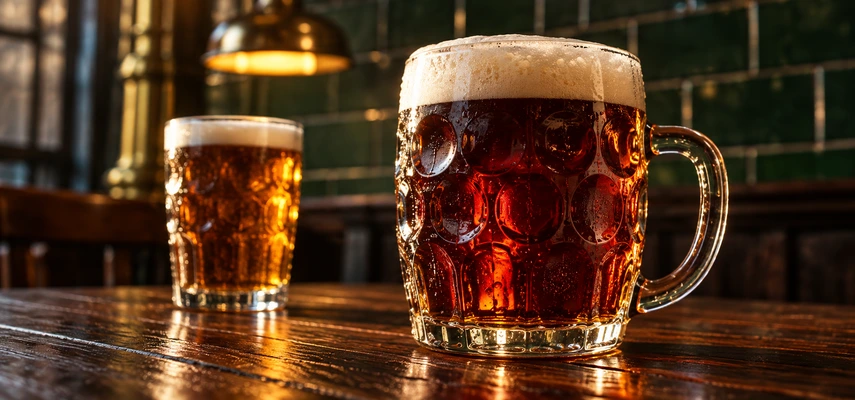

A brown lager smells of bread crust rather than coffee. An amber lager finishes dry enough to invite another sip. Amber and dark lagers are useful reminders that color is a clue to processing, not a complete flavor forecast. The interesting question is which kind of malt character sits behind the color.
This lesson covers Munich dunkel, international dark lager, Märzen, Vienna lager and international amber lager. All five belong in the prescribed Level 2 range. Learn their individual profiles, then use malt treatment, recipe balance and lager production to explain both the similarities and the differences.
A color family with several flavor routes
Highly kilned malt can contribute bread crust, toast and rich grain character without the strong coffee-like roast of a heavily roasted ingredient. Caramel/crystal malt can add another set of caramel, toffee or dried-fruit possibilities. Small darker additions can adjust color without becoming the dominant flavor.
That means two beers of similar brown appearance can have different grain bills and aromatic centers. The brewer also chooses starting extract, wort fermentability, hopping and maturation. Calling both dark leaves most of the useful production story untold.
Throughout the group, lager fermentation usually keeps overt fruity or spicy yeast character restrained. Malt can therefore occupy the foreground, with hops supplying balance and sometimes quiet herbal or spicy detail. Malt-driven still does not mean hop-free or necessarily sweet in the finish.
Munich dunkel: bread crust with depth
Munich dunkel typically appears deep copper to brown, often with red or garnet highlights and a cream-colored head. It is generally clear enough for light to reveal those highlights. Its aromatic center is rich malt: bread crust, toast and sometimes a gentle nutty or chocolate-like suggestion.
The flavor is rounded and malt-led without harsh roast. Bitterness is restrained but helps the beer avoid a cloying finish, and hop aroma is usually low. Body tends toward medium or medium-full with a smooth texture and moderate carbonation. Alcohol normally stays unobtrusive; this is not defined as a strong warming lager.
Munich malt and related grain-bill choices help build the profile, with traditional lager fermentation and maturation supporting a clean presentation. Decoction is a traditional option, not a mandatory explanation for every modern example. Compared with dunkles bock, dunkel is generally less strong and intense; compared with many stouts, it places far less emphasis on assertive roast.
Märzen: amber malt with a finishing snap
Märzen is commonly amber-orange to copper, clear, with an off-white head. Its malt expression suggests toasted bread and bread crust rather than a heavy dose of burnt grain. Hop aroma is generally low, with enough bitterness to support a rounded but drinkable balance.
Body is medium, carbonation moderate, and strength typically more substantial than a light everyday lager without becoming a doppelbock-like warming experience. The initial malt richness should lead toward a reasonably dry finish, not a sticky dessert impression. The recipe and fermentation have to work together to make that combination possible.
Munich and other suitable base malts help produce the toasted profile. The name recalls March brewing traditions, but it is not an instruction that every modern bottle must have been brewed during that month. Oktoberfest labels also need context: amber Märzen and the paler golden Festbier served at the modern festival are not interchangeable style definitions.
Vienna lager: toasted malt, a leaner balance
Vienna lager usually has an amber to copper color, clear appearance and off-white head. Its aroma and flavor emphasize elegantly toasted malt rather than intense roast or thick caramel sweetness. Traditional hop expression may be quietly floral or spicy.
Compared with Märzen, Vienna lager generally has lighter malt intensity and body, with a somewhat drier, more bitter balance. Body is commonly medium-light to medium, carbonation moderate, and alcohol is ordinarily in everyday-lager territory rather than pronounced warmth. Bitterness should support the toast without turning the beer into an overtly hop-driven style.
Vienna malt provides a useful ingredient reference, although actual grists can include pilsner and Munich malts. Clean lager fermentation lets the malt remain clear. The name identifies a style tradition rather than proof that the beer was made within Vienna’s city limits; contemporary examples are brewed in many places.
International amber lager: a wider territory
International amber lager is typically clear amber to copper with an off-white head. Grain, light toast or caramel can provide low-to-moderate malt character. Hop aroma is generally unobtrusive, and restrained fermentation avoids the strong fruit or spice associated with yeast-driven ales.
Bitterness is low to moderate, body light to medium, and carbonation often livelier than in a rich malt-centered comparison. A little perceived sweetness is possible when bitterness is low, but the finish can remain moderately dry. Alcohol is usually moderate rather than overtly warming.
Recipes can combine base malt, color or caramel malts and, in some examples, adjuncts or coloring materials. International amber is therefore broader than one specific Vienna-malt formula. Compared with Vienna lager, its toasted malt expression is often less developed. Judge the actual profile rather than assuming every amber commercial lager is secretly the same historical style.
International dark lager: color without stout-level roast
International dark lager ranges from amber-brown into much darker brown, often with ruby highlights and a pale tan or off-white head. Grain, caramel and gentle chocolate-like character may appear, but aggressive burnt roast is not the main point. Hop aroma is usually low.
The balance is commonly somewhat sweeter and richer than an international pale lager, with low bitterness and a light-to-medium body. Carbonation can be moderate to high. Alcohol is ordinarily restrained in sensory effect. The darker appearance does not make this automatically stronger than the pale beer beside it.
A pale-lager base can be adjusted with darker ingredients or color contributions, sometimes alongside adjuncts. Compare it with Munich dunkel’s more deeply developed bread-crust malt character: both can be brown, but the malt expression need not be equally rich. Compared with stout, roast is generally much more subdued.
Why bitterness can change the impression of sweetness
The same residual composition can seem different when bitterness, acidity, alcohol and gas change the overall balance. In these lagers, restrained hopping allows malt to lead, but enough bitterness may still be necessary to keep the result from seeming heavy or overly sweet.
That is why a malt-driven classification should not make you ignore the hops. They can perform important balancing work without announcing a grapefruit aroma. Conversely, a toast-like aroma does not establish residual sugar; aroma association and sweetness are different observations.
Use a complete tasting note before choosing an explanation. If a Vienna lager seems drier than a Märzen, consider both fermentability and balance. Do not claim one isolated measurement or one named malt completely determines what the palate experiences.
Distinguish the labels that sound similar
Dunkel means dark in German, but Munich dunkel is a specific style reference in this lesson. Dunkles bock belongs to a different strength and intensity comparison, covered in Article #12. A dark word on the label is not enough to collapse both beers into one category.
Märzen, Vienna and international amber overlap in appearance yet differ in typical malt expression and balance. The international terms are useful broad categories, not protected geographical designations. A beer’s actual place of production and its style name can answer different questions.
The Märzen reference also helps separate brewing history from current expectations. Historical associations can explain a name without becoming a universal modern production rule. Concentrate on the profile the name now helps a reader anticipate.
A comparison that reveals the processing
Take written descriptions of Munich dunkel, Vienna lager and a dark stout. Mark every grain-derived descriptor and arrange them from fresh bread through toast to roast. The useful discovery is not that one beer is better; it is that different thermal treatments create different sensory centers.
Next add body, sweetness, bitterness and alcohol impression. Does the darkest description also have the highest alcohol? It need not. Does the richest aroma guarantee the sweetest finish? Again, no. This exercise can be completed without drinking and directly tests the shortcuts most likely to mislead you.
If you choose a voluntary tasting and are legally eligible, use similar conditions and clean glasses. Let appearance inform the note without dictating it. A clear brown lager may offer more sensory detail when light passes through the glass than when viewed against a dark background.
Learn the group as contrasts
For each style, write one sentence about its central grain character and one about its nearest comparison. Munich dunkel points toward bread-crust richness; Vienna toward balanced toast; Märzen toward a fuller amber malt presentation. The international categories often offer a broader, more restrained commercial expression.
Then state the production explanation in familiar language. Different malt treatments and proportions shape aroma and color; starting extract and fermentation affect strength and residual character; hopping influences balance. This is more durable knowledge than memorizing five disconnected adjectives.
One-page revision summary
Amber and brown do not automatically mean burnt, sweet or strong. Munich dunkel, Märzen and Vienna lager show different expressions of developed malt, with varying body and bitterness. International amber and dark lagers cover broader territory and can use varied recipes to reach their intended presentation.
Keep the style names, strength categories and historical labels distinct. Explain the malt treatment, recipe and clean lager fermentation that support each profile. Color starts the comparison; aroma, palate and production relationships finish the useful work.
Continue your beer studies
Explore the related lessons on malt explained alongside beer fermentation to extend the ingredient, process or sensory reasoning in this article.
Knowledge check: 10 original practice questions
Independent TFE questions, not official WSET examination items. Choose one answer per question; explanations follow separately.
1. Which malt impression is central to Munich dunkel?
- Only sharp lemon acidity
- Rich bread crust and toast without harsh roast
- Mandatory coffee additions
- Intense tropical dry hopping
2. How does Vienna lager generally compare with Märzen?
- Always higher in alcohol
- Always intensely smoked
- Lighter in malt intensity and body, with a drier balance
- Identical in all sensory properties
3. Which statement about modern Märzen is accurate?
- Its historical name does not require every example to be brewed in March
- It must be pale as light lager
- It is synonymous with every golden Festbier
- It cannot have a dry finish
4. What distinguishes international dark lager from a strongly roasted stout comparison?
- Dark lager contains no grain
- Dark lager cannot be brown
- Stout always has less alcohol
- Dark lager generally has much more restrained roast
5. Which group is a broad amber-lager category rather than one mandatory Vienna-malt recipe?
- International amber lager
- Only Munich dunkel
- Only rauchbier
- Only imperial stout
6. Why can a brown lager be relatively moderate in alcohol?
- Brown coloring removes alcohol
- Color and starting fermentable extract are separate variables
- Lager yeast never produces alcohol
- All brown beer is alcohol-free
7. Which statement about malt-driven lagers is accurate?
- They must be hop-free
- They must all finish sweet
- Hops can balance malt without dominating aroma
- They require banana-like yeast character
8. Which style is generally less strong and intense than dunkles bock?
- Every imperial stout
- Every doppelbock
- Only double IPA
- Munich dunkel
9. What can distinguish two equally brown lagers?
- Different grain bills and balances despite similar color
- Nothing at all
- Only the shape of the cap
- The impossibility of lager fermentation
10. Which observation directly supports a sweetness judgment?
- The word amber alone
- The actual palate impression evaluated separately from caramel-like aroma
- Only the country of origin
- Only the darkness of the bottle
Answers and explanations
1. B — Rich bread crust and toast without harsh roast. Munich dunkel centers on developed malt richness. Its brown color does not imply the aggressive roast associated with some stouts. Mapping: LO3 AC1/AC2.
2. C — Lighter in malt intensity and body, with a drier balance. Vienna typically offers a leaner toasted-malt balance than Märzen. These are comparative tendencies, not guarantees about every example. Mapping: LO3 AC1.
3. A — Its historical name does not require every example to be brewed in March. The name has brewing-history roots, while the modern style has an amber toasted-malt profile. Present-day production timing is not universally fixed by the name. Mapping: LO3 AC1.
4. D — Dark lager generally has much more restrained roast. International dark lager can show gentle caramel or chocolate-like notes without assertive burnt roast. Color alone does not make it stout-like. Mapping: LO3 AC1/AC2.
5. A — International amber lager. International amber lager covers varied commercial recipes and histories. It is not simply another name for a specific Vienna-malt formulation. Mapping: LO3 AC1/AC2.
6. B — Color and starting fermentable extract are separate variables. Color reflects ingredient and processing choices, while strength depends on starting material and fermentation. Dark appearance does not determine ABV. Mapping: LO3 AC2/AC3.
7. C — Hops can balance malt without dominating aroma. Malt-driven describes sensory emphasis. Restrained hops can provide essential balancing bitterness even when obvious hop aroma is low. Mapping: LO3 AC2/AC3.
8. D — Munich dunkel. Munich dunkel is the moderate-strength dark malt-driven comparison. Dunkles bock develops a stronger, more intense malt presentation. Mapping: LO3 AC1.
9. A — Different grain bills and balances despite similar color. Highly kilned malt, caramel materials and small color additions can produce similar appearances through different sensory routes. Mapping: LO3 AC2/AC3.
10. B — The actual palate impression evaluated separately from caramel-like aroma. Aroma associations and residual sweetness are different observations. Evaluate palate sweetness in the context of bitterness, body and other components. Mapping: LO3 AC1.











