










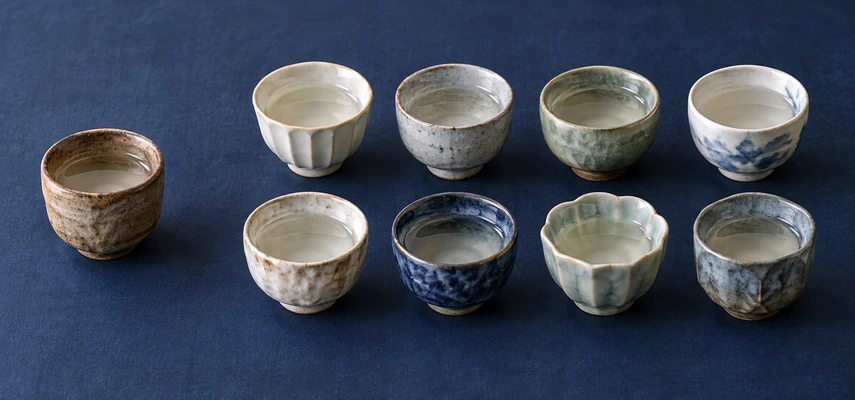

Sake classifications make a crowded label easier to understand, provided you ask them the right questions. They can tell you about ingredients, rice polishing and production requirements. They don’t supply a complete tasting note, a guaranteed serving temperature or a verdict that one bottle must be better than another.
The first division is between specially designated sake, often called premium sake in educational materials, and futsu-shu, ordinary or non-special-designation sake. The eight familiar premium names can then be organized through two ingredient families and several production distinctions. Learn that structure before trying to memorize a ladder of unfamiliar words.
Sake classifications describe eligibility
Tokutei meisho refers to the special designations. The National Tax Agency labeling standard sets conditions for their use. These include more than a single polishing number: ingredients, rice eligibility, koji proportion and relevant production and sensory requirements all contribute to the framework.
This makes the system useful but bounded. A qualifying name records compliance with its conditions. It doesn’t establish that every bottle carrying that name has an identical aroma, sweetness or texture. Yeast, fermentation management, finishing and storage can still produce substantial variation within a category.
The word grade can encourage an unhelpful race toward the apparently highest rung. For Level 3 reasoning, keep classification separate from quality assessment. A beautifully balanced honjozo can be more successful in its own expression than an awkwardly balanced daiginjo, even though their production thresholds differ.
Two ingredient families organize eight names
The junmai family is made without added brewing alcohol. Its four names are junmai, tokubetsu junmai, junmai ginjo and junmai daiginjo. Rice, rice koji and water remain central; junmai doesn’t mean dry rice fermented alone with no water or microorganisms.
The parallel conventional presentation contains honjozo, tokubetsu honjozo, ginjo and daiginjo, with permitted brewing alcohol used under the applicable restrictions. The NRIB classification table sets out the eight names together. Junmai is combined with ginjo or daiginjo when those products meet the relevant conditions without brewing alcohol addition.
This structure prevents a common mistake: treating junmai as the opposite of ginjo. A sake can be both. Junmai answers an ingredient question; ginjo adds production and polishing requirements. Combining the words supplies more information rather than creating a contradiction.
Read polishing as the percentage remaining
Seimai-buai expresses polished rice weight relative to the original brown rice weight. At 60%, the nominal remaining weight is 60% and the removed portion is 40%. A lower number therefore means more extensive polishing, not less.
The thresholds are maximum percentages remaining. Rice polished to 55% meets a 60%-or-less polishing threshold; rice at 65% does not. This interpretation is essential before applying any category chart. Reversing the denominator can turn a correctly memorized number into an incorrect answer.
Polishing influences composition and processing cost, but the number doesn’t replace the full eligibility check. Nor is it a universal flavor score. The Ministry of Agriculture explanation presents classification through ingredients, processing and polishing together, which is a better approach than looking at one isolated percentage.
The eight special designations at a glance
The following is a study overview of the familiar eight-name framework. It summarizes polishing and alcohol distinctions; other conditions still apply.
| Designation | Added brewing alcohol in this presentation | Polishing threshold |
|---|---|---|
| Junmai | No | No prescribed numerical cutoff |
| Tokubetsu junmai | No | 60% or less, or qualifying special production basis with explanation |
| Junmai ginjo | No | 60% or less |
| Junmai daiginjo | No | 50% or less |
| Honjozo | Yes, restricted | 70% or less |
| Tokubetsu honjozo | Yes, restricted | 60% or less, or qualifying special production basis with explanation |
| Ginjo | Yes, restricted | 60% or less |
| Daiginjo | Yes, restricted | 50% or less |
Ginjo and daiginjo also require the relevant ginjo production and sensory characteristics. Tokubetsu isn’t a free-standing compliment that can be attached to anything the producer likes. Plain junmai has no current numerical polishing cutoff, a detail that makes some older simplified charts misleading.
Junmai and honjozo are not quality opposites
Junmai identifies the absence of added brewing alcohol within its requirements. It doesn’t require every sample to be heavy, rustic, sweet or highly acidic. Those impressions depend on the whole production plan. A refined, relatively delicate junmai is entirely compatible with the ingredient distinction.
Honjozo allows restricted brewing alcohol addition and has the 70%-or-less polishing threshold. Alcohol addition can influence extraction and the balance of rice-derived components. It isn’t automatically equivalent to adding flavoring, and the category name doesn’t prove the sake was made carelessly.
For a useful comparison, separate the confirmed facts from tendencies. One bottle may show a lighter palate than another, but knowing only junmai versus honjozo cannot isolate the cause. Rice preparation, yeast, fermentation, dilution and other choices might differ too. The category provides context for an explanation, not an experimental control.
Tokubetsu needs an objective basis
Tokubetsu means special in these designated names, but the labeling framework requires an objective explanation. A polishing basis of 60% or less can qualify, while another special production basis needs the relevant explanation. The surrounding quality conditions remain part of eligibility.
This is why tokubetsu junmai and junmai ginjo aren’t synonyms. Their polishing figures may overlap, but the designation requirements and production description aren’t identical. Likewise, tokubetsu honjozo shouldn’t simply be renamed ginjo because both might show a similar percentage on the back label.
When revising, attach a question to the word: special on what stated basis? That encourages reading the actual label rather than filling the gap with a story about unusually ancient rice, extra-long fermentation or a secret technique that the producer never claimed.
Ginjo and daiginjo involve more than arithmetic
Ginjo-style production is associated with careful management intended to achieve characteristic aromas and expression, commonly involving low-temperature fermentation. The polishing limits are 60% or less for ginjo and 50% or less for daiginjo. The corresponding junmai forms share those limits while excluding brewing alcohol addition.
Reaching 50% doesn’t automatically require a producer to label every eligible product daiginjo, and a number alone doesn’t prove all conditions are met. In a question about possible eligibility, say which threshold is satisfied and identify what further information is needed. Don’t convert a partial clue into a complete certification.
Aromatic fruit can be common in these styles, but an individual sample still needs observation. The category doesn’t tell you an exact fruit descriptor, a fixed intensity or a guarantee that chilled service is the only successful option. Production expectations should guide attention while leaving room for the actual sake.
Shared conditions prevent misleading shortcuts
Specially designated sake requires a koji-rice proportion of at least 15% of the total polished rice weight. The eligible rice provisions also matter. These are shared foundations that can disappear when a chart displays only the headline polishing limits.
For relevant alcohol-added special designations, the NTA restricts brewing alcohol by weight relative to polished rice, calculated on the specified 95%-alcohol basis, to no more than 10%. This isn’t a rule that the final drink contains only 10% ABV. It isn’t a percentage of the finished bottle volume either.
Those denominators matter more than memorizing an isolated ten. If a question tests the basis, name the polished-rice weight and the reference alcohol concentration. Avoid an improvised volume calculation unless the necessary conversion information is supplied. A rule about ingredient accounting answers a different question from the label’s final alcohol strength.
Futsu-shu is a broad category
Futsu-shu sits outside the special designations. That doesn’t mean every example uses the same ingredients, polishing level or production shortcuts. A product may fall outside the designated framework for different reasons. There is no single compulsory sensory profile hidden in the word ordinary.
The JSS classification overview distinguishes this broad group from specially designated sake. Use that distinction without assuming ordinary means faulty. An everyday sake can be clean, balanced and well suited to its intended setting.
Nor should you assume that any product without added alcohol automatically earns a particular special designation. Other requirements and the producer’s actual labeling decision matter. Ingredients alone are an incomplete eligibility check, just as a polishing number alone is incomplete.
Try sorting a hypothetical back label into three columns: confirmed ingredient facts, confirmed processing facts and unanswered questions. A junmai ginjo name belongs in the first two columns, while its exact sweetness and quality remain unanswered until further evidence appears. Add a 55% polishing statement and note how it supports one eligibility condition without answering whether the sake is nama or genshu. This simple sorting exercise prevents several independent production systems from collapsing into a single imagined hierarchy. It also makes clear which extra information a customer or examination question would need.
Build the category distinctions through honjozo and junmai and ginjo and daiginjo. Keep those legal and production facts separate from the evidence used in quality assessment.
One-page revision summary
Organize the eight names through ingredient family and production requirements. Remember 70% for honjozo, 60% for ginjo and 50% for daiginjo, while plain junmai has no numerical cutoff and tokubetsu needs a qualifying explained basis. Check shared conditions and correct denominators. Treat futsu-shu as broad non-special-designation sake, and assess quality from the actual glass.
Written practice: original TFE exercises
These suggested marks and indicative points are independent teaching guidance, not official WSET marking schemes.
Exercise 1: 5 suggested marks
Explain why a sake at 55% seimai-buai cannot be classified conclusively from that number alone. Mapping: Unit 1 LO2.
Indicative marking points:
- 55% describes rice weight remaining, not removed.
- It meets the polishing threshold of ginjo but not daiginjo.
- Ingredients determine whether a junmai form is possible.
- Ginjo production and other shared requirements still need confirmation.
- A category or polishing figure does not establish the final sensory quality level.
Model answer: At 55% seimai-buai, 55% of the original brown-rice weight remains. This meets the ginjo polishing limit but not the daiginjo limit. Ingredients, ginjo production and shared requirements still need confirmation, so the number alone cannot classify the sake conclusively or establish its sensory quality.
Why it works: It interprets the percentage, tests two thresholds and identifies the missing evidence instead of assigning a category from one clue.
Common mistake: Calling 55% the removed portion, or declaring any rice at 55% automatically produces junmai ginjo.
Exercise 2: 5 suggested marks
Distinguish junmai, tokubetsu junmai and futsu-shu without treating them as a sensory ranking. Mapping: Unit 1 LO2.
Indicative marking points:
- Junmai is a special designation without brewing alcohol addition.
- Plain junmai has no numerical polishing cutoff.
- Tokubetsu junmai needs the qualifying special basis, such as 60% or less, with relevant explanation.
- Futsu-shu is outside the special designations and is broad in possible production.
- Actual quality requires sensory evidence rather than the names alone.
Model answer: Junmai is a special designation excluding added brewing alcohol, with no current numerical polishing cutoff. Tokubetsu junmai adds a qualifying special basis and relevant explanation. Futsu-shu is outside the special designations, not one compulsory flavor or ingredient recipe. These names inform production understanding while actual quality still needs sensory evidence.
Why it works: It separates eligibility and breadth from evaluation, while addressing the important plain-junmai exception.
Common mistake: Assigning a universal heavy taste to junmai or assuming all futsu-shu is faulty.
Knowledge check: 10 original practice questions
Independent TFE questions, not official WSET examination items. Choose one answer per question; explanations follow separately.
1. Why are tokubetsu junmai and junmai ginjo not synonyms?
2. What does the restricted brewing-alcohol rule compare?
3. Which conclusion is justified by a special designation?
4. Which is the daiginjo polishing threshold?
5. What is the honjozo polishing limit?
6. What does 60% seimai-buai mean?
7. Which statement about plain junmai is current?
8. What is the minimum koji-rice proportion for special-designation sake?
9. Which designation excludes added brewing alcohol?
10. Which is the best description of futsu-shu?
Answers and explanations
1. C — Their eligibility and production requirements differ even if polishing figures overlap.. A shared percentage does not erase the different basis for the designation. Mapping: Unit 1 LO2 Range 1.
2. D — Alcohol weight on the specified 95% basis with polished rice weight.. The ingredient-accounting rule is not a statement that finished sake must be 10% ABV. Mapping: Unit 1 LO2 Range 1.
3. C — Relevant category conditions apply, while actual sensory quality still requires assessment.. Classification provides production information but does not replace evaluation of the actual product. Mapping: Unit 1 LO2 Range 1.
4. C — 50% or less.. The numerical limit is 50% remaining, with other production and quality requirements also applying. Mapping: Unit 1 LO2 Range 1.
5. D — 70% or less.. This is a maximum percentage remaining, not a compulsory exact target for every product. Mapping: Unit 1 LO2 Range 1.
6. B — 60% of the original brown-rice weight remains after polishing.. The figure records remaining rice weight, so lower numbers mean more extensive polishing. Mapping: Unit 1 LO2 Range 1.
7. A — It has no prescribed numerical polishing cutoff.. The current framework distinguishes plain junmai from its more specifically qualified forms. Mapping: Unit 1 LO2 Range 1.
8. A — 15% of total polished rice weight.. The denominator is total polished rice weight, not liquid volume or the material removed by polishing. Mapping: Unit 1 LO2 Range 1.
9. B — Junmai ginjo.. Junmai in the combined name identifies the ingredient distinction alongside ginjo requirements. Mapping: Unit 1 LO2 Range 1.
10. B — A broad group outside the special designations.. The name does not supply one fixed ingredient recipe, sensory profile or quality verdict. Mapping: Unit 1 LO2 Range 1.












