










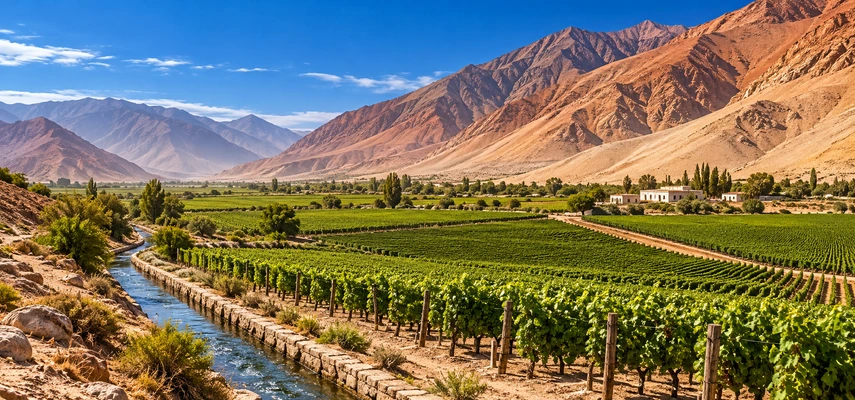

A clear grape spirit can be remarkably expressive without acquiring vanilla or toast from a barrel. That is one reason Pisco deserves its own lesson alongside the better-known wood-aged brandies. Pisco explained, however, requires another distinction before the tasting begins: Chilean and Peruvian production are governed by different national frameworks.
Both traditions work with grapes and fermented wine or must, and both include aromatic styles. That common starting point should not become a single imaginary rulebook. Geography, permitted varieties, distillation and post-distillation choices need to be attached to the relevant country. Otherwise a correct statement about one tradition can become an incorrect statement about the other.
This guide focuses on production rather than trying to settle national claims about the name’s history. Learn the two systems side by side. Their differences make useful examples of how a spirit’s identity can depend as much on regulated choices after fermentation as on the raw material printed in a short definition.
Pisco explained from grapes rather than grain
Grapes supply fermentable sugars in their juice. After preparation, fermentation creates the ethanol in the alcoholic base. Distillation then selects and concentrates components from that base. Pisco is therefore not grape-flavoured vodka, and the presence of grape aroma does not establish that a grape extract was added after distillation.
The grape varieties matter because they supply different aromatic material and precursors. Aromatic varieties can contribute pronounced floral and fruit-associated character. The label “non-aromatic,” used in one national classification, does not mean a grape produces a spirit with absolutely no smell. It identifies a group within that system, not a universal sensory verdict.
As with other fruit spirits, handling and fermentation help establish what the still receives. Processing choices can preserve, transform or lose characteristics before a distiller selects a heart fraction. The final spirit is a product of the whole sequence. A named grape alone isn’t enough to predict every aroma or the intensity of every bottle.
Peru has a defined origin and grape list
The Peruvian denomination regulation defines coastal production areas in Lima, Ica, Arequipa and Moquegua, plus the Locumba, Sama and Caplina valleys in Tacna. Naming a whole country is not a substitute for that delimited origin. Nor should the rule be casually expanded to every part of Tacna.
Its eight recognised grapes are Quebranta, Negra Criolla, Mollar, Uvina, Italia, Moscatel, Albilla and Torontel. The regulation groups the first four as non-aromatic and the last four as aromatic. These names belong to the grape requirements and classification; they aren’t maturation grades or synonyms for alcohol strength.
This is a useful place to practise category-specific vocabulary. Italia, for example, is a permitted grape name in this setting, not a claim that the finished spirit comes from Italy. Read the term in its production context. Spirits labels contain names that can do more than one job in ordinary language.
Peruvian types describe how grape material is organised
Puro identifies Pisco from a single permitted grape variety. It doesn’t mean the same thing as “single cask,” “oldest” or “strongest.” A single-variety spirit can still reflect decisions in grape growing, fermentation, distillation and resting. The designation narrows one variable without documenting the entire process.
Acholado involves a blend. The permitted combination can occur at different stages, including grapes, musts, fermented material or finished Piscos, under the denomination’s framework. It is therefore too narrow to define every Acholado as two finished bottles mixed just before packaging. The production route can organise the blend earlier.
Mosto verde uses must whose fermentation is interrupted before completion. This does not mean the distillation equipment ferments the remaining sugar. Fermentation and distillation remain different operations. Nor should a learner assume that residual sugar in the base simply pours through a still into an automatically sweet spirit: volatility and selection intervene.
The Peruvian tourism authority’s category introduction presents these three names in a reader-friendly form. For exact production interpretation, the regulation provides the firmer reference. Keep attractive sensory language separate from a requirement: no grape variety legally guarantees that every example must smell like one specified flower or fruit.
Peruvian distillation and resting retain a clear identity
The regulation describes direct batch distillation, with heads and tails separated to retain the central portion. It excludes rectifying columns of the described kind. The objective is a grape-derived spirit with its own character, rather than a neutral base whose personality must later be supplied by botanicals or oak.
Peruvian Pisco is brought to its required strength through its production and collection, rather than later water dilution. The published range is 38–48% ABV, and the regulation prohibits adding water or sugar to the product in the specified production context. That is a crucial distinction from casually applying the general finishing toolkit to every spirit category.
At least three months of resting takes place in glass, stainless steel or another suitable material that does not alter the spirit’s defining characteristics. This is an inert resting route, not an oak-ageing requirement. The clear presentation therefore doesn’t mean the spirit necessarily went straight from condenser to retail bottle without a controlled resting period.
Connect the choices to style without overstating them. A grape-derived aromatic profile can remain prominent because it isn’t being deliberately overlaid with wood extraction. That doesn’t mean every example has identical intensity or texture. Grape selection, fermentation and collection still provide room for differences within the denomination.
Chile has its own northern grape-growing zone
Under Chile’s Decreto 521, the production zone covers Atacama and Coquimbo. The framework identifies permitted grapes and requires the relevant production and packaging activities within the zone. These are Chilean origin rules; importing the Peruvian regional list would answer the wrong question.
The permitted varieties include several Moscatel grapes, alongside names such as Torontel and Pedro Jiménez. Aromatic grape character is important to many Chilean styles. Similar-looking variety names across countries should be read in their local regulatory context rather than treated as proof that the two permitted lists are identical.
ProChile’s official introduction places the vineyards in northern Chile’s dry, sunny landscape. It also describes clear and wood-influenced presentations. Use that as geographical and style context, while giving the legal text priority for exact category thresholds. Promotional summaries can simplify numbers in ways that a qualification student should not repeat unquestioningly.
Chilean strength categories are not age grades
Chilean production uses batch stills under the regulation, but it should not be collapsed into the Peruvian process. Chilean presentations can be organised by strength and may include different resting or wood treatments. Always identify which country’s rule is being discussed before attaching a method or a label definition to the word Pisco.
The legal minimum strengths include Tradicional or Corriente: 30%; Especial: 35%; Reservado: 40%; Gran Pisco: 43% ABV. These are strength categories, not promises of years in a barrel. A higher stated ABV also doesn’t automatically establish greater maturity, stronger grape aroma or better balance.
Wood-related terms have their own conditions. The regulation provides a general resting minimum of 60 days, with guarda requiring at least 180 days in qualifying wood and envejecido at least 360 days. The point is not to memorise every possible producer presentation here, but to see how strength and maturation can form separate label coordinates.
Decode a label in the right order
Suppose a description identifies a Chilean Reservado at 40% ABV and another identifies a Peruvian Italia Puro at 42% ABV. The first designation communicates a strength category; the second communicates a single grape variety. They aren’t competing age grades. Both strengths can fit their respective frameworks, so ABV alone cannot identify the country. Begin with origin, interpret the designation within that system, and only then compare the documented production choices. This sequence avoids treating familiar-looking label language as a universal code.
Typically unaged does not mean universally unwooded
The course’s useful starting picture is a typically unaged grape spirit. That works for introducing a clear, grape-focused style, but it must be qualified. Peruvian Pisco’s inert resting framework differs from Chilean options that can include wood. “All Pisco is oak aged” and “no Pisco can ever touch wood” both flatten a distinction the learner needs to retain.
Compare a hypothetical clear Peruvian aromatic Puro with a wood-treated Chilean presentation. Grape selection, national production rules, resting and wood influence may all differ. Don’t attribute every contrast to nationality as if a passport were an aroma ingredient. Identify the actual production variables and describe what each can contribute.
For an alcohol-free revision exercise, classify written descriptions. A single-variety Peruvian type points towards Puro; interrupted fermentation identifies Mosto verde; Atacama and Coquimbo point towards Chile’s origin zone. Those tasks test understanding of the framework without requiring a purchase, a tasting or a claim that one country’s entire tradition is superior.
What to remember
Use two columns in your notes, one for Chile and one for Peru. Put geography, permitted grapes, distillation, strength and resting in the correct column before comparing them. Their shared grape origin explains the family resemblance; their separate rules explain why a single universal production summary is misleading. Pisco becomes easier to understand when the similarities and differences are both allowed to remain visible.
Continue your study
To compare Pisco with a wood-matured grape spirit, read Cognac Explained: Ugni Blanc, Crus, Distillation, and Age Classifications. To distinguish grape wine from pomace, read Grappa Explained: Grape Pomace, Distillation, and Italian Traditions. To plan an aromatic fruit-spirit comparison, read How to Taste and Compare Spirits: A WSET Level 2 Revision Guide.
Knowledge check: 10 original practice questions
Independent TFE questions, not official WSET examination items. Choose one answer per question; explanations follow separately.
1. What is the minimum Peruvian resting period discussed?
- Three years in new oak
- Three days
- Three months
- Ten years in glass
2. Which statement correctly limits the Tacna part of Peru’s area?
- Every part of Tacna automatically qualifies
- Only the capital city qualifies
- Tacna is a Chilean grape variety
- The Locumba, Sama and Caplina valleys are specified
3. Which pair identifies Chile’s Pisco production zone?
- Lima and Ica
- Grande Champagne and Borderies
- Atacama and Coquimbo
- Bas-Armagnac and Ténarèze
4. Which group is aromatic in the Peruvian classification?
- Corn, rye, barley and wheat
- Juniper, gentian, quinine and wormwood
- Quebranta, Negra Criolla, Mollar and Uvina
- Italia, Moscatel, Albilla and Torontel
5. Which finishing practice conflicts with the Peruvian rule discussed?
- Adding water to the finished Pisco
- Resting in suitable inert vessels
- Using permitted grape must
- Selecting a heart portion
6. Which Peruvian type is made from one permitted grape variety?
- Guarda
- Acholado by definition of any blend
- Puro
- Gran Pisco
7. What distinguishes Mosto verde?
- Water is added to make it sweet
- The spirit must be aged in green oak
- Fermentation is interrupted before completion
- Every grape must be green in colour
8. What supplies the ethanol before Pisco distillation?
- Adding unfermented grape skins to water
- Oak extraction
- The irrigation channel
- Fermentation of grape-derived must or wine
9. What does Chilean Reservado primarily indicate in the categories here?
- A minimum alcoholic strength of 40% ABV
- The absence of all resting
- Forty years in oak
- A compulsory Peruvian single grape
10. Which statement best handles Pisco wood treatment?
- National rules must be distinguished because Chilean wood options differ from Peru’s inert route
- Colour alone proves the country of origin
- Every Pisco requires three years in oak
- All countries use one identical finishing rule
Answers and explanations
1. C — Three months. The regulation requires at least three months in suitable vessels that do not alter the defining characteristics. Mapping: LO2.
2. D — The Locumba, Sama and Caplina valleys are specified. The Peruvian definition specifies those valleys rather than treating the entire department as the same origin area. Mapping: LO2.
3. C — Atacama and Coquimbo. The Chilean framework defines Atacama and Coquimbo, distinct from Peru’s origin areas. Mapping: LO2.
4. D — Italia, Moscatel, Albilla and Torontel. The regulation groups those four grapes as aromatic; the other Peruvian set is classified non-aromatic. Mapping: LO2.
5. A — Adding water to the finished Pisco. The Peruvian regulation prohibits the stated water addition rather than allowing generic post-distillation dilution. Mapping: LO2.
6. C — Puro. Puro identifies the single-variety Peruvian type, separate from Chilean strength or wood terms. Mapping: LO2.
7. C — Fermentation is interrupted before completion. Mosto verde refers to the fermentation state of the must, not grape colour or a wood treatment. Mapping: LO2.
8. D — Fermentation of grape-derived must or wine. Fermentation creates ethanol in the grape-derived base before distillation selects and concentrates components. Mapping: LO2.
9. A — A minimum alcoholic strength of 40% ABV. Reservado is a Chilean strength category, separate from terms describing wood treatment or elapsed age. Mapping: LO2.
10. A — National rules must be distinguished because Chilean wood options differ from Peru’s inert route. The national frameworks differ; a typical clear style must not erase Chilean wood-treated presentations. Mapping: LO2.












