










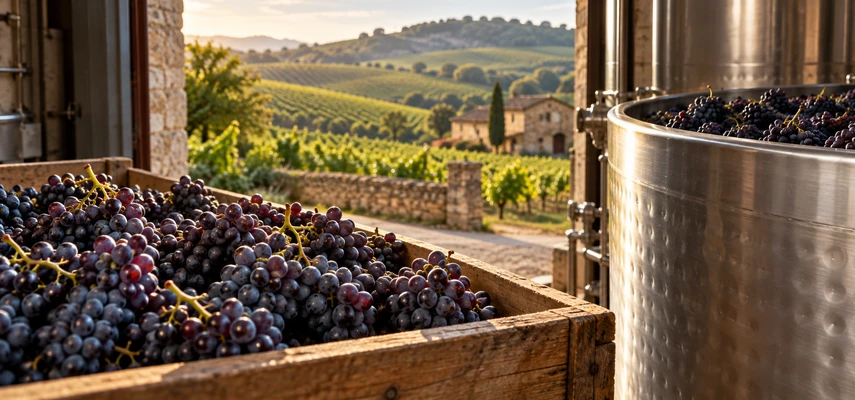

Beaujolais can arrive at the table in two rather different moods. One bottle offers exuberant fruit and very little tannic resistance; another needs air, food and perhaps several years before its structure settles. Both can be Gamay. Explaining that range is the useful Diploma task: connect growing conditions, grape handling, fermentation, origin and commercial intent rather than treating the region as a synonym for November’s new wine.
Beaujolais is a region, Nouveau is a release style, and carbonic maceration is a technique. Confusing those three creates most of the shortcuts that this chapter will help you avoid.
Place Gamay between Mâcon and Lyon
The Beaujolais vineyards sit south of the Mâconnais and north of Lyon, west of the Saône. Gamay noir à jus blanc dominates red production; Chardonnay also supplies white wines, while the broader Beaujolais and Beaujolais Villages categories include rosé. Don’t turn a chapter focused on reds into a claim that every local bottle is red.
The regional wine council’s Gamay profile identifies an early-ripening variety with thin skins and potentially vigorous growth. Those traits don’t guarantee dilute wine. They explain why crop balance and the condition of the fruit matter: enough leaf area and available water must support the intended yield, while excessive growth can shade bunches and complicate disease control.
Temperature affects ripening speed and acid retention; sunlight supports sugar accumulation and changes the bunch environment. Warmth can help an exposed site reach maturity, yet heat and water shortage can interrupt vine function. Cooler or higher slopes may retain freshness but struggle in a difficult season. Always attach a proposed advantage to the season and site that make it useful.
Explain a slope before praising its rocks
The regional technical handbook describes continental, oceanic and Mediterranean climatic influences. Rainfall, exposure and elevation create variation within that broad setting. Much northern vineyard land includes granite and other old rock formations; southern areas include limestone and clay. The region isn’t a single pink-granite slab.
Water availability depends on soil depth, texture, drainage and rooting, not simply the rock’s name. Nutrient availability influences vigour and canopy density. A shallow, freely draining slope may restrain growth in a wet season but impose stress during drought. A deeper site may provide a useful reserve, although excess vigour still needs managing. None of that means dissolved granite travels into a glass as a ready-made flavour.
Weather adds hazards that a regional average conceals. Spring frost can remove young shoots; hail can damage fruit and leaves; rain near harvest can encourage rot or make picking decisions awkward. Downy and powdery mildew require monitoring, and bunch rot threatens both flavour and sound whole berries. Those risks matter particularly when the winery wants intact bunches rather than a load that has already started leaking juice.
Grow grapes for the intended fermentation
Vineyard establishment involves slope access, permitted varieties, planting density and a training system suited to the site. Planting materials should combine suitable Gamay selections with rootstocks appropriate to soil conditions, vigour and water constraints. Short-pruned bush vines remain characteristic, but the regional handbook also describes other permitted training approaches; don’t assume every vineyard uses an identical goblet shape.
Nutrient and water management should respond to vine status and the applicable rules. Canopy management balances healthy leaf area, airflow and bunch exposure; stripping too much leaf can exchange rot risk for sunburn. Harvest timing balances sugar, acidity, flavour, weather forecasts and the intended style, rather than following one regional date.
Hazard management can include site selection and practical frost precautions where suitable, but resources and effectiveness vary. Integrated pest and disease management combines observation, canopy measures and justified treatments; organic certification doesn’t make monitoring unnecessary. For whole-bunch work, careful hand selection and gentle grape transportation help preserve intact berries. Reception should remove damaged or rotten material and organise timely vat filling. A cellar cannot make intracellular fermentation happen inside a berry that has already burst.
Separate carbonic and semi-carbonic maceration
The Australian Wine Research Institute’s technical explanation distinguishes an initial intracellular phase from ordinary yeast fermentation. In full carbonic maceration, intact fruit sits in an oxygen-excluding atmosphere, generally established with carbon dioxide. Enzymatic activity inside berries produces a little ethanol and modifies other compounds, including some malic acid. It doesn’t ferment all the sugar into a finished bottle of wine.
In semi-carbonic maceration, some berries at the bottom release juice under the load. Yeast fermentation in that juice generates carbon dioxide, supporting intracellular activity in intact berries above. The Beaujolais council’s vinification account describes this combination of processes and the subsequent completion of alcoholic fermentation. Real vats are less tidy than two perfectly separated laboratory compartments.
Whole bunches therefore don’t prove full carbonic maceration. A producer may use semi-carbonic work, partial destemming or more conventional red fermentation, with extraction adjusted through temperature, time and cap management. Stems also affect the fermenting mass and can contribute tannin. Avoid the tempting equation that whole bunch automatically means negligible structure.
Connect extraction with the wine you want
Processing decisions begin with the desired style. Shorter maceration and gentle handling may favour approachable fruit and modest extraction; longer skin contact and controlled cap work can produce more structure. Extraction and pressing need separate evaluation: press wine may differ from the free-run fraction, so combining every fraction is a choice rather than an obligation.
Pre-fermentation clarification of settled juice is relevant to white or rosé production, rather than a routine attempt to remove the skins from a red maceration. Must adjustments require analysis and legal permission; adding something because the vintage sounds difficult isn’t a technical justification. Alcoholic fermentation must finish appropriately for the intended wine, regardless of how aromatic its early stages smell.
Malolactic conversion changes malic acid into lactic acid and can improve microbial stability, but it isn’t the same process as intracellular malic-acid metabolism. Maturation in tank, large old wood or barrels changes cost, oxygen exposure and texture differently. New oak can dominate delicate fruit; avoiding it doesn’t mean avoiding serious winemaking.
Blending eligible parcels or fractions can improve balance and consistency without erasing all origin distinctions. Post-fermentation clarification removes unwanted suspended material; stabilisation addresses risks such as tartrate deposits and microbial activity. Finishing adjustments, sulfur dioxide and filtration require decisions based on condition, intended distribution and rules. Neither an unfiltered label nor a glossy cellar guarantees quality.
Packaging and closures must protect the intended drinking window, while wine transportation should avoid unnecessary heat and oxygen exposure. A wine designed for youthful fragrance has little to gain from spending weeks warm on a loading dock. A longer-lived cru needs sound packaging too; tannin isn’t shipping insurance.
Read the regional names accurately
Think first of Beaujolais, Beaujolais Villages and the ten named crus. The council’s north-to-south route runs through Saint-Amour, Juliénas, Chénas, Moulin-à-Vent, Fleurie, Chiroubles, Morgon, Régnié, Côte de Brouilly and Brouilly. These are separate protected origins, rather than ten brands owned by one producer.
International and EU protection frameworks sit alongside national French law and local appellation specifications. A geographical indication identifies protected origin under defined conditions; these AOC/AOP wines occupy the PDO category. INAO administers the recognition framework, while industry associations such as Inter Beaujolais support collective information and promotion. Promotion isn’t permission to ignore a specification.
Comtés Rhodaniens IGP illustrates the wider PGI category, with its own geographical and production conditions, including territory in the Rhône department. This isn’t an automatic alternative label for any rejected Beaujolais lot. Wines without a geographical indication, such as eligible Vin de France, operate under a different set of claims. Neither category grants the right to borrow a protected cru name.
Labelling terms also carry different meanings. Nouveau or primeur concerns early release, while a lieu-dit identifies a named place. The council describes applications for future Premier Cru recognition; a proposed site or favourable procedural step isn’t an approved classification. Check the operative specification before making a current label claim.
Use the crus as comparisons, not predictions
Fleurie offers a useful starting point for studying fragrance and elegance; Morgon and Moulin-à-Vent can illustrate greater structure and development. Treat those as comparative expectations to test, not guaranteed tasting notes. Vineyard position, vintage, extraction and producer choices can outweigh a neat regional stereotype.
For example, compare two similarly aged wines before deciding that a firmer sample proves a particular cru. Was one fermented with more extraction? Did one spend longer in wood? Is one less ripe, rather than better suited to ageing? Strong causal answers offer plausible alternatives and then use evidence to discriminate between them.
The same caution applies to price. A cru name can support demand, but yield, labour, fruit selection, maturation and reputation also affect the commercial position. Higher extraction doesn’t automatically justify a higher price or quality judgment. A concentrated but coarse wine may be less successful than a balanced, fragrant example made for early drinking.
Follow the wine through its business model
Supply changes with harvested volume and permitted production; demand depends on customers, occasion, reputation and competing wines. Costs rise with difficult slopes, selective picking, low usable yields and time in inventory. Legislation affects production and destination-market sales, while currency exchange can alter an importer’s landed cost without changing the wine itself.
A grower may sell grapes; an estate may combine vineyards and winemaking; a merchant may buy grapes or wine and manage a range. A broker connects trading parties without necessarily becoming the producer. A winery supplies production capacity. A virtual winery coordinates a brand through contracted work, and a custom crush facility provides agreed processing services: these are useful analytical models, not claims that every model is equally widespread here.
A cooperative pools member resources; Oedoria provides a local example. A conglomerate may coordinate brands and distribution across businesses, with different scale advantages and management demands from a small estate. Assess who owns fruit, carries stock, controls specifications and bears the commercial risk.
Importing adds freight, compliance and intermediary margins. Retail needs clear positioning; HoReCa buyers consider food compatibility, staff explanation and stock turnover. Direct-to-consumer sales can retain more of the selling price but require visitors, service and fulfilment. Mature and emerging markets may differ in familiarity and channels, yet neither category describes every buyer within a country.
Match promotion to the drinking occasion
Wine brands can emphasise an estate, a merchant or regional identity. Marketing concepts begin with a target customer and a credible benefit: cheerful early drinking and a structured cellar candidate need different explanations. Marketing options include tastings, restaurant partnerships, tourism and digital storytelling. The five Ps connect product, price, place, people and promotion; a compelling story still needs appropriate distribution and a viable margin.
Nouveau gives that framework a particularly visible deadline. The French agriculture ministry identifies the third Thursday of November as its release date. A concentrated launch can create attention and rapid cash flow, but it also makes timing, transport and unsold stock important. The region’s commercial future needn’t depend on squeezing every wine into that one annual occasion.
Compare the evidence here with Alsace as a regional case, then apply the regional comparison framework to the comparison. Compare growing conditions, production decisions, style, quality and the commercial reasons for price. Establish the differences rather than assuming that one familiar name must be better.
Original Diploma practice
These exercises and indicative points are original teaching material, not official WSET questions or marking allocations.
Question 1: compare two fermentation plans
A producer wants one fragrant red for early sale and another with greater structure. Compare appropriate handling, fermentation and maturation choices, including their limitations.
Indicative points: intact fruit, carbon dioxide source, extraction, completion of fermentation, maturation and cost.
Outline answer: Gentle reception and shorter whole-bunch maceration may suit the youthful wine, provided sound fruit and control preserve freshness. Semi-carbonic fermentation generates its atmosphere through yeast activity in released juice; full carbonic work establishes anaerobic conditions around intact berries. Neither finishes the entire wine intracellularly. The structured wine may use longer maceration, different destemming and cap management, with maturation selected for integration. More time and wood tie up money, and stronger extraction can create imbalance rather than quality.
Question 2: evaluate a misleading sales description
A buyer calls a named Beaujolais lieu-dit “an approved Premier Cru, guaranteed to improve for ten years.” Explain what evidence is missing.
Indicative points: current legal status, distinction between place and classification, producer and vintage evidence, quality versus ageing.
Outline answer: A place name or application doesn’t demonstrate formal approval; inspect the operative appellation specification and permitted wording. Then assess the actual bottle’s concentration, balance, tannin, acidity and development. Quality doesn’t establish a precise lifespan. Producer history and storage information help, but the sales statement still requires qualification even if the wine is excellent.
Question 3: evaluate a launch decision
A fictional merchant proposes shipping its entire range by air for the Nouveau deadline. Evaluate that choice for early-release wine and a cru intended for later sale.
Indicative points: deadline value, cost and margin, demand uncertainty, suitable transport, differentiated positioning.
Outline answer: Deadline-sensitive stock may gain commercial value from timely arrival, although freight cost and forecast demand must justify the decision. A cru without that launch requirement may use a slower suitable route, provided handling protects it. Assess cash tied up, destination requirements and exchange exposure. A mixed range needs distinct sales plans; sharing a region doesn’t create identical urgency.
Analytical tasting preparation: compare method and structure
The official Diploma specification, recommended samples table on PDF page 25, lists two essential Beaujolais comparisons: a wine with obvious whole-bunch fermentation character and a Beaujolais Cru with little or none. Nouveau of acceptable or good quality is optional. These are proposed study selections, not bottles tasted here or guarantees about examination wines.
Write a full systematic description blind before revealing identity, using the current official tasting approach. Compare fruit character, fermentation-associated aromas, acidity, tannin, body and length. Don’t identify a technique from one sweet-like aroma alone, or assume a cru cannot use whole bunches. Choose contrasting producer methods deliberately if technical information is available.
Justify quality through balance, concentration, complexity and finish in the actual samples. Assess bottle-ageing suitability separately through retained fruit, structure and existing development. A low-tannin wine may be excellent for immediate drinking; a firmer wine needs sufficient fruit and balance to make further development plausible. Record uncertainty and explain what additional evidence would change your conclusion.












