










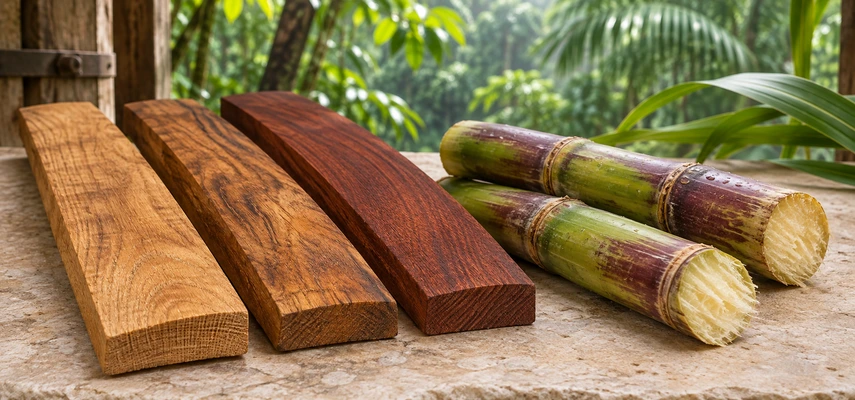

Cachaça starts with fresh sugar cane juice and a Brazilian identity. What happens next can lead to a bright, clear spirit or a wood-influenced expression whose aromas are very different from a familiar oak-aged rum. Brazil’s tradition of using several woods makes the maturation discussion especially interesting: the question is which wood, as well as how long.
The category also offers an excellent lesson in reading classifications carefully. A pot-still statement, a maturation term and the word Premium answer different questions. Putting them in separate boxes makes the law easier to remember and keeps a tasting judgment from becoming a guess based on the label.
Cachaça has a specific material and geographical identity
Brazil’s agriculture ministry defines cachaça as the specifically Brazilian cane-spirit identity, with an alcoholic strength of 38–48% ABV at 20°C. Its current guidance cites Article 54 of the 2025 beverage decree. The fresh-juice route is central to understanding the category, rather than treating it as any spirit made from sugar.
Compare that with molasses rum. Both begin with cane agriculture, but molasses has passed through sugar production before fermentation at the distillery. Cachaça’s juice enters a different preparation sequence. This connection explains their family resemblance without making their protected names, national rules or typical production arrangements interchangeable.
Fresh cane needs suitable handling
Harvesting and transport affect the condition of the material delivered to the mill. The aim is to obtain suitable juice before deterioration undermines the intended fermentation. Pressing separates the sugar-bearing liquid from much of the fibrous material. The remaining bagasse can have other uses, but it is not the principal fermenting liquid.
At Maison Leblon, the producer describes prompt transport and pressing of whole stalks. It also emphasizes its own pressing choices. Treat that as an example of material handling, not proof that every other producer follows an inferior method. A useful account identifies what is done and how that prepares the liquid for the next operation.
Juice preparation supports fermentation
Cane already provides usable sugars, so there is no need for the grain sequence of gelatinizing starch and supplying amylase enzymes. Juice can nevertheless need practical preparation, including removing unwanted solids and adjusting conditions for fermentation. Naturally available sugar does not mean the liquid arrives with every variable already ideal for yeast.
Think about a juice that is too concentrated for the intended yeast performance. Dilution changes the working concentration, while suitable temperature and nutrients help the fermentation proceed as planned. The objective is a reliable alcoholic wash with appropriate characteristics. Simply chasing the highest starting sugar level can work against that objective.
Yeast makes alcohol and contributes to aroma
During fermentation, yeast uses sugars and generates ethanol, carbon dioxide and other compounds. The resulting cane wine or wash is the feed for distillation. Yeast choice, the microbial population and fermentation management can influence the mixture available for later selection; distillation does not erase every earlier production decision.
Novo Fogo’s production account describes yeast cultivated from its own cane fields and a fermentation lasting less than a day. That is a named producer’s arrangement, rather than a legal requirement for every cachaça. Cultivating a local population also differs from assuming that an uncontrolled fermentation is always desirable.
Pot and column routes both belong in the picture
Cachaça can be made through batch pot distillation or other arrangements, including continuous columns. Batch production processes a charge and changes over the course of the run. Continuous equipment supports ongoing feed and product collection once operating conditions are established. These are different production systems, rather than automatic rankings of the finished spirits.
The 2022 Brazilian identity standard distinguishes cachaça de alambique, produced entirely through the specified copper batch route, from cachaça made by other methods or mixtures of methods. The current ministry guidance retains the specific copper-alambique identity. Do not extend that apparatus requirement to every product in the broader category.
Cuts and equipment influence what is retained
In batch distillation, the distiller selects the desired heart portion while managing earlier and later fractions. The changing composition matters, because the object is not merely to collect the greatest possible liquid volume. Apparatus design, copper contact and operation contribute to the result alongside the choice of which distillate to keep.
A producer’s single-distillation practice should not be mistaken for a universal legal ban on a second distillation. The ministry’s corrected explanatory FAQ explicitly permits double distillation or redistillation under the applicable conditions, including preservation of the required sensory characteristics. This is a useful example of checking an appealing shorthand against the actual rule.
Clear spirits can rest without taking on oak character
Resting in a suitable neutral vessel differs from maturation in an active wooden container. Stainless steel does not supply the same extractable wood compounds as a cask. A clear spirit can therefore have undergone a period of storage while retaining a profile centered on cane, fermentation and distillation rather than obvious vanilla and tannin.
Novo Fogo’s current FAQ describes its Silver expression resting in stainless steel and distinguishes that from its wood-treated range. The point is the vessel relationship, rather than an assumption that resting gives all spirits the same flavor. Time alone does not specify which physical and chemical changes are available in the container.
Brazilian woods widen the maturation choices
Oak is important, but it is not the only wood used for cachaça. Amburana, bálsamo and jequitibá are among the names worth recognizing. They are not three Portuguese words for oak: different species can contribute different combinations of aroma, flavor and color, and some are used for relatively restrained effects.
The University of São Paulo’s producer guide discusses wood selection alongside storage conditions and maturation. Learn the principle before collecting an enormous species list. Choosing wood changes the material with which the spirit interacts, while cask history, size and duration affect the scale and balance of the resulting influence.
Wood character should fit the intended spirit
An expressive wood contribution can add interest, but stronger extraction is not automatically better. Imagine an aromatic cane spirit overwhelmed by an intense spice character. The relevant quality question is whether the resulting combination feels balanced and coherent, not whether the producer has extracted the maximum possible amount from the container.
The Avuá account of Brazilian wood traditions describes several native species and the wider context of cooperage. Responsible sourcing belongs in that discussion, too. A familiar wood name does not establish identical forestry conditions, cask construction or availability everywhere, and a list of traditional uses is not a guarantee of sustainable supply.
Envelhecida describes a defined maturation relationship
Under the Brazilian identity standard, cachaça envelhecida contains at least 50% of its volume aged for at least one year in wooden containers of no more than 700 liters. Notice both the proportion and the time. The term does not, by itself, say that every drop spent the full stated minimum in those containers.
The same framework distinguishes armazenada for wood-stored spirit that does not meet the specified aging classification. It also provides for cachaça held in other suitable materials. Consequently, wood contact, the legal envelhecida classification and complete maturation of the whole blend are related ideas with different thresholds. Keep them separate when reading a product description.
Premium and Extrapremium require the whole spirit to qualify
Premium may be used for spirit aged in its entirety for at least one year; Extrapremium requires at least three years. The standard places these expressions separately from the formal denomination. They provide maturation information, rather than a substitute for examining the actual balance, complexity and finish in the glass.
For a blend of fully aged components, a declared aging period follows the youngest component rather than an arithmetic average. A small addition of much older spirit does not turn every younger component into that age. This familiar distinction helps connect cachaça classification with the careful age-reading habits developed elsewhere in the series.
Compare a clear and a wood-influenced example systematically
Start with aroma families, texture and finish before looking at the wood statement. A clear sample might show fresh vegetal, floral or fruit-related notes; a matured example might add spice, nuts or other wood-derived associations. Those are possible profiles, not compulsory tasting descriptors guaranteed by the category name.
Then use the declared production details to explain plausible differences. Was the spirit rested in steel, kept in oak or exposed to another wood? Does the maturation statement apply to the whole volume? Is a named barrel treatment being confused with the legal age classification? Asking these questions produces a much more useful comparison than ranking the darker sample first.
What to remember
Cachaça connects Brazilian origin with fermented fresh cane juice and a specific strength range. Learn the difference between the broad category and cachaça de alambique, and between neutral resting and wood maturation. For labels, separate envelhecida’s proportion threshold from Premium and Extrapremium’s whole-volume requirements. For quality, return to the spirit itself: wood should contribute to a successful whole.
Knowledge check: 12 original practice questions
Independent TFE questions, not official WSET examination items. Choose one answer per question; explanations follow separately.
1. What minimum aged-volume share applies to envelhecida here?
2. Which minimum wood-aging period applies to that qualifying envelhecida portion?
3. Which group contains Brazilian woods used in cachaça production?
4. What distinguishes neutral stainless resting from active wood maturation?
5. How should excessive wood character be judged?
6. What is the minimum whole-volume period for Extrapremium?
7. Which origin is required for cachaça?
8. What distinguishes Premium from the basic envelhecida share threshold?
9. Which route defines the specific cachaça de alambique identity?
10. What is the principal fermenting raw material for cachaça?
11. What bottling-strength range does current Brazilian guidance give?
12. What does the ministry FAQ say about redistillation?
Answers and explanations
- C — At least 50%. The classification has a proportion condition as well as time and container conditions. Mapping: LO3.
- D — One year. The cited classification requires a full year for the qualifying portion in appropriate containers. Mapping: LO3.
- D — Amburana, bálsamo and jequitibá. These are wood names rather than botanical flavorings, grape varieties or Cognac crus. Mapping: LO3.
- A — Steel does not supply the same extractable wood compounds. Vessel material determines available interactions rather than time alone specifying a flavor. Mapping: LO3.
- B — By its effect on balance and the intended whole. More extraction can dominate other characteristics rather than necessarily improving the spirit. Mapping: LO3.
- B — Three years. The expression requires the whole spirit to meet its longer minimum aging period. Mapping: LO3.
- C — Brazil. Brazilian geographical identity is part of the category rather than an optional style description. Mapping: LO3.
- B — Its entire volume must meet the one-year aging condition. The whole-volume condition is maturation information rather than an automatic sensory award. Mapping: LO3.
- A — The prescribed entirely copper batch-still route. The specific equipment identity is narrower than the broader cachaça category. Mapping: LO3.
- D — Fresh sugar cane juice. The juice route distinguishes the material sequence from molasses-based rum production. Mapping: LO3.
- B — 38–48% ABV. The cited national identity range should not be replaced with broader aguardente limits. Mapping: LO3.
- B — It can be permitted subject to the applicable conditions. A producer single-run practice does not establish a universal prohibition on a second run. Mapping: LO3.
Continue exploring this series
4. Fermentation Methods Explained: Liquid, Solid-State, Sequential, and Parallel Fermentation
6. Pot Still Distillation Explained: Design, Heating, Cuts, and Flavor
7. Column and Hybrid Stills Explained: Plates, Reflux, and Continuous Distillation
9. Oak Maturation Explained: Barrels, Oxygen, Evaporation, and Flavor Development
21. Sugar Cane Spirits Explained: Juice, Syrup, Molasses, and Fermentation
22. Caribbean Rum Explained: Distillation, Regional Traditions, and Quality
38. Other Rum Traditions Explained: Haiti, Puerto Rico, Trinidad, Guyana, and Beyond
40. Bacanora, Raicilla, and Sotol Explained: Mexico’s Other Distilled Traditions
50. WSET Level 3 Spirits Exam: Complete Revision Guide and Practice Examinations












