











Champagne production is a sequence of decisions about fruit, time and balance. The second fermentation creates the sparkle, but it doesn’t repair every earlier choice. Press fractions, base-wine fermentation, blending and maturation all help determine what eventually reaches the glass.
The useful Diploma question is therefore more interesting than “what happens next?” Ask why the producer chooses a particular option, what it changes, what it costs and where the explanation has limits. Two wines can follow the same compulsory method and still differ considerably in style and quality.
Press grapes gently and keep fractions meaningful
Whole bunch pressing helps obtain juice while limiting unwanted extraction from skins, particularly when making white wine from dark-skinned grapes. Rapid delivery and careful handling reduce the opportunity for damaged fruit to release colour or develop undesirable changes. Intentional skin contact for a rosé expression is a different objective, not a failure to make a pale wine.
The Comité Champagne’s pressing account distinguishes the first fraction, cuvée, from the later taille. They are kept separate because their compositions and uses differ. Free-run juice means juice draining without deliberate pressing pressure; it shouldn’t be used as an automatic synonym for the entire cuvée fraction in Champagne’s pressing system.
Press juice can bring a different balance of acids, flavour and phenolics as extraction progresses. A winemaker can select fractions to support the intended wine rather than treating every litre as interchangeable. The word cuvée also appears elsewhere for a blend or named wine, so read its context before deciding it always describes a press fraction.
For an explanation of quality, connect gentle handling and fraction selection with the actual objective: clean flavour, suitable acidity, controlled colour and manageable phenolics. Don’t write that every later fraction is worthless or that the first fraction guarantees a great finished wine.
Make and evaluate the base wines
Clarification before fermentation helps manage suspended material. Fining can address selected unwanted components, while filtering can remove particles or microorganisms according to the operation used. These aren’t identical treatments, and neither should be described as automatically stripping out everything interesting.
Primary fermentation temperature and yeast choice influence aroma and reliability. Neutral vessels can keep the focus on the wine’s fruit. Oak needs more description: the size of the vessel changes the relationship between wine and wood, while its age affects the contribution of new oak flavour. A large old cask and a small new barrel aren’t interchangeable explanations of style.
The official fermentation guide distinguishes alcoholic fermentation from optional malolactic conversion. Encouraging the latter can soften the acid impression; avoiding it can preserve a different balance. Partial conversion provides another option. None of those choices alone determines a quality grade or proves that a wine will age better.
Stopping primary fermentation isn’t the usual route to sweetness in the standard dry-base Champagne sequence. The base wines are intended for another controlled fermentation, and the sweetness decision normally comes later. Separating this sequence from a classic sweet Asti-method process prevents a surprisingly persistent confusion about where the sugar belongs.
Blend for a defined result
The Comité’s blending explanation describes a palette of grapes, sites and years. Blending can balance acidity, structure, fruit and development, maintain a recognisable style or express a particular harvest. It can also reconcile the available components with the quantity of wine a business needs to release.
Reserve wines are older base wines retained for later use. They can help moderate vintage differences and add developed character. Holding them also uses vessels, cellar space and working capital, with continuing responsibilities for condition and traceability. “Contains reserve wine” doesn’t tell you its exact contribution, age or sensory effect.
Imagine a hypothetical current-year component with bright acidity and restrained fruit, alongside a sound older component with more developed flavour. A trial blend could improve balance, but the result must be assessed rather than assumed. If the older wine dominates or is compromised, its age isn’t a reason to include it.
Blending and maturation answer different questions. A skilled blend prepares a coherent starting point for bottle fermentation and ageing. It doesn’t make every component disappear into a generic house style, nor can an impressive number of components substitute for a convincing result.
Tirage creates the conditions for second fermentation
Tirage introduces the wine to bottle with the materials needed for the second fermentation, including sugar and yeast. The closed, pressure-resistant bottle retains the carbon dioxide produced as the yeast ferments that sugar. Alcohol also increases. The official bottle-fermentation account identifies this as the stage that creates Champagne’s sparkle.
The secondary fermentation vessel is therefore the bottle, not a large closed tank. Its temperature must allow a controlled fermentation. Yeast selection needs to suit conditions including existing alcohol, acidity and increasing pressure. A producer needs successful completion and appropriate sensory results, rather than simply the slowest possible fermentation.
Deliberately stopping secondary fermentation isn’t the standard means of setting Champagne’s final sweetness. The intended sequence completes the bubble-producing fermentation, matures the wine and later adjusts the finish. Confusing unfinished fermentation with dosage also misses the importance of stability in a packaged wine.
Tirage and dosage are different additions at different stages. The first supports fermentation and sparkle; the second helps define the finished wine after sediment removal. Remembering the order is useful, but explaining each addition’s purpose is better.
Separate lees maturation from the release clock
After fermentation, the wine remains with its yeast sediment. Autolysis involves the breakdown of yeast cells and release of components that can influence the wine. Time on lees can contribute to texture and developed character, although a particular aroma doesn’t provide an exact stopwatch for the process.
The Comité’s maturation guide describes the importance of cellar conditions and extended development. For precise minimum timings, use the approved 2025 production specification: disgorgement cannot occur before twelve months from tirage, while release to consumers requires at least fifteen months from tirage. Vintage-labelled Champagne requires at least thirty-six months before consumer release.
Those are distinct controls. Don’t convert the general thirty-six-month release rule into a claim that every vintage Champagne legally requires all thirty-six months on lees. Nor does a twelve-month minimum before disgorgement permit general consumer release at twelve months. Read the event attached to the number.
Producers may choose considerably longer maturation. Longer holding increases space, inventory and finance commitments while offering possible development. Whether that development improves the wine depends on the starting material, conditions and intended style. The most expensive storage programme still needs something worthwhile to store.
Riddle the deposit, then remove it
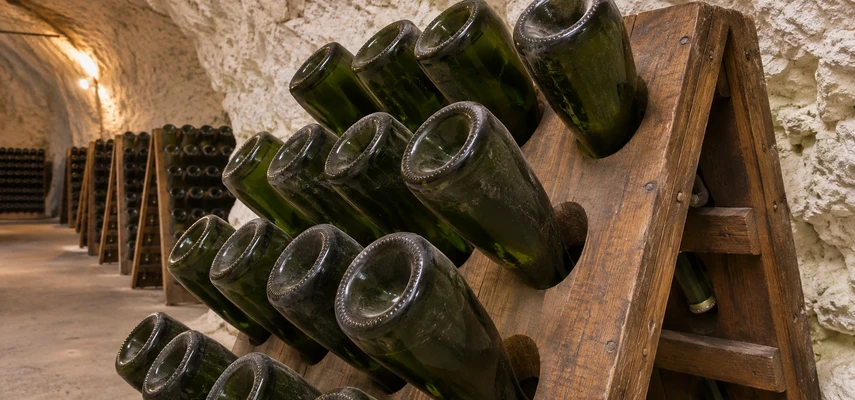
Riddling gradually collects sediment towards the closure by changing bottle position and rotation. It prepares the wine for sediment removal; it doesn’t create the bubbles or replace ageing. The official riddling guide describes both hand work and automated equipment.
Automation can change labour requirements and handling efficiency without making the finished wine inherently inferior. To evaluate it, compare the required result, capital investment, throughput and reliability. The romance of a wooden rack isn’t a sensory measurement.
Disgorgement expels the deposit collected at the neck, commonly after freezing it into a plug. Some wine is lost, and the operation exposes the wine to a different handling environment. Careful control matters; more oxygen exposure isn’t automatically desirable simply because the wine is mature.
The disgorgement date, when supplied, identifies a finishing event. It isn’t the harvest date, tirage date or a complete history of storage. Two bottles with different dates may also have different blends or handling, so a comparison needs more information before attributing every difference to one interval.
Use dosage to balance the finished wine
Dosage can replace wine lost at disgorgement and adjust the final sugar level through the finishing liqueur. Its composition can also influence style. The Comité’s dosage explanation distinguishes choices about neutrality, reserve wine and the intended result.
Assess the addition against the actual base wine. Acidity, fruit, texture and the style objective affect perceived balance, so the same sugar concentration needn’t taste equally sweet in two wines. Lower dosage doesn’t automatically mean higher quality, greater purity or a better expression of origin.
The sugar description on a label is a separate legal claim, covered in the companion styles article. Here, the central production point is timing: dosage follows sediment removal and isn’t the sugar responsible for the second fermentation. A no-added-sugar finish also doesn’t mean a bottle must contain analytically zero sugar.
Final packaging and closures must suit a pressurised wine. The familiar cork is secured with a wire cage, and bottles undergo finishing checks before release. The official final-inspection account describes mixing the finishing addition and checking clarity. Packaging communicates positioning too, but a heavier presentation box doesn’t lengthen the finish in the glass.
Link production with sensory evidence and price
Trace a proposed choice all the way through its consequences. Holding extra reserve wine may improve blending flexibility while tying up capital. Longer lees maturation may change texture and development while delaying revenue. Separate fermentation vessels may preserve blending options while increasing tracking and handling demands. Each needs a reason beyond “premium producers do this.”
For tasting, follow the official Level 4 resources. Observe clarity, colour depth and hue, with visible bubbles or sediment noted separately. Assess nose condition, aroma strength and specific character. On the palate separate sweetness, acidity, alcohol warmth and body; consider tannin quantity and texture where relevant rather than inventing tannin because the checklist contains a heading.
Distinguish flavour strength from flavour character, record mousse and other tactile observations, and assess the persistence of identifiable flavour on the finish. Make one scale choice where required; illustrative descriptors guide observation without demanding every example. Explain quality from balance, definition, complexity and persistence. Justify bottle-ageing suitability separately through the development expected and the support available.
Production information can help test an explanation after tasting. It can’t prove a quality level before tasting, and an exact lees duration can’t be recovered reliably from a single toast-like aroma. Keep the causal theory and the sensory evidence in conversation without pretending either supplies missing facts.
Connect Champagne styles with sparkling production methods when testing the explanation: trace a production choice into the wine’s sensory evidence, then distinguish its contribution to style from its implications for quality and cost.
Original Diploma practice
These independent tasks provide indicative points and outline answers, not official questions or marks. Proposed sample targets are not verified grades on unseen bottles, and no tasting was performed for this article.
Question 1: evaluate a reserve-wine decision
A hypothetical producer considers holding more base wine to improve future blending flexibility. Evaluate the sensory, operational and commercial consequences, including the risk that demand changes before release.
Indicative points: consistency; component quality; vessels; condition; finance; market risk. Outline answer: Reserves can offer flexibility while creating a real holding commitment. A sound decision compares the value of that flexibility with cash, storage and demand risks rather than treating older stock as automatically superior.
Question 2: correct the three-clock explanation
A student says that Champagne can be sold twelve months after tirage and that vintage Champagne must always spend thirty-six months on lees. Correct the explanation using the event attached to each minimum period.
Indicative points: tirage reference; twelve-month disgorgement minimum; fifteen-month consumer release; thirty-six-month vintage release; producer choices. Outline answer: The release clock and sediment-removal minimum answer different questions. Longer actual lees ageing may occur, but the general vintage release rule shouldn’t be relabelled as an identical compulsory lees period.
Question 3: distinguish two sugar additions
Explain why replacing tirage sugar with a later dosage addition would fail to reproduce the same production sequence. Then evaluate whether lower final dosage proves higher quality.
Indicative points: fermentation; gas retention; timing; sediment removal; sensory balance; evidence. Outline answer: Tirage supports the fermentation that creates sparkle, whereas dosage adjusts the finished wine. Final balance and quality depend on the actual wine, so the smaller sugar figure doesn’t settle the judgement.
Analytical tasting preparation: examine a maturation hypothesis
Source a non-vintage Champagne targeting very good quality and a vintage Champagne targeting very-good-to-outstanding quality, both essential study types. Ask an organiser to choose sound bottles and conceal their identities. Write full notes and separate quality and ageing conclusions before revealing production details.
Indicative points: condition; fruit and development; texture; balance; finish; inference limits. Outline answer: Test whether the recorded differences support a maturation explanation without assuming the vintage wine must win. Different blends, grape sources, storage and dosage can also matter; the reveal supplies context rather than permission to invent observations.












