











The kitchen counter is convenient, especially the sunny section beside the cooker. For wine, convenience can be a poor guide. Heat, light and changing conditions can matter long before anyone starts debating whether the bottle needs another decade in a cellar.
How to store wine properly begins with protecting the wine you actually have. An unopened bottle needs suitable conditions; an opened bottle also needs protection from air. Neither task requires treating every everyday wine as an investment portfolio.
What WSET Level 1 expects you to know
Learning Outcome 3, assessment criterion 1 in the official Issue 1.2 specification covers storage temperature, light, bottle position and preservation using vacuum and blanket systems.
Know the principles and explain their purpose. Detailed cellar construction and guaranteed open-bottle lifespans aren’t required. This independent TFE lesson has no WSET affiliation; its knowledge questions are original.
Stable and cool beats hot and variable
Store wine at a cool, reasonably constant temperature, away from heat sources. Large fluctuations and excessive heat can harm quality. A cupboard above an oven is therefore a poor choice even if the bottles fit neatly.
For longer-term storage, roughly 10–15°C provides a useful practical guide, rather than a promise that every wine requires one exact degree. WSET’s storage and temperature guidance emphasizes suitable, consistent conditions.
Don’t confuse storage temperature with service temperature. A sparkling wine may need well-chilled service, while a fuller red needs a warmer serving condition. Their appropriate longer-term storage principles can still be similar. Storage protects the bottle; service prepares it for drinking.
Putting a bottle in a refrigerator before dinner is also different from planning years of storage. A domestic fridge is useful for chilling and short-term preservation, but its environment isn’t automatically an ideal long-term cellar for every closure and wine.
Keep light away from the bottle
Strong light can damage wine’s aromas and flavours. Direct sunlight also brings heat, combining two undesirable influences. A windowsill is therefore a display location rather than a sensible general storage recommendation.
Dark glass offers some protection, but it doesn’t make a bottle immune to unsuitable conditions. Treat packaging as part of the protection, not a replacement for choosing an appropriate location.
The simple rule is to prefer a dark place away from heat. There is no need to memorize the wavelengths involved to answer a Level 1 storage question correctly.
Bottle position depends partly on the closure
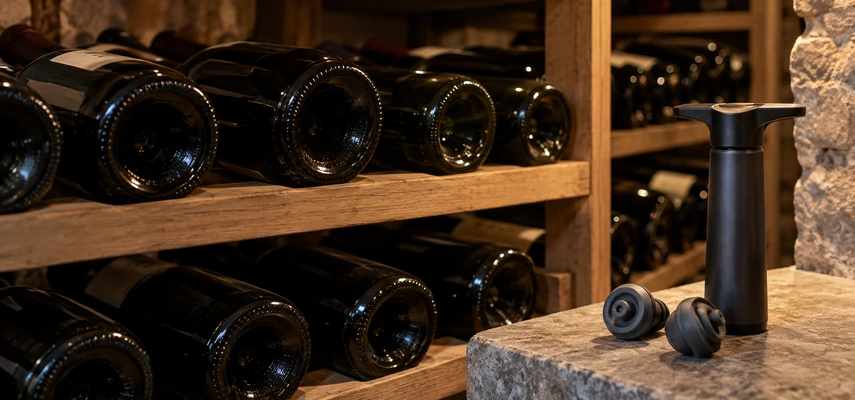
For longer-term storage of wine sealed with a natural cork, laying the bottle on its side helps keep the cork in contact with the wine. A cork that dries and loses its effectiveness can allow unwanted air exposure.
Screwcap bottles don’t need to be horizontal for the same cork-moisture reason. This qualification matters: “all wine must always lie down” is broader than the principle justifies. Match the explanation to the closure instead of repeating the position without its purpose.
Once opened, a recapped bottle is usually stored upright in the fridge. The priorities have changed: keep it sealed, cool and protected from oxygen. That isn’t a contradiction of the guidance for unopened cork-sealed wine stored over a longer period.
Wine doesn’t improve indefinitely
Some wines can develop positively with age, but many are intended for relatively early enjoyment. Storing an everyday fresh white for years doesn’t automatically turn it into a more complex or valuable wine.
Appropriate conditions preserve the potential of a bottle; they don’t manufacture ageing potential that wasn’t there. This distinction makes storage advice practical rather than ceremonial. Protecting a wine for a few weeks is a worthwhile task even without a grand cellar.
Likewise, preservation isn’t repair. If a wine has already suffered serious heat damage or oxidation, putting it somewhere cool won’t reliably restore its original state. Prevention and reversal are different claims.
Opened wine faces a new problem: oxygen exposure
Opening creates contact with air. Some air exposure can change aromas initially, but continued exposure can reduce freshness and fruit character. The aim after serving is to slow unwanted change, not to imagine the bottle is frozen in time.
Replace the closure promptly and refrigerate opened still wine, including red wine. Cooler temperatures slow chemical processes. A red can then be allowed to approach its suitable service temperature before the next glass is poured.
WSET’s preservation guide explains practical approaches. No single number of days fits every wine, fill level, closure, storage temperature and preservation method, so check condition rather than treating an advertised lifespan as a guarantee.
Vacuum systems: remove some of the air
A vacuum system uses a pump and a special stopper to remove some air from an opened still-wine bottle. Reducing air in the bottle can help slow oxidation. It doesn’t remove every oxygen molecule or stop every possible change.
The method is useful to understand without buying a particular brand. Pump, seal and cool is the practical sequence, following the device’s instructions. The system’s purpose is less air exposure, not renewed fermentation or added alcohol.
Don’t use an ordinary still-wine vacuum pump to preserve sparkling wine. Removing gas works against the aim of keeping its bubbles. A method that suits one wine type can be unsuitable for another because the features being protected differ.
Blanket systems: replace air with protective gas
A blanket system introduces protective gas into the bottle, reducing the wine’s contact with oxygen. The term describes protection over the wine; it doesn’t mean placing a fabric blanket around the bottle.
Common systems use gases such as argon or gas mixtures. Follow the product’s directions, reclose the bottle and keep it cool. The protection isn’t a reason to leave the closure off or store the bottle beside a radiator.
Vacuum and blanket systems pursue a related goal through different actions. One removes some air; the other introduces protective gas. Recognizing that difference is more useful for Level 1 than memorizing brand names or promotional lifespan claims.
Sparkling wine needs pressure-aware preservation
After opening sparkling wine, use a suitable sparkling-wine stopper designed for the bottle’s pressure and refrigerate it. A teaspoon in the neck isn’t an effective substitute for a proper closure.
Ordinary still-wine pumps and basic blanket sprays don’t protect bubbles in the same way. Some specialist equipment is made specifically for sparkling wine, but the basic lesson is to choose a method appropriate to the wine rather than assuming every gadget is universal.
Check freshness rather than trusting the calendar
Before serving a reopened bottle, check its appearance and smell, then taste a small sample if appropriate. Notice whether the expected fresh fruit has faded or unpleasant stale character has appeared. Comparison with the intended style matters.
Brownish colour or nutty aromas aren’t automatically faults in every wine. Some styles deliberately develop oxidative character. An unexpectedly stale fresh white and an intentionally oxidative Sherry need different interpretation, which is why knowing the wine type remains useful.
These checks concern quality and service condition. They aren’t a universal food-safety test, and a wine that seems fresh hasn’t thereby acquired an unlimited shelf life.
Common misconceptions and exam traps
Warm storage doesn’t make wine mature gracefully faster. Sunlight isn’t beneficial because grapes needed sunlight on the vine. Cork and screwcap bottles don’t require identical positioning for the same reason.
Vacuum removes some air; blanket systems add protective gas. Neither repairs damage, and ordinary vacuum pumps are unsuitable for preserving sparkling bubbles. A fridge can help an opened red even though that red shouldn’t necessarily be served at refrigerator temperature.
A practical end-of-meal routine
After pouring the last intended glass of still wine, replace the closure promptly. If using a suitable preservation system, follow its instructions before storing the bottle upright in the fridge. Note the wine’s condition and plan to check it again rather than assuming the device has made it permanent.
For a red, allow time to move toward the intended serving condition on the next occasion. Don’t reject refrigeration merely because the wine will eventually be served warmer. For sparkling wine, use the appropriate stopper and protect its pressure instead of applying the still-wine vacuum routine.
This modest routine connects each action to a reason: sealing limits new air exposure, cooling slows change, and the right closure protects the features of the particular wine. Knowing the reasons makes the steps easier to recall than memorizing an unexplained gadget list.
Knowledge check: 10 original questions
1. Which location best follows general wine-storage principles?
- A cool dark place with stable conditions
- A sunny windowsill
- Above a hot oven
- Beside a radiator
2. Why store natural-cork bottles horizontally over longer periods?
- To stop all ageing
- To help keep the cork moist
- To create more alcohol
- To make white wine red
3. Do screwcap bottles need horizontal storage for cork moisture?
- Only red screwcaps do
- Only sparkling screwcaps do
- No, they have no natural cork requiring that contact
- Yes, every bottle has a natural cork
4. What is an ordinary vacuum system intended to do?
- Add grape sugar
- Add sparkling bubbles
- Heat the bottle
- Remove some air from opened still wine
5. What is a blanket preservation system intended to introduce?
- Protective gas
- A fabric cloth inside the wine
- More oxygen
- Active yeast
6. What is useful after opening a still red wine?
- Always discard it immediately
- Reclose and refrigerate it
- Leave it open beside a heater
- Put it in direct sun
7. Which closure suits opened sparkling wine?
- An ordinary vacuum pump
- No closure
- A suitable pressure-rated sparkling stopper
- A teaspoon hanging in the neck
8. Why is an ordinary vacuum pump unsuitable for sparkling wine?
- It makes the wine too red
- It adds oak flavours
- It creates more sugar
- It works against retaining dissolved gas
9. Can good storage reliably reverse serious heat damage?
- No, prevention is different from repair
- Yes, in every wine
- Yes, if the bottle lies sideways
- Only when a label is removed
10. Which open-bottle lifespan statement is most accurate?
- Gas makes all wine permanent
- It depends on wine and storage; check condition
- Every wine lasts exactly five days
- All reds last forever
Answers and explanations
1. A — A cool dark place with stable conditions. Cool, stable and dark conditions help protect wine quality.
2. B — To help keep the cork moist. Wine contact helps prevent a natural cork drying and losing effectiveness.
3. C — No, they have no natural cork requiring that contact. The cork-moisture rationale does not apply to a screwcap.
4. D — Remove some air from opened still wine. A pump reduces air exposure before the bottle is sealed.
5. A — Protective gas. Protective gas reduces the wine’s exposure to oxygen.
6. B — Reclose and refrigerate it. Cooling slows change; it can return toward suitable service temperature later.
7. C — A suitable pressure-rated sparkling stopper. A suitable sparkling stopper helps retain pressure and bubbles.
8. D — It works against retaining dissolved gas. Removing gas conflicts with preserving the sparkling character.
9. A — No, prevention is different from repair. Preservation can slow further deterioration but does not reliably restore damaged wine.
10. B — It depends on wine and storage; check condition. Wine, air space, closure, temperature and method affect how long freshness lasts.
One-page revision summary
| Situation | Main action |
|---|---|
| Unopened wine | Cool, stable, dark conditions |
| Natural cork, longer storage | Horizontal position helps keep cork moist |
| Opened still wine | Reclose, refrigerate, limit oxygen exposure |
| Vacuum system | Remove some air |
| Blanket system | Introduce protective gas |
| Opened sparkling wine | Suitable pressure-rated stopper and refrigeration |
Protect the wine’s freshness without promising that storage makes every bottle better or every opened wine last the same number of days.












