











How sparkling wine is made explains much more than the bubbles. A fresh, floral wine and a savoury, biscuit-scented one may both fizz enthusiastically, yet their producers have followed different routes. The useful questions are where the carbon dioxide came from, where fermentation happened, how long the wine met its yeast lees, and how those lees were removed.
For WSET Level 3, learn six routes: traditional, transfer, tank, ancestral, Asti and carbonation. They appear in the official specification, along with the environmental and commercial factors behind style, quality and price. Think in sequences, then explain what each stage changes. Knowing the French word helps; knowing its job earns the useful explanation.
Start with suitable grapes and a target style
Many sparkling wines need grapes with high acidity and moderate sugar, giving fresh base wines without excessive alcohol. Cooler conditions can help preserve acidity while flavours develop. Latitude and altitude affect temperature, while aspect changes exposure to sunlight. Oceans and large lakes can moderate extremes, and fog can cool suitable coastal locations while reducing sunlight. None of those factors guarantees the right fruit on its own.
Weather adds a different timescale: frost can reduce the crop, rain around harvest can increase disease, and heat can accelerate sugar accumulation or damage exposed fruit. Growers therefore select sites, manage canopy and crop, and choose harvest timing for the intended style. Grapes for a fresh base wine may be picked earlier than fruit intended for a richer still wine, provided they have suitable flavour.
Champagne provides one example of the interaction between climate and weather, with oceanic and continental influences and several vineyard hazards, as its regional climate account explains. Other sparkling regions reach suitable conditions through different combinations. Avoid turning “cool” into “everywhere equally cold” or “earliest picking is always best.”
Why a sealed vessel changes fermentation
Yeast converts sugar into alcohol and carbon dioxide during alcoholic fermentation. In an open or vented vessel, much of the gas escapes. In a suitable sealed pressure vessel, it is retained and dissolves in the wine. Opening the finished bottle reduces pressure, allowing gas to emerge as bubbles. The container and closure must suit the pressure involved.
Temperature and pressure affect gas behaviour, so producers keep wine suitably cold and manage pressure during transfers, filtration and bottling. AWRI’s discussion of sparkling-wine processing explains why counterpressure matters. Using gas to protect a tank’s headspace during processing isn’t the same as making the wine’s sparkle primarily by injecting carbon dioxide.
Traditional method: first make the base wine
Pressing separates juice from skins and seeds. Gentle extraction helps limit unwanted phenolics, especially when making white wine from dark-skinned grapes. Clarification removes suspended solids before the first alcoholic fermentation, which produces a still base wine. Stainless steel supports a neutral expression; some producers use oak. These are choices within the process, not separate sparkling methods.
Malolactic conversion is optional: it can soften acidity and alter flavour, while preventing it can retain a sharper acid profile. After fermentation and suitable clarification, blending can combine varieties, sites or years to achieve balance and a desired style. Reserve wines can help consistency or complexity. Comité Champagne’s fermentation account illustrates why base-wine decisions matter before the sparkle exists.
The producer then adds liqueur de tirage, containing sugar and yeast, and seals the wine in appropriate bottles. The second alcoholic fermentation in bottle creates more alcohol and dissolved carbon dioxide. This isn’t dosage: tirage feeds the fermentation that produces the sparkle. The Champagne bottling explanation describes this stage in a particular regulated setting; don’t transfer all Champagne rules to every traditional-method wine.
Lees, riddling, disgorgement and dosage
After the second fermentation, the wine remains in contact with yeast lees. Over time, yeast autolysis can contribute bread, biscuit or brioche-like complexity and changes in texture. The result depends on time, wine and conditions; more months don’t automatically make every bottle better. The Champagne maturation account distinguishes this extended development from the short period needed merely to generate gas.
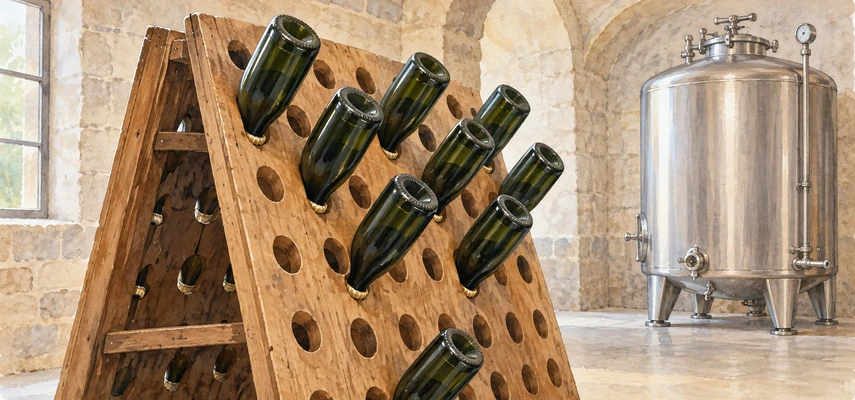
Riddling gradually moves the sediment into the bottle neck by rotating and tilting bottles neck-down. It can be manual or automated; its purpose is sediment collection, not creating bubbles. The riddling explanation makes the distinction particularly clear. Automation can reduce labour and time without automatically reducing quality.
Disgorging, or disgorgement, ejects the collected sediment. Commonly, the neck is chilled to freeze a plug of deposit, which internal pressure expels when the closure is removed. It isn’t the same as filtering the entire bottle. Comité Champagne’s disgorgement account gives a concrete example, although disgorgement can also be performed without the freezing step.
Next, liqueur d’expédition, associated with dosage, adjusts the final profile and usually adds sugar where the style calls for it. The lost volume is replaced and the bottle receives its final closure. The dosage account explains the final adjustment. Tirage occurs before second fermentation; dosage comes afterwards. A wine can have no added sugar at dosage, and sweetness isn’t a quality score.
Transfer method: bottle fermentation, bulk clarification
The transfer method begins with the same pressing, clarification, first alcoholic fermentation and blending steps. Liqueur de tirage starts a second fermentation in bottle, followed by time on lees. The important change comes when sediment must be removed.
Instead of riddling each bottle and ejecting its small collected deposit, the bottles are emptied into a sealed pressurised tank, including their sediment. This is the syllabus stage described as disgorging into tank. The wine undergoes filtration in bulk, receives the appropriate dosage adjustment, and is rebottled under pressure. The consumer therefore needn’t receive the bottle in which fermentation occurred.
The Wine Australia sparkling guide explains the practical advantage: bottle fermentation and lees development can be retained while avoiding individual riddling and disgorgement. Pressure control preserves the dissolved gas. Transfer doesn’t mean the second fermentation happened in tank; that would be a different sequence.
Tank method: ferment the sparkle in a pressure tank
The tank method, also called Charmat or Martinotti, also starts with pressing, clarification, first fermentation and blending to create a base wine. Sugar and yeast in the tirage addition then start the second alcoholic fermentation in tank, rather than bottle. The sealed tank retains the gas.
Time on lees can be short when the aim is fresh primary fruit, although extended tank lees contact is possible. Afterwards, filtration removes yeast, any appropriate dosage adjustment establishes the intended sweetness, and bottling takes place under pressure. Individual bottle riddling isn’t needed. The Prosecco consortium’s method account supplies a familiar example of pressure-tank second fermentation.
This approach can reduce handling and allow quicker release, making it useful for aromatic, fruit-led styles and efficient larger-scale production. However, it still requires equipment, temperature control and careful fruit selection. Tank doesn’t mean injected gas, and quicker production doesn’t excuse faults or poor balance. Lees contact and the intended flavour profile matter more than treating every tank wine as identical.
Ancestral method: one fermentation crosses into bottle
In the ancestral method, alcoholic fermentation starts before bottling and continues partly in bottle. The producer bottles while fermentable sugar and active yeast remain, retaining gas as fermentation proceeds. This is different from finishing a dry base wine and deliberately starting a separate second fermentation with tirage.
The producer has a choice over disgorgement: some wines keep sediment and look cloudy, while others have it removed. Cloudiness isn’t required in every example and doesn’t establish quality. The WSET overview of ancestral wines introduces the familiar pét-nat context.
Timing and remaining sugar require close control to achieve the intended pressure and alcohol. A shorter sequence doesn’t mean making the wine is effortless. Likewise, an association with minimal-intervention production isn’t a guarantee that every pét-nat is organic, fault-free, dry or suitable for long ageing.
Asti method: retain sweetness during one tank fermentation
For the classic sweet Asti method, aromatic grapes are pressed, the juice is clarified, and chilled juice storage prevents fermentation until required. Yeast then starts alcoholic fermentation. Gas can escape initially; later the tank is sealed so fermentation partly under pressure retains carbon dioxide.
When the desired balance of alcohol, pressure and remaining grape sugar is reached, the producer stops fermentation through chilling and filtration. Bottling follows under pressure. Sweetness comes from sugar that hasn’t fermented, rather than requiring dosage to sweeten a dry second-fermented wine. The Asti consortium’s production account describes the cold storage, controlled fermentation and stabilisation stages.
Fresh grape and floral aromas are central to this style, so lengthy autolytic development usually isn’t the aim. Keep the method separate from the full range of modern wines bearing an Asti designation: not every permitted style is equally sweet or follows this exact classic teaching example. Article #40 develops the regional distinctions.
Carbonation: add the gas to a finished wine
For carbonation, grapes undergo pressing, clarification and fermentation to make a base wine. The producer then injects CO₂ into suitably chilled wine and bottles it under pressure. There is no need for an additional fermentation to supply the sparkle.
This is a fast, relatively inexpensive route because it avoids a second fermentation and associated lees storage. It doesn’t create autolytic flavours through the act of injection. Base-wine quality still matters. Carbonated wine and tank-fermented wine may use similar pressure-management equipment later, but the origin of their gas is the decisive difference. AWRI’s gas-adjustment guidance explains the wider relationship between dissolved gases and processing.
Connect the method to cost and demand
Traditional production can involve bottle handling, lees storage, riddling and disgorgement, while quicker tank production spreads work across larger batches. Transfer replaces individual sediment removal with bulk filtration. Asti-style cold juice storage and stabilisation still cost money, and ancestral timing demands skill. None of the methods creates quality independently of sound grapes and execution.
Separate cost of production from market forces. Extra maturation ties up cellar space and working capital; expensive equipment adds another cost. Strong demand or a celebrated name can raise selling price separately. Ultimately, the intended fruit, lees character, balance and complexity should justify the choices rather than the method name doing all the persuasion.
For revision, revisit fermentation in #5–6 and maturation in #8. Article #39 applies the traditional method to Champagne, while #40 compares other sparkling regions.
Knowledge check: sparkling-wine methods
1. What is the main purpose of liqueur de tirage?
2. What distinguishes the transfer method from the tank method?
3. What does riddling accomplish?
4. Which process best describes the ancestral method?
5. Where does sweetness in the classic sweet Asti teaching example primarily come from?
6. Why might extended time on lees influence flavour?
7. Which route supplies sparkle by injecting CO₂ into the base wine?
8. Why is bottling under pressure important after tank filtration?
9. Which statement about dosage is correct?
10. Which statement best links climate with sparkling base wine?
Answers and explanations
1. C — Feed the second fermentation. Tirage supplies the sugar and yeast needed for that stage. Dosage is a separate later adjustment.
2. B — The fermentation vessel differs. Transfer starts the sparkle in bottle, then processes wine in bulk. Tank method starts the second fermentation in tank.
3. D — Move the deposit. Riddling gathers lees into the neck so they can be removed. It doesn’t generate the gas or ferment sugar.
4. A — One fermentation crosses the bottling stage. Ancestral production traps gas from the ongoing first fermentation. It isn’t defined by a fresh second fermentation after a dry base wine.
5. C — Retained grape sugar. Chilling and yeast removal stop further conversion of sugar to alcohol. This differs from sweetening a dry second-fermented wine through dosage.
6. B — Contact with yeast can add complexity. Autolysis contributes compounds affecting aroma and texture. The benefit depends on the wine and conditions, not time alone.
7. D — An external gas source. Carbonation injects CO₂ into base wine. The other listed methods obtain their sparkle from fermentation.
8. A — Preserve the retained gas. Controlled pressure limits gas loss during processing. It doesn’t identify the original fermentation method by itself.
9. C — A final style adjustment. Dosage follows sediment removal in the relevant sequence and can affect sweetness and balance. It isn’t the tirage addition.
10. B — Freshness needs suitable ripeness. Acid retention is useful, but fruit must suit the target style. Climate, site and harvest interact.
Written exercise 1: Explain traditional-method production stages (5 marks)
Explain the purpose of tirage, time on lees, riddling, disgorgement and dosage in a traditional-method wine. Give one purpose for each stage.
Model answer: Tirage supplies sugar and yeast for the bottle fermentation that creates additional alcohol and retained carbon dioxide. Time on lees allows yeast autolysis to contribute bread-like complexity and texture. Riddling gathers sediment in the bottle neck. Disgorgement ejects that gathered deposit to clarify the wine. Dosage adjusts the final style and sweetness where sugar addition is intended, before final closure.
Why it earns credit: Award one mark each for the correctly explained purpose of (1) tirage, (2) lees contact, (3) riddling, (4) disgorgement and (5) dosage. Naming five stages without their jobs doesn’t answer the question, and confusing tirage with dosage loses the relevant credit.
Written exercise 2: Compare transfer with tank production (5 marks)
Explain five features that distinguish or connect transfer-method and tank-method sparkling production.
Model answer: Both normally begin with a still base wine made through pressing, clarification and a first fermentation. Transfer has its second fermentation in bottle, whereas tank production has it in a sealed pressure tank. Transfer wine can gain lees character before the bottles are emptied into tank. Transfer then uses bulk filtration instead of individually riddling and disgorging each bottle. Both require controlled pressure during later filtration and bottling to retain dissolved carbon dioxide.
Why it earns credit: Award one mark each for (1) common base-wine preparation, (2) the different second-fermentation vessels, (3) transfer’s bottle lees contact, (4) its bulk sediment-removal distinction and (5) explained pressure management. Calling transfer “second fermentation in tank” contradicts the defining sequence.
One-page revision summary
| Method or stage | What happens | Main implication |
|---|---|---|
| Suitable grapes | Match climate, weather, site and picking to intended wine | Acidity and moderate sugar need appropriate flavour |
| Pressing / clarification | Separate juice, then remove suspended solids | Control extraction and prepare for fermentation |
| Traditional | Base wine → tirage → bottle fermentation → lees → riddling → disgorgement → dosage | Individual-bottle process can add lees complexity and handling cost |
| Transfer | Bottle fermentation and lees → empty into pressure tank → filter → dosage → rebottle | Keep bottle development, use bulk clarification |
| Tank / Charmat / Martinotti | Base wine → tirage → tank fermentation → lees period → filter → adjustment → pressure bottle | Often prioritises fresh fruit and efficient production |
| Ancestral | First fermentation continues partly in bottle | Timing and sugar control matter; disgorgement is a choice |
| Classic sweet Asti | Clarified chilled juice → fermentation partly under pressure → chill/filter → pressure bottle | Retains grape sugar and primary aromas |
| Carbonation | Ferment base wine → inject CO₂ → pressure bottle | No additional fermentation needed to create sparkle |
| Tirage / dosage | Fermentation addition / final style adjustment | Different jobs at different times |
| Lees / riddling / disgorgement | Development / collect deposit / eject deposit | Avoid confusing flavour development with clarification |
| Cost / market forces | Equipment, labour and storage / demand and reputation | Price isn’t explained by production alone |
Without looking at the table, trace the gas and the yeast through all six methods. If you can say where each goes, the names become much easier to remember.












