










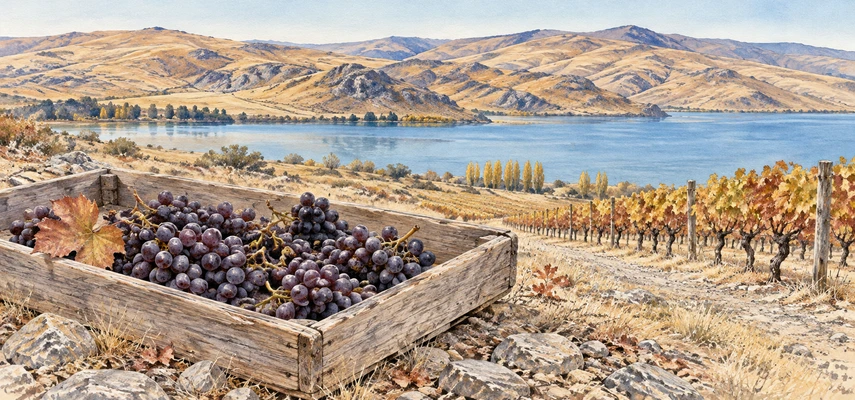

New Zealand wines have a recognisable calling card: a vividly aromatic Sauvignon Blanc with enough freshness to make the first sip quite an introduction. But that bottle isn’t the whole country. Hawke’s Bay can ripen structured Cabernet blends and peppery Syrah; Martinborough and Central Otago give Pinot Noir different settings; Chardonnay and aromatic whites add further choices across both islands.
For WSET Level 3, use those contrasts to explain style, quality and price through place and production. This guide covers the assigned New Zealand origins and eight grapes in the WSET specification. Start with the geography, then ask what a producer must do to turn the available fruit into the intended wine.
Two islands, many growing conditions
The North Island is generally warmer than the South Island, but latitude is only part of the explanation. Ocean influence, mountains, elevation and exposure create local differences. Many vineyards lie in eastern or sheltered locations, where mountains reduce exposure to rain-bearing weather. Central Otago provides a particularly important inland contrast to the country’s broad maritime setting.
Long sunshine hours can support flavour development even where average temperatures are relatively low. At the same time, cooler nights can help preserve acidity, while a longer ripening season allows flavours to develop more gradually. However, insufficient warmth can still prevent suitable ripeness. “Cool climate” doesn’t guarantee balance or excellence. New Zealand Winegrowers’ regional introduction sets out the importance of these local variations.
Spring frost can damage young growth, and rain or humidity can encourage disease. Wind can dry the canopy but also interfere with flowering or increase water loss. Growers choose suitable sites and crop levels, manage canopies for airflow and shade, and monitor water availability. The right decision depends on the problem: exposing every bunch isn’t a universal answer to either disease or ripeness.
Gisborne: ripe fruit and useful white-wine contrasts
On the North Island’s east coast, Gisborne has abundant sunshine and relatively warm growing conditions, with differences between coastal and inland sites. Chardonnay is the principal study anchor, and Pinot Gris also matters. The Gisborne regional profile shows why the area isn’t limited to one white style or one production scale.
Chardonnay can show ripe citrus, peach or tropical fruit. A fruit-led example may use neutral vessels, whereas barrel fermentation, lees ageing and malolactic conversion can build a broader, more complex style. Malolactic conversion can soften acidity and add buttery notes; the effect comes from production, not from sunshine directly.
Pinot Gris offers pear, apple, stone-fruit or spice characters, with body and sweetness varying by producer and harvest choices. The national Pinot Gris guide describes that range. Ripe aromas and a rounded texture don’t prove residual sugar. Ask about the actual sweetness and production rather than treating the grape name as a reliable dry-wine guarantee.
Hawke’s Bay: enough warmth for structured reds
Farther south on the North Island’s east coast, Hawke’s Bay combines sunshine with maritime moderation and varied soils and exposures. Merlot, Cabernet Sauvignon and Syrah are important red references; Chardonnay is a major white. The regional profile provides the setting for those contrasting grapes.
Suitable warmer sites and a sufficiently long season can support Cabernet Sauvignon’s flavour and tannin ripeness. Merlot can contribute plum fruit and a different tannin profile to blends. Site selection is crucial: planting a late-ripening variety doesn’t ensure that a cool or wet season will deliver the intended structure. Free drainage can help manage wet conditions, while soil water supply still needs attention in dry periods.
Fermenting reds on skins extracts colour and tannin. After the alcoholic fermentation, malolactic conversion can soften acidity; suitable oak maturation can develop complexity. Together with measured extraction, these choices can build a structured wine without overwhelming the fruit. Syrah, the same grape as Shiraz, supplies a separate dark-fruit and spice reference. Neither a blend nor a varietal wine is automatically the higher-quality choice.
Chardonnay provides a useful white comparison: healthy ripe fruit supplies the foundation, then barrel, lees and malolactic decisions influence texture and complexity. New barrels and longer maturation add costs, but extra wood flavour isn’t itself evidence of quality.
Martinborough: locate the Pinot Noir precisely
Martinborough lies in southern Wairarapa, near the southern end of the North Island. The names aren’t interchangeable: Wairarapa also includes other growing areas. Martinborough’s relatively dry, cool setting and free-draining sites provide a strong Pinot Noir reference, alongside other grapes. The Wairarapa account makes that geographical relationship clear.
Pinot Noir can deliver red-fruit perfume, savoury complexity and fine tannin, with body and concentration varying. Appropriate yields allow a vine to ripen the intended crop; wind or difficult flowering can reduce output and raise grape cost. In the cellar, gentle handling and extraction can preserve delicate fruit. Later, suitable oak or bottle maturation can add complexity without requiring every wine to become heavy.
Don’t turn “small producer” into a tasting score. Smaller parcels and labour-intensive work may increase costs, but the finished wine still needs balance, length and convincing flavour concentration. Likewise, a regional reputation doesn’t remove frost or disease risk.
Marlborough: Sauvignon Blanc with several addresses
At the north-east of the South Island, Marlborough combines a relatively cool setting with sunshine and generally low rainfall in important vineyard areas. Sauvignon Blanc is the headline grape, but Pinot Noir, Chardonnay and aromatic whites also grow here. The Marlborough profile describes variation across Wairau Valley, Awatere Valley and Southern Valleys rather than a single uniform site.
Wairau includes warmer early-ripening positions and cooler inland or maritime-influenced locations. Awatere is generally cooler, drier and windier, often giving a more herbaceous expression. Southern Valleys are important for Pinot Noir. These are broad comparisons, not promises about every bottle or a reason to ignore a particular vintage.
Sauvignon Blanc can combine high acidity with citrus, gooseberry, passion-fruit or herbaceous characters. Ripeness influences the balance of green and tropical fruit. Harvesting too early can leave an excessively green impression; delaying too long can lose the freshness needed for the intended wine. The national Sauvignon Blanc guide connects regional conditions with this spectrum.
Protecting juice from oxidation and fermenting at controlled, relatively cool temperatures in neutral vessels can preserve bright aromas. Meanwhile, blending parcels harvested at different ripeness levels can help balance fruit expression. Some producers use barrels or lees to develop texture, so oak-free isn’t a legal definition of Marlborough Sauvignon Blanc.
Efficient mechanised harvesting and modern temperature-controlled wineries can produce sound wine at scale. By contrast, lower yields, selective parcels and additional cellar work can support a different budget. Neither approach should be mistaken for an automatic tasting verdict.
Nelson: sheltered sunshine, plains and hills
Nelson, at the north of the South Island west of Marlborough, has sheltered, sunny conditions with coastal moderation. Sauvignon Blanc, Chardonnay, Pinot Noir and Pinot Gris provide useful anchors. New Zealand Winegrowers’ Nelson guide distinguishes the Moutere Hills from the Waimea Plains.
Soil texture, water retention and exposure affect vine growth and ripening. Clay-rich hillside settings and stonier alluvial plains therefore offer different management questions. Explain those effects through roots, water and canopy vigour; a stone doesn’t supply a finished mineral flavour to the wine. From there, protective handling can preserve aromatic whites, while suitable lees or oak work can build texture in Chardonnay. The producer’s intended style remains part of the explanation.
Canterbury: make room for Riesling
Canterbury, on the South Island’s eastern side, includes vineyards around Christchurch and important growing areas farther north. North Canterbury and Waipara Valley are useful more specific references. Mountain shelter, sunshine and relatively dry conditions support a long growing season, while local hills can moderate exposure. The North Canterbury guide describes the differences between protected Waipara sites and the wider plains.
Pinot Noir and Chardonnay matter, but Riesling deserves a clear place in revision. It can combine high acidity with citrus, apple or floral notes, in dry through sweet styles. The national Riesling guide confirms that range. A floral nose alone doesn’t establish sweetness, and a sweet style still needs enough acidity for balance.
Neutral fermentation can preserve Riesling’s aromas; stopping fermentation with sugar remaining can create an off-dry or sweeter style when managed appropriately. Later picking and, in suitable conditions, botrytis can provide other routes to sweetness and concentration. Before the harvest, growers must monitor fruit condition carefully rather than simply leaving all bunches indefinitely. Drying north-westerly winds can also create water stress, so shelter and water management remain relevant.
Central Otago: Pinot Noir in a more continental setting
In the inland south of the South Island, Central Otago has a stronger continental influence than most New Zealand regions, with mountains sheltering dry vineyard locations. Warm summer days, cold nights and winter cold can coexist. Pinot Noir is the main reference, with Riesling, Pinot Gris and Chardonnay also useful. The Central Otago guide shows why its varied sites shouldn’t be compressed into one climate statement.
Suitable sunshine and warm days allow Pinot Noir to develop ripe fruit, while cooler conditions can preserve acidity. Frost, a limited safe growing season and water needs complicate the picture. Choose slopes and exposures that support ripening and cold-air drainage; don’t assume high elevation always improves quality.
Gibbston is a useful cooler comparison, while Bannockburn includes notably warmer, dry sites. Wine styles vary with site and production, so “all Central Otago Pinot is powerful” is too blunt. Extraction and maturation influence tannin, fruit definition and texture. As a result, a fragrant, fine-textured Pinot and a richer example may both be plausible regional wines without one representing the entire area.
What labels and prices actually explain
New Zealand’s domestic rules generally require at least 85% to meet a single named variety, vintage or area-of-origin claim. Country-of-origin and applicable export requirements also matter; a bottle intended for another market needs the relevant rules checked. The Ministry for Primary Industries’ labelling guide explains the framework. An origin claim doesn’t impose a quality rank or require a particular barrel programme.
Separate five commercial categories. Grapes carry vineyard labour, crop size, frost protection and fruit selection. Winery production includes equipment, barrels, storage and packaging. Transport adds shipping and distribution to distant markets. Margins support the work, overheads and profit of businesses along the chain. Market forces, including demand, competition and limited supply, affect achievable prices.
A small Pinot parcel and an efficient large Sauvignon Blanc programme can therefore have different costs without a guaranteed quality ranking. For revision, revisit climate in #2, vineyard choices in #4, white and red production in #5 and #6, and maturation in #8. Compare Australia in #35–36 and labels in #49.
Knowledge check: New Zealand wines
1. Which statement best describes New Zealand’s climate comparison?
2. Which grape is especially useful when studying Gisborne?
3. Where is Martinborough?
4. What can explain Hawke’s Bay’s structured Cabernet blends?
5. Which Marlborough comparison is most defensible?
6. What does a ripe pear-like Pinot Gris aroma prove about sweetness?
7. Which variety is an important Canterbury aromatic-white reference?
8. Why is Central Otago an important climate contrast?
9. Which item belongs primarily to grape costs?
10. What is the general domestic threshold for a single New Zealand varietal claim?
Answers and explanations
1. C — Several influences interact. Broad north–south tendencies don’t replace site-specific assessment. Shelter, elevation and maritime influence affect local conditions.
2. B — A useful white-wine anchor. Gisborne is associated with Chardonnay, from fruit-led to more textured examples. Cellar choices help explain that range.
3. D — A specific Wairarapa address. Martinborough is in the lower North Island, within the wider Wairarapa context. It isn’t Central Otago or the whole region.
4. A — Environment plus decisions. Sufficient warmth and season length help suitable grapes ripen, while extraction and maturation shape the final structure.
5. C — A qualified regional comparison. Awatere generally supplies a cooler, windier contrast, but individual sites and vintages still matter.
6. B — Fruit character differs from sugar. A rounded pear-like wine may be dry or have residual sugar. Taste and production information are needed.
7. D — Riesling adds a clear contrast. Canterbury can supply aromatic Rieslings across sweetness levels. Acidity and concentration influence balance.
8. A — An inland counterpoint. Central Otago’s stronger continental influence brings warm-day/cold-night contrasts and frost concerns, with variation between sites.
9. C — A vineyard expenditure. Labour and frost protection contribute to grape costs. Freight, margins and market demand are separate commercial categories.
10. B — A compositional claim. The domestic single-variety rule generally requires at least 85%. Export-market requirements and other label claims need their own checks.
Written exercise 1: Preserve a fresh Marlborough Sauvignon Blanc (5 marks)
Explain five vineyard or cellar decisions that can help make a fresh, aromatic dry Sauvignon Blanc.
Model answer: Select a suitable site where fruit can develop flavours while retaining acidity. Manage the crop so the vine can ripen it adequately. Choose harvest timing to balance herbaceous and ripe fruit characters without excessive sugar or loss of freshness. Protect juice from oxidation during pressing and handling to preserve delicate aromas. Ferment at controlled, relatively cool temperatures in neutral vessels to support a fresh, fruit-led expression.
Why it earns credit: Award one mark each for (1) site linked to ripening/acidity, (2) crop balance, (3) harvest linked to flavour/freshness, (4) protective handling linked to aroma, and (5) fermentation linked to intended style. Merely listing Marlborough, steel and sunshine doesn’t explain the result.
Written exercise 2: Explain five New Zealand wine price factors (5 marks)
Give one plausible explanation in each commercial category for a small-production Pinot Noir costing more than an efficiently produced large-volume white.
Model answer: Grapes may cost more through labour-intensive vineyard work and a small crop. Winery production may cost more through barrels and longer maturation. Transport can add a higher cost per bottle for smaller shipments or extra handling. Importer and retailer margins cover operations and profit. Market forces can support a higher price when a sought-after producer has limited supply relative to demand.
Why it earns credit: Award one mark each for (1) grapes, (2) winery production, (3) transport, (4) margins and (5) market forces, with a relevant explanation. Expensive grapes don’t prove strong demand, and a higher selling price doesn’t automatically prove better tasting quality.
One-page revision summary
| Origin or idea | Anchor | Explain the consequence |
|---|---|---|
| North Island / South Island | Broad warmer / cooler tendency | Local shelter, exposure and altitude still matter |
| Gisborne | Chardonnay and Pinot Gris | Sunshine and ripeness; neutral or textured cellar styles |
| Hawke’s Bay | Merlot, Cabernet Sauvignon, Syrah, Chardonnay | Suitable warm sites and season length support varied styles |
| Martinborough | Southern Wairarapa, North Island | Pinot Noir; distinguish the specific place from the wider region |
| Marlborough | South Island Sauvignon Blanc, also other grapes | Sunshine, freshness and harvest decisions |
| Wairau / Awatere / Southern Valleys | Varied sites / generally cooler windier / Pinot reference | Avoid one style claim for every Marlborough bottle |
| Nelson | Sheltered sunny northern South Island | Plains/hills and soil water properties affect growth |
| Canterbury / North Canterbury / Waipara | Eastern South Island, protected sites and wider plains | Pinot, Chardonnay, Riesling and other aromatics |
| Central Otago | Stronger continental influence, dry sheltered sites | Pinot Noir; frost, water, aspect and ripening tradeoffs |
| Pinot Gris / Riesling | Aromatic whites with varied sweetness | Fragrance and texture don’t alone establish residual sugar |
| Sauvignon / Chardonnay | Aromatic freshness / flexible cellar texture | Protective handling, lees, oak and malolactic choices differ |
| Labels | Domestic single claims generally at least 85% | Check applicable origin and export rules separately |
| Commerce | Grapes, production, transport, margins, market forces | Separate costs from reputation and tasting evidence |
Compare a Marlborough Sauvignon Blanc, a Hawke’s Bay red blend and a Central Otago Pinot Noir. Explain why each grape suits a particular location, then choose one vineyard decision and one cellar decision that would support the intended style.












