










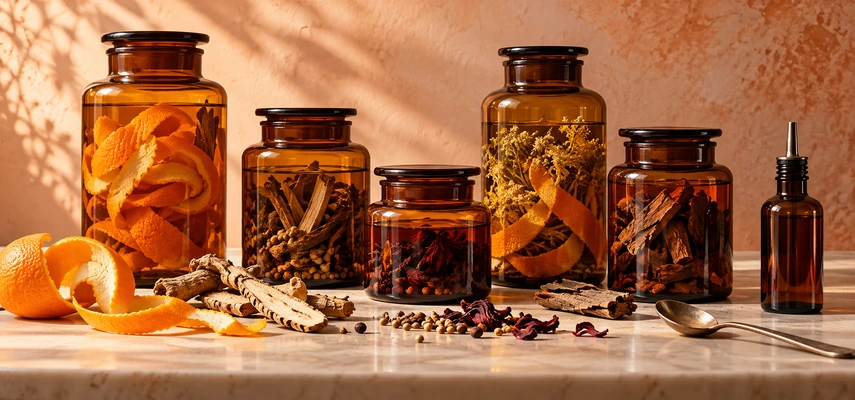

A few dashes from a small bitters bottle and a measured portion of a bitter spirit can both change a cocktail. Swapping one for the other in equal quantities, however, is unlikely to improve anybody’s afternoon. They share a word and a broad flavour territory, but they play different roles.
This guide connects flavoured spirits and bitters through three questions: what is the alcoholic base, how is flavour introduced, and what is the finished product intended to do? Those questions keep flavoured vodka, spiced rum, bitter spirits and cocktail bitters related without making them interchangeable.
Start with base plus flavour
A flavoured spirit has an alcoholic foundation shaped by further flavouring. The base may be relatively neutral or already characterful. That difference affects how added botanical or other flavour compounds interact with it. The result is not simply a flavour floating independently above an otherwise irrelevant liquid.
A neutral base offers relatively little competing aroma. A characterful rum base brings its own fermentation, distillation and possibly maturation contributions. Adding a similar spice to those two foundations can produce different results because the starting mixture differs. Production decisions interact rather than stacking up as isolated layers.
The word flavoured also does not make fermentation optional. Alcohol was produced from fermentable material before the base was distilled. Flavouring is a later part of the story. A clear explanation identifies both stages instead of saying the drink was “made from orange” when orange merely supplied a later flavour.
Flavoured vodka changes a restrained canvas
Flavoured vodka takes the relatively restrained vodka style in a deliberate aromatic direction. A product may feature citrus, fruit, vanilla or other permitted flavouring. The exact method and recipe vary. Its name tells you that the finished profile has moved beyond the simple light-or-neutral model used for plain vodka.
This does not mean the fruit or botanical supplied the original fermentation sugars. A lemon-flavoured product, for example, can use a base alcohol derived from another suitable agricultural material. The flavour name and the base ingredient answer different production questions. Both may be useful information when available.
Sweetness needs separate checking. A flavour association does not establish a universal sugar content, and not every flavoured vodka should automatically be called a liqueur. Applicable category definitions and the actual composition matter. The broad fact of added flavour cannot do all the classification work by itself.
Spiced rum adds to a characterful foundation
Spiced rum introduces spice or other permitted flavouring into a rum-based product. The cane-derived base may already show considerable character. Vanilla-like, warm-spice, citrus or other associations can arise from the flavouring choices, the base, or their interaction. There is no compulsory universal spice cabinet behind every bottle.
This is different from saying ordinary unflavoured rum must contain added spices. A rum can show a spicy association from its production and maturation without a later spice addition. A tasting word and an ingredient declaration are not equivalent. To identify added flavouring, use production information rather than an aroma guess alone.
Likewise, a darker appearance does not establish which spice was used or how long the base matured. Colour may have several causes within the applicable rules. A useful description begins with the observed character, then checks the label and producer information before drawing conclusions about additions.
How flavour can reach the liquid
Maceration extracts compounds by soaking material in a suitable liquid. Botanical material can release aromatic and bitter substances into an alcoholic medium. The material, conditions and time influence the result. This is not a new yeast fermentation, even if the jar happens to look like a fermentation vessel.
Redistillation is another possible method in flavoured-spirit production. Distilling a base again with suitable botanical material can transfer volatile flavour compounds into the collected liquid. Purchased natural or other permitted flavourings provide additional routes. Which methods are allowed depends on the precise category and jurisdiction.
Method and outcome must therefore be distinguished. Two products might both have an orange character while using different production approaches. One might be clear, another coloured. Similar sensory impressions do not prove an identical extraction method, just as different appearances do not necessarily prove completely unrelated flavours.
A producer’s secrecy about a recipe does not justify inventing it. A study guide can explain the general mechanism and name verified ingredient examples without claiming to know every botanical or proportion in a branded product. Understanding the process is more useful than a confident reconstruction unsupported by evidence.
Bitter spirits are components with their own balance
Bitter spirits are flavoured alcoholic products in which bitterness is an important feature. They can also contain sweetness and a range of aromas. Some are used as measured components in cocktails or served in other suitable ways. Bitter does not mean unsweetened, and sweetness does not mean bitterness has disappeared.
That coexistence is easy to understand through familiar food. A sweetened grapefruit preparation can remain bitter; sugar changes the balance rather than deleting every other taste. Similarly, a bitter alcoholic ingredient can contribute sweetness and bitterness to a cocktail at the same time. Recipes must account for both contributions.
Avoid assigning one universal ABV or recipe to this diverse group. A broad sensory description cannot establish the exact composition of every product. The safe beginner comparison concerns the role of a drinkable component and the importance of bitter flavour, with individual labels supplying more detail.
Cocktail bitters act more like seasoning
Cocktail bitters are concentrated preparations typically added in small quantities to season a mixed drink. Their role can resemble seasoning food: a little can change the balance and aromatic impression of the whole. That does not make them interchangeable with a measured portion of a bitter spirit.
The Angostura producer’s description presents aromatic bitters as a flavouring agent for food and drink. It provides a concrete illustration of the role without supplying a universal recipe for every bitters brand. Other products can have different botanical profiles and intended applications.
A small serving quantity also does not prove the product is alcohol-free. Concentration of flavour, alcoholic strength and the amount added are separate facts. Check the actual product if alcohol content matters to the use. For examination purposes, distinguish the concentrated seasoning role from the broader word bitter.
Three bitter ingredients to recognise
The syllabus names gentian, quinine and bitter orange. These are useful anchors because they show that bitterness can come from different botanical sources. They are not three compulsory ingredients in every bitter product, nor do they imply a complete shared recipe among producers.
Gentian is associated with intensely bitter botanical material, notably roots used in beverage flavouring. The Suze producer’s account offers a familiar example of a gentian-led drink. Recognising the ingredient does not require buying that brand or assuming every gentian product shares its exact sweetness and aroma.
Quinine is a bitter compound associated with cinchona bark. The Cambridge University Botanic Garden identifies that botanical source. For spirits study, the relevant fact is its bitterness. There is no need to turn a beverage lesson into medical advice or a set of instructions for preparing concentrated bark extracts.
Bitter orange can contribute bitterness as well as citrus-related aroma, depending on the material and processing. This illustrates another important distinction: a single botanical can influence more than one sensory dimension. The word orange does not automatically mean only sweetness, acidity or the flavour of fresh juice.
Bitter, sour and strong are not synonyms
Bitterness is a taste dimension. Sourness concerns acidity, while alcoholic strength concerns ethanol proportion. They can all affect the overall impression of a drink, but increasing one does not mechanically increase the others. A bitter product need not be the highest-ABV component in a cocktail.
This matters when diagnosing balance. If a mixture seems too bitter, more sour juice may not solve the problem. If it seems too strong, sweetness might alter perception without making the alcoholic proportion fall in the same way as added water would. Name the dimension before deciding what an adjustment is doing.
The upcoming cocktail lessons use two scales: strong versus weak and bitter and/or sour versus sweet. Bitter ingredients fit naturally into that framework, but their other contributions still count. A sweet bitter spirit cannot be treated as though it adds bitterness and nothing else.
Where liqueurs enter the comparison
Liqueurs must be sweetened and can use neutral or characterful bases. Some bitter products can also meet a liqueur definition under the applicable rules. The everyday label “bitter” and a formal category need not be mutually exclusive. Classify using the actual composition and legal framework rather than one adjective alone.
For this lesson, retain the boundaries that help most: flavoured vodka has a vodka-related base and deliberate flavouring; spiced rum has a rum-related base and added character; bitter spirits are drink components with prominent bitterness; cocktail bitters are concentrated seasoning preparations. Sweetened liqueurs receive their fuller explanation next.
Complete the category comparison with gin and liqueurs and vermouth.
What to remember
Follow the base, the flavouring method and the intended role. Keep aroma separate from sweetness, bitterness separate from alcoholic strength, and concentrated bitters separate from a measured bitter-spirit component. Recognise gentian, quinine and bitter orange without treating them as one universal formula.
Those distinctions make the flavoured-spirit shelf easier to navigate and help prevent cocktail mistakes. The most useful question is often not “Is it bitter?” but “What else does it contribute, and how much of it was the recipe expecting?”
Knowledge check: 10 original practice questions
Independent TFE questions, not official WSET examination items. Choose one answer per question; explanations follow separately.
1. Which trio is explicitly required bitter-ingredient knowledge?
- Grapes, potato and barley
- Cream, sugar and water
- Gentian, quinine and bitter orange
- Juniper, corn and blue agave
2. Which production operation extracts by soaking?
- Bottling
- Maceration
- Charring
- Fermentation
3. Which statement about alcohol in cocktail bitters is accurate?
- Bitterness measures ABV
- Small usage does not establish alcohol-free composition
- All bitters share one ABV
- All bitters are alcohol-free
4. How should a flavoured spirit be distinguished from a liqueur?
- Use bottle size alone
- Call every flavoured spirit a liqueur
- Use colour alone
- Check applicable category requirements and actual sweetening
5. What does spiced rum indicate?
- A grain-only fermentation
- Flavouring applied to a rum-related base
- All rum must contain spice additions
- A required ten-year maturation
6. How are cocktail bitters typically used?
- Only as fermentation sugar
- Only as barrel colouring
- As concentrated seasoning in small amounts
- As a universal equal-volume substitute for bitter spirits
7. Does an orange flavour name identify the original fermentation raw material?
- Only if it is bitter
- Only if the drink is clear
- Not necessarily
- Always
8. What botanical source is associated with quinine?
- Corn starch
- Cinchona bark
- Oak charcoal
- Agave leaves
9. What can gentian contribute?
- Bitter flavour
- An age category
- A required grape origin
- Fermentation ethanol by itself
10. Can sweetness and bitterness coexist?
- No, sugar removes every bitter compound
- Only in oak-aged spirits
- Yes
- Only in alcohol-free drinks
Answers and explanations
1. C — Gentian, quinine and bitter orange. These three bitter ingredients are named in the Level 1 flavoured-spirit range. Mapping: LO2.
2. B — Maceration. Maceration can extract botanical flavour compounds from material placed in a suitable liquid. Mapping: LO2.
3. B — Small usage does not establish alcohol-free composition. Serving quantity and alcoholic strength are different facts; the actual product provides its composition. Mapping: LO2.
4. D — Check applicable category requirements and actual sweetening. Liqueurs require sweetening, while flavouring alone does not settle every category classification. Mapping: LO2.
5. B — Flavouring applied to a rum-related base. The flavoured product differs from assuming that every spicy impression in ordinary rum comes from additions. Mapping: LO2.
6. C — As concentrated seasoning in small amounts. Their concentrated role differs from a measured drink component, even when both have bitter flavour. Mapping: LO2.
7. C — Not necessarily. A flavouring ingredient may be added to base alcohol fermented from another suitable material. Mapping: LO2.
8. B — Cinchona bark. Quinine is a bitter compound associated with cinchona, not a synonym for all botanical extracts. Mapping: LO2.
9. A — Bitter flavour. Gentian is one of the specified bitter ingredients, often associated with root-based beverage flavouring. Mapping: LO2.
10. C — Yes. A product can contribute both dimensions, so cocktail balance must consider its combined effect. Mapping: LO2.












