










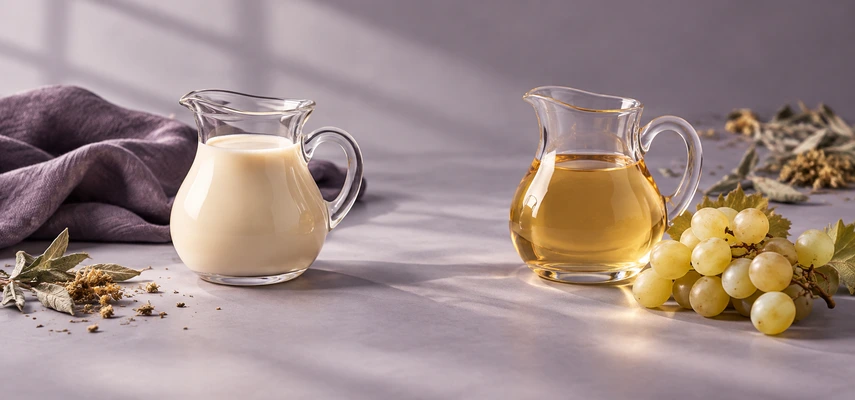

An orange liqueur and a sweet vermouth can both add sweetness and aroma to a cocktail. That shared job does not make them the same kind of beverage. One belongs to sweetened flavoured spirits; the other begins with wine. The family resemblance appears at the bar, while the difference starts much earlier.
Understanding liqueurs and vermouth means tracing their foundations before judging sweetness or colour. This lesson connects base material, flavouring and final balance, then separates a required feature from a common possibility. It is a useful rehearsal for cocktail questions because a single ingredient can contribute several things at once.
What makes a liqueur a liqueur?
A liqueur is a sweetened flavoured spirit category. Sweetening is mandatory, not an optional detail that happens to appear in a few famous examples. The flavour may come from fruit, herbs, spices, nuts or other suitable materials, depending on the product and the applicable category rules.
That does not mean all liqueurs have the same sweetness or the same alcoholic strength. A family can share a defining requirement while allowing considerable variation. The beginner’s task is to recognise the requirement without inventing a single recipe or an exact numerical threshold for every jurisdiction.
A drink with an orange aroma is therefore not automatically a liqueur. It might be another flavoured spirit, depending on its composition and the definition applying to it. A flavour description identifies one characteristic; a category name makes a broader production claim. The two need to be connected rather than confused.
Neutral and characterful bases
A liqueur can use a neutral spirit base. That gives the flavouring relatively little competing raw-material character. Think of it as choosing a quiet setting in which the added ingredients can be heard clearly. The base still supplies alcohol and contributes to the mixture even when its aroma is restrained.
A characterful spirit base is another route. A producer might retain recognisable spirit character alongside the added flavouring and sweetness. The result depends on how those contributions interact. A liqueur is not disqualified simply because its base has more personality than a highly neutral alcohol.
This is why “liqueur” should not be translated as “flavoured vodka” in every situation. Some products may use a neutral foundation, but the category is wider. Base choice, flavouring and sweetening together explain the finished style more effectively than treating the alcoholic component as irrelevant.
Fermentation and distillation have already supplied the base spirit. Flavouring and sweetening are later operations. A coffee or fruit ingredient need not have provided the fermentation sugars originally used to make the alcohol. The featured flavour and the alcohol’s agricultural origin answer different questions.
Building flavour and sweetness
Flavour can be introduced through extraction, maceration, suitable distillation processes or permitted flavouring preparations. Different products use different approaches. The general production toolkit does not establish that every liqueur is made by soaking fresh ingredients in a bottle or that every producer uses the same method.
Sugar changes actual sweetness and can affect texture and balance. It is distinct from an aroma associated with sweet foods. Vanilla or chocolate impressions can suggest sweetness, but the liqueur category’s requirement concerns real sweetening rather than a pleasant smell alone. The process needs to match the category claim.
Flavour and sweetness also interact in perception. Sugar can soften the impression of some bitter or acidic elements without removing them from the mixture. A liqueur may therefore be simultaneously sweet and bitter, or sweet and fruit-led. Calling it sweet is a beginning, not a complete sensory description.
Cream creates a different texture
Cream liqueurs include cream within a sweetened alcoholic product. That ingredient contributes an opaque appearance and a creamy texture, alongside the flavouring and spirit base. Cream is not compulsory in ordinary liqueurs; it identifies an important variation rather than the definition of the entire family.
The smooth impression is also not a reliable measure of alcoholic strength. A rich or sweet texture can change perception without establishing how much ethanol is present. Read the actual ABV rather than using creaminess as a substitute for a label. Sensory softness and alcohol proportion are different kinds of information.
Storage and use should follow the actual producer’s instructions. A study guide should not invent a universal shelf life for every cream liqueur, since formulations and packaging differ. For the examination, the useful connection is cream as a production element affecting the finished beverage’s appearance and texture.
Vermouth starts with wine
Vermouth is an aromatised wine, not merely another liqueur. Its base wine remains central to its identity. Spirit is added, and botanical flavourings shape the profile. Sugar and caramel colour are also elements in the Level 1 production framework, although actual formulations and styles vary.
The Virginia Alcoholic Beverage Control Authority’s vermouth guide describes the wine foundation, fortification and botanical character. The combination helps explain why vermouth belongs beside spirits in cocktail teaching while retaining its own beverage classification. Being used with gin does not make it gin.
A useful analogy is a guest at a shared table who keeps their own surname. Liqueurs and vermouth may perform related cocktail jobs, but the wine-based member does not change category because the others are distilled spirits. Classify the component by its production, then discuss what it contributes to the mixture.
Wine, added spirit and botanicals do different jobs
The base wine supplies a foundation that includes wine-derived character and acidity. Added spirit raises alcoholic strength as part of fortification. Botanical flavourings introduce aromatic and taste characteristics, including bitter elements. Each contribution belongs in the explanation; none makes all the others redundant.
Maceration can extract botanical compounds into liquid. Producers select materials and methods to achieve the intended result. Herbs, spices or citrus-related notes may be evident, but a tasting impression alone does not reveal a complete proprietary recipe. An original explanation can describe the mechanism without pretending to know secret proportions.
Some bitter botanicals help provide vermouth’s characteristic balance. Bitterness can coexist with sweetness and wine-derived acidity. This makes the beverage especially useful for understanding why a cocktail ingredient cannot always be assigned to just one sensory box. Vermouth may influence several dimensions at the same time.
The Noilly Prat producer’s dry-vermouth description illustrates botanical variation within one actual style. Its individual selection of herbs and spices is an example, not a universal ingredient count. The point is that wine and flavouring combine through deliberate choices rather than appearing in one fixed recipe everywhere.
Dry, sweet and colour are separate clues
Not all vermouth has identical sweetness. Dry and sweeter styles serve different purposes and contribute different balances to cocktails. A word such as dry should not be expanded into a claim that a beverage contains no sugar whatsoever. The exact category rules and actual formulation determine the more detailed composition.
Colour is another dimension. A pale appearance does not by itself prove dryness, and a darker colour does not establish that red base wine must have been used. Caramel colour can be relevant to appearance. The simple rule “red means red wine” can therefore mislead when applied to vermouth.
As with spirits, appearance provides an observation rather than the entire production record. A student should be able to describe the visible colour while remaining cautious about its cause. Label information and producer evidence help identify the wine base and adjustments; the eye alone cannot settle every question.
Compare cocktail roles without merging categories
A liqueur may supply sweetness and a focused flavour such as orange, herbal or coffee character. Vermouth may supply sweetness or a drier balance, botanical aroma, bitterness and wine-derived acidity. Both can alter a cocktail’s overall alcoholic concentration when combined with a stronger spirit, depending on their actual strengths and proportions.
Equal volumes are not automatically equivalent substitutions. Replacing vermouth with a liqueur can change acidity, sweetness, botanical character and strength together. A drink may remain enjoyable, but the swap has done more than exchange one flavour word for another. Understanding composition explains the result better than simply calling both ingredients modifiers.
The Martini and Manhattan provide familiar contexts in which vermouth matters. A liqueur also appears in several cocktail structures explored later. Learn the ingredient’s identity first, then its role in the recipe. A cocktail family does not rewrite the legal category of each component it contains.
Work through two hypothetical products
Product A uses a neutral spirit base, orange flavouring and sweetening. Those facts point towards a liqueur framework, subject to applicable requirements. The neutrality of the base does not remove its alcohol, while the flavour name does not establish that oranges were fermented to create that alcohol.
Product B begins with wine, receives added spirit and botanical flavourings, and is prepared as vermouth. Its sweetness and colour may differ from another vermouth. The wine foundation remains the crucial classification clue even if both products happen to look amber and appear in the same cocktail cabinet.
Now imagine adding cream to a suitable liqueur formulation. Its appearance and texture change substantially, but that does not make cream a requirement for the orange liqueur or turn the vermouth into a cream product. The exercise separates the general category from a particular variation within it.
Use the differences between sweetened spirits and aromatised wine when studying cocktail balance and cocktail families.
What to remember
Liqueurs must be sweetened and may use neutral or characterful spirit bases. Flavouring creates many styles, and cream supplies an important variation. Vermouth belongs to aromatised wine: start with base wine, then account for added spirit, flavourings including bitter elements, sugar and relevant colouring decisions.
Keep classification, sweetness and appearance separate. A pale drink needn’t be dry, a bitter drink can contain sugar, and a shared cocktail role does not make two beverages the same category. Those distinctions will make the balance and cocktail-family lessons easier to reason through.
Knowledge check: 10 original practice questions
Independent TFE questions, not official WSET examination items. Choose one answer per question; explanations follow separately.
1. What does a fruit flavour name establish about a liqueur’s alcohol source?
- Not necessarily the fermentation raw material
- The fruit always supplied every sugar
- The alcohol was never distilled
- The beverage must be wine
2. Which spirit base can a liqueur use?
- Neutral or characterful
- Only unaged rum
- Only grape brandy
- Only neutral
3. Can vermouth styles differ in sweetness?
- Only if wine is removed
- Yes
- Only if cream is added
- No, every formulation is identical
4. Which feature is compulsory for liqueurs?
- Cream
- Ten years in oak
- Sweetening
- A wine base
5. Which set belongs to vermouth’s production framework?
- Only grain and yeast
- Only potato and water
- Only cane and oak
- Base wine, spirit, flavourings, sugar and caramel colour
6. Which category includes vermouth?
- Cream liqueur
- Unflavoured whisky
- Aromatised wine
- Plain vodka
7. What does a darker vermouth colour prove about its base wine?
- It must be aged ten years
- It must be unsweetened
- It must use red wine
- No necessary red-wine conclusion
8. Why is an equal-volume liqueur-for-vermouth substitution consequential?
- Only the bottle colour changes
- Both are always identical
- It can change several balance dimensions together
- Wine acidity never matters
9. What distinguishes cream liqueurs within this lesson?
- They are aromatised wines
- Cream contributes appearance and texture
- All liqueurs require cream
- They contain no alcohol
10. What does fortification contribute to vermouth?
- Removal of every botanical
- An increase in alcoholic strength through added spirit
- Mandatory cream
- Creation of alcohol without fermentation
Answers and explanations
1. A — Not necessarily the fermentation raw material. Flavour may be introduced after the spirit base was produced from another agricultural material. Mapping: LO2.
2. A — Neutral or characterful. The category permits either kind of base, which changes the interaction with flavouring. Mapping: LO2.
3. B — Yes. Dry and sweeter styles differ, so one universal sweetness claim is inaccurate. Mapping: LO2.
4. C — Sweetening. Sweetening defines the liqueur framework, while bases and flavourings can vary. Mapping: LO2.
5. D — Base wine, spirit, flavourings, sugar and caramel colour. These are the elements named in the syllabus, with actual styles and formulations varying. Mapping: LO2.
6. C — Aromatised wine. Vermouth retains a wine foundation even though added spirit and botanicals shape it. Mapping: LO2.
7. D — No necessary red-wine conclusion. Colour adjustments and other production choices mean appearance alone does not establish wine colour. Mapping: LO2.
8. C — It can change several balance dimensions together. Sweetness, acidity, aroma and strength may all differ rather than one flavour changing in isolation. Mapping: LO2.
9. B — Cream contributes appearance and texture. Cream is an important variation rather than a compulsory ingredient in every liqueur. Mapping: LO2.
10. B — An increase in alcoholic strength through added spirit. Added spirit is distinct from the wine base and botanical flavouring steps. Mapping: LO2.












