










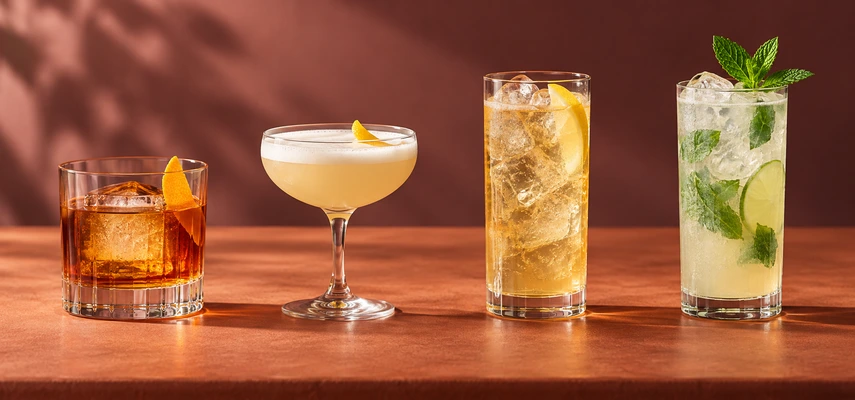

A Martini and a Negroni do not taste alike, yet they occupy the same family in the Level 1 framework. A Greyhound contains grapefruit juice but sits among the highballs, rather than being assigned to the short-sour group merely because the fruit can taste sour. Names and individual ingredients are clues; the prescribed classification is the exam reference.
The four cocktail families are spirit-forward, short sour, highball and long sour. Learning their structures makes the twenty named examples easier to remember. It also prevents a recipe detail or a bartender’s alternative taxonomy from displacing the framework the qualification actually uses.
Use the syllabus as the map
The official WSET specification assigns the examples to these four groups. These are the authoritative study assignments here. Professional cocktail writing can classify drinks differently, and variants of a familiar name may change ingredients or preparation. Neither fact makes the examination mapping optional.
This guide gives original structural explanations rather than full recipes. Quantities, garnish histories and disputed origin stories are unnecessary for the recognition task. The goal is to see how spirit, sweetness, sourness, bitterness and dilution interact, then attach the required name to the correct family.
Think of the families as four useful folders, not a claim that every cocktail ever invented fits cleanly into one of them. The folder helps organise learning. It does not require you to resolve every boundary debate in professional bartending before answering a beginner multiple-choice question.
Spirit-forward: the spirit remains central
A spirit-forward cocktail keeps the alcoholic ingredients and their character prominent, rather than building a long drink around a large mixer portion. It can still contain sweetness, bitterness and water from dilution. Forward does not mean undiluted, free of sugar, or simply a neat spirit in a decorative glass.
Some examples use a relatively small seasoning addition; others combine several alcoholic components. Their balance therefore differs within the family. A Negroni’s bitterness and a Martini’s drier structure do not stop both from belonging here. The shared folder does not promise identical flavour or one universal recipe ratio.
| Required example | Structural explanation |
|---|---|
| Old Fashioned | Spirit supplies the centre, with sweetness and bitters shaping the balance. Water and ice affect concentration without turning it into a highball. |
| Sazerac | A whiskey-centred structure combines sweetness and bitters with an anise-scented accent. Its aromatic details do not make it a citrus-led sour. |
| Rusty Nail | Scotch and a sweet whisky-based liqueur produce a compact alcoholic mixture. The liqueur supplies flavour and sweetness alongside its own alcohol. |
| Manhattan | Whiskey and vermouth form the main relationship, with bitters providing seasoning. Vermouth contributes more than simple dilution or sugar alone. |
| Martini | The classic gin-and-vermouth structure keeps alcoholic botanical ingredients central. A dry impression is compatible with flavour and deliberate dilution during preparation. |
| Negroni | Gin, a bitter component and sweet vermouth combine several roles. Bitterness, sweetness and alcoholic strength coexist rather than occupying separate ingredients perfectly. |
The IBA Negroni composition is a useful concrete comparison with the other names. Use the recognised ingredients to understand the interaction, then retain the WSET family assignment. A different serving glass alone does not overturn the structure or the prescribed study answer.
Short sour: compact sweet-sour balance
A short sour combines a spirit foundation with a sour component and sweetness in a relatively compact drink. Citrus is a familiar source of acidity. Syrup or a liqueur can provide sweetness, with the latter also contributing alcohol and aroma. Those overlapping roles matter to the finished balance.
The word short concerns the structure relative to longer mixed drinks. It does not establish one compulsory glass shape or one ABV. Foam, colour and garnish can vary without being the defining family test. Look first for the spirit, sourness and sweetness relationship.
| Required example | Structural explanation |
|---|---|
| Pisco Sour | Pisco supplies the spirit foundation, supported by citrus acidity and sweetness. Foam in familiar versions adds texture without changing the core sour structure. |
| Whiskey Sour | Whiskey, sour citrus and sweetness form the main balance. The whiskey’s grain and oak character remains relevant within that compact arrangement. |
| Daiquiri | Rum meets lime and sweetness in the familiar short structure. A classic example need not be a large frozen fruit drink. |
| Sidecar | Brandy combines with citrus acidity and a sweet orange-flavoured liqueur. The liqueur acts as both flavouring and sweet alcoholic component. |
| Margarita | Tequila, citrus and a sweetening component create the sour framework. Familiar orange-liqueur versions illustrate how one ingredient can affect several balance dimensions. |
| Clover Club | Gin, citrus and raspberry-related sweetness fit the short-sour relationship. Foam in familiar preparations is a texture feature, not a separate fifth family. |
Notice what changes and what stays. The spirit can be pisco, whiskey, rum, brandy, Tequila or gin, yet the folder remains short sour. Raw-material variety does not create a new family every time the base changes. The balance relationship is what makes the comparison educationally useful.
Highball: spirit with a longer mixer
A highball combines a spirit with a substantial mixer component, producing a longer arrangement than the compact examples above. Carbonation is common but should not become a false universal rule for every prescribed example. The Greyhound is a useful reminder that fruit juice can serve as the mixer.
The mixer may contribute sweetness, bitterness or acidity in addition to lowering the mixture’s alcoholic concentration relative to the spirit portion. Highball does not mean flavourless or chemically simple. It describes a useful structural relationship, with individual examples supplying different flavours and balances.
| Required example | Structural explanation |
|---|---|
| Cuba Libre | Rum and cola create a long mixed drink with a lime connection. The mixer brings flavour and sweetness alongside its volume. |
| Greyhound | A spirit, commonly vodka or gin, combines with grapefruit juice. The syllabus places it here despite the juice’s sour or bitter associations. |
| Horse’s Neck | The alcoholic version pairs a spirit with ginger ale in a long structure. A citrus-peel accent does not turn it into a short sour. |
The highball group is the smallest prescribed set: three names. Do not add an extra required cocktail merely because it is a familiar example from general bar knowledge. The wider world contains many highballs, but the examination list in this lesson has a specific scope.
Long sour: sour balance with a longer structure
A long sour retains the spirit-plus-sour-plus-sweet relationship while extending the drink through additional length. That may involve a carbonated ingredient, fruit components or another structure suitable to the particular example. The result combines the second balance scale with a different strong-versus-weak arrangement from a compact sour.
A longer ingredient need not be alcohol-free. French 75 is especially helpful here because sparkling wine contributes alcohol as well as length and other sensory features. Treating every top-up as plain water would misread the first balance scale even when the final drink seems refreshing.
| Required example | Structural explanation |
|---|---|
| Tom Collins | A gin sour structure is lengthened with soda. The added water and carbonation change the experience while sweetness and acidity remain central. |
| Paloma | Tequila meets grapefruit-related flavour in a longer sweet-sour arrangement. Familiar soda-based versions show how a mixer can contribute several properties together. |
| French 75 | A gin-and-citrus sweet-sour foundation is extended with sparkling wine. The top-up contributes alcohol, so length does not mean alcohol-free dilution. |
| Mojito | Rum, lime, sweetness and mint form a fresh aromatic structure lengthened with soda. Mint contributes aroma without replacing the sweet-sour relationship. |
| Singapore Sling | A longer gin-based drink combines fruit and sweetened flavouring elements. Its more complex ingredient arrangement still has a prescribed home in this family. |
Build a memory system that explains itself
Use the counts as a quick check: six spirit-forward, six short sour, three highball and five long sour, giving exactly twenty names. Counts alone cannot teach the classification, but they can expose an omission. If one folder has seven, check whether a name has wandered across a boundary.
Then revise by comparison. Pair Manhattan with Whiskey Sour to see how whiskey can appear in different structures. Pair Daiquiri with Mojito to compare compact and longer rum-based sweet-sour drinks. The base spirit does not determine the family by itself.
Next test the awkward names deliberately. Greyhound belongs to highball in this framework. French 75 belongs to long sour despite its sparkling wine. Negroni belongs to spirit-forward despite prominent bitterness. Those examples prevent an overly simple rule from replacing the actual syllabus assignments.
Finally, cover the family names and explain a drink’s structure in ordinary words. You do not need to memorise a complete protected recipe to identify the main relationship. Refer to the IBA collection for composition context while retaining the qualification’s own family map for revision.
Consolidate the family map through balance principles and revision and original mock examinations.
What to remember
Learn both the organising idea and every required name. Spirit-forward keeps alcoholic character central; short sour uses a compact sweet-sour structure; highball uses a longer mixer relationship; long sour extends a sweet-sour arrangement. These descriptions support the prescribed assignments rather than replacing them.
All twenty examples have a home here, and no fifth family is required. Keep recipe variants, glassware and professional taxonomy debates in perspective. The examination asks for a particular useful map, while the production and balance lessons explain why the map is worth learning.
Knowledge check: 10 original practice questions
Independent TFE questions, not official WSET examination items. Choose one answer per question; explanations follow separately.
1. Which pair belongs to long sour?
- Sazerac and Rusty Nail
- Mojito and Singapore Sling
- Sidecar and Clover Club
- Greyhound and Horse’s Neck
2. Which classification should govern a Level 1 practice answer?
- The garnish colour
- The official specification’s mapping
- Any alternative taxonomy
- The serving-glass height alone
3. Which family contains French 75?
- Short sour
- Long sour
- Highball
- Spirit-forward
4. Which family contains Manhattan?
- Spirit-forward
- Long sour
- Short sour
- Highball
5. Which is a short sour rather than a highball?
- Cuba Libre
- Horse’s Neck
- Clover Club
- Greyhound
6. What is the total prescribed example count?
- Sixteen
- Eighteen
- Twenty-four
- Twenty
7. Which list contains only spirit-forward examples?
- Margarita, Sidecar and Mojito
- Old Fashioned, Martini and Negroni
- Cuba Libre, Greyhound and Paloma
- Pisco Sour, Daiquiri and Tom Collins
8. Which family contains Greyhound in this syllabus?
- Highball
- Short sour
- Long sour
- Spirit-forward
9. Does base spirit alone determine the family?
- Yes, all gin drinks are short sours
- Yes, all rum drinks are highballs
- No, structure and the syllabus assignment matter
- Yes, all whiskey drinks are spirit-forward
10. Which family contains Daiquiri?
- Spirit-forward
- Short sour
- Long sour
- Highball
Answers and explanations
1. B — Mojito and Singapore Sling. Both are in the prescribed long-sour group, despite their different aromatic details. Mapping: LO3.
2. B — The official specification’s mapping. Alternative professional classifications exist, but the qualification supplies the authoritative study assignments. Mapping: LO3.
3. B — Long sour. Its sparkling-wine length fits the prescribed long-sour group, and the wine also contributes alcohol. Mapping: LO3.
4. A — Spirit-forward. Whiskey and vermouth form a compact alcoholic structure in the prescribed spirit-forward group. Mapping: LO3.
5. C — Clover Club. Clover Club belongs with the short sours; the other three are the complete highball set. Mapping: LO3.
6. D — Twenty. The four groups contain six, six, three and five named examples respectively. Mapping: LO3.
7. B — Old Fashioned, Martini and Negroni. All three names in the correct list belong to the official spirit-forward set. Mapping: LO3.
8. A — Highball. The official assignment is highball; grapefruit juice does not automatically move it to a sour group. Mapping: LO3.
9. C — No, structure and the syllabus assignment matter. The same base can appear in different families, such as rum in Daiquiri and Mojito. Mapping: LO3.
10. B — Short sour. The classic rum, citrus and sweetness relationship belongs to the compact short-sour group. Mapping: LO3.











