










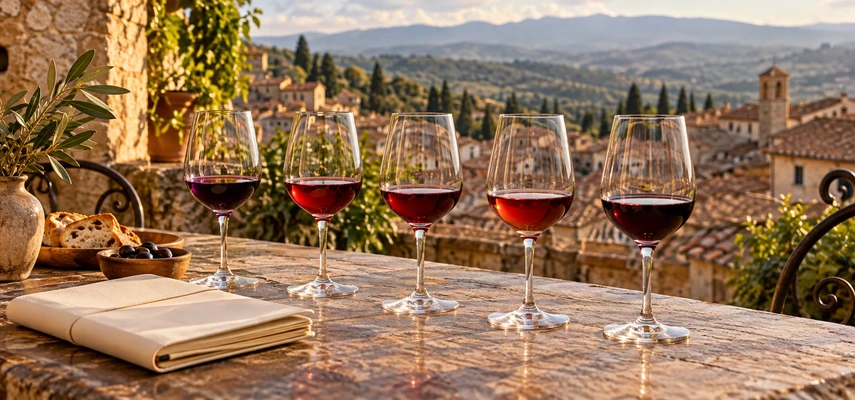

Five bottles display five place names, and none of the names appears in the principal-grape list. That isn’t an omission. Many European wines announce where they come from, expecting the drinker to know something about the grapes and styles associated with that place.
Famous red wines explained through their differences are easier to remember than five disconnected labels. Beaujolais supplies a useful lighter reference; Chianti brings a fresh, structured Italian contrast; Rioja introduces a classic Spanish red and possible oak character; the Rhône names point toward different scales of French red blends.
What WSET Level 1 expects you to know
All five examples appear in Learning Outcome 2 of the official Issue 1.2 specification: Beaujolais, Chianti, Rioja, Côtes du Rhône and Châteauneuf-du-Pape. Know the red styles being discussed, their countries and useful principal grape associations.
These additional grapes help explain the named wines; they don’t replace the eight prescribed principal varieties. Exact legal blending percentages and ageing classifications aren’t required here. This independent TFE guide has no WSET affiliation, and its questions are original.
Beaujolais: fruit and a lighter frame
Beaujolais is a French region associated with red wines made from Gamay. A typical beginner example is dry, relatively light-bodied, fresh and low in tannin, with red-fruit flavours such as strawberry, raspberry or cherry.
The official Beaujolais Gamay profile describes a wide range of fruit expression and wines that can differ in depth and development potential. Therefore, the lighter introductory style shouldn’t become “all Beaujolais is simple and must be drunk immediately.”
Beaujolais Nouveau is one particular youthful style, not a synonym for all Beaujolais. The Level 1 priority is the regional red-wine example and its useful Gamay association. There is no need to collect every cru name to understand that connection.
Don’t swap Beaujolais and red Burgundy
Both can be French reds with attractive red-fruit flavours and comparatively gentle tannin, but the principal associations differ. Beaujolais points to Gamay. The prescribed red Burgundy example points to Pinot Noir.
That is why memorizing only “light French red” is insufficient. Similar styles can arise from different grapes. Regional identity and sensory comparison should support each other rather than becoming a single vague category.
Imagine two wine-list descriptions that both mention cherry and fresh acidity. The notes alone don’t make the place names interchangeable. A named-wine question asks for the association taught, not a guess based on one shared fruit word.
Chianti: Tuscany and Sangiovese
Chianti is a red-wine name from Tuscany in Italy. Sangiovese is its central grape association. Typical wines are dry, with noticeable acidity, red-cherry character and tannic structure; body and oak influence vary.
The Chianti consortium’s Sangiovese guide explains the variety’s regional importance. Learn the grape connection without turning Chianti into a grape name or assuming every bottle follows an identical blend.
Compared with a typical light Beaujolais, Chianti can feel more structured and grippy. Its acidity is part of the style rather than automatic evidence that the wine is spoiled. Acidity and tannin can both be noticeable, while remaining different sensations.
“Good with Italian food” is too broad to replace this description. Tomato acidity, fat, salt, sweetness and the rest of a dish can all matter. Food pairing belongs to a separate lesson; the regional identity remains useful whether dinner is pasta or something else.
Rioja: Spain, Tempranillo and possible oak
Rioja is a Spanish wine region whose red wines are commonly associated with Tempranillo. Other grapes may contribute. Typical red styles are dry, with red-fruit character, tannin and medium to fuller body depending on the wine.
Oak maturation can add vanilla, toast or spice, so a Rioja description may include both fruit and wood-derived notes. Not every Rioja has the same amount of oak influence or the same development. The Rioja regulator’s classification guide shows that the region contains several production and maturation categories.
Rioja also produces white and rosé wines. This article teaches its prescribed red example rather than claiming that every product under the name is red. Similarly, Rioja isn’t the name of a single grape, and Tempranillo isn’t the name of the entire region.
Côtes du Rhône: a regional blend, not a single-grape promise
Côtes du Rhône comes from France’s Rhône Valley. For the red example, blends often involve Grenache and Syrah, alongside other permitted varieties. Typical wines are dry, fruity and commonly medium-bodied, although individual expressions vary.
Grenache can contribute ripe fruit, warmth and body; Syrah can add darker fruit, colour and structure. These are useful blending tendencies rather than a formula requiring every producer to use the same proportions.
The Rhône wine body’s Grenache guide explains its role in the southern valley and its capacity for generous, fruit-driven styles. Recognizing the grape doesn’t mean that every wine with Rhône in its name is a pure Grenache wine.
Châteauneuf-du-Pape: a fuller southern Rhône reference
Châteauneuf-du-Pape is a named appellation in the southern Rhône in France. Its red wines are commonly Grenache-led blends and often provide a fuller-bodied, ripe-fruited comparison, sometimes with spicy character and noticeable alcoholic warmth.
The name doesn’t mean that every bottle is made from only Grenache. Nor should the fuller reference become a claim that every example is darker or more tannic than every possible Côtes du Rhône. Blending, growing conditions and producer choices still matter.
White Châteauneuf-du-Pape also exists, but the prescribed example here is red. The same careful wording used for Sancerre and Bordeaux prevents an introductory association from becoming an inaccurate universal statement.
Five names, five useful anchors
| Named red wine | Country/place | Useful grape association | Typical study anchor |
|---|---|---|---|
| Beaujolais | France | Gamay | Lighter, fruity, low tannin |
| Chianti | Tuscany, Italy | Sangiovese | Red cherry, acidity, tannic structure |
| Rioja | Spain | Tempranillo, often in blends | Red fruit; possible oak/spice |
| Côtes du Rhône | Rhône Valley, France | Often Grenache/Syrah blends | Fruity, commonly medium-bodied |
| Châteauneuf-du-Pape | Southern Rhône, France | Commonly Grenache-led blends | Often fuller, ripe, warming |
The table provides anchors, not tasting boundaries enforced by a ruler. Its main purpose is to stop five regional names collapsing into “European red wine.” Each carries information that can help interpret a label or a question.
How to learn the associations without a geography lecture
Start with country, then principal grape connection, then one style contrast. Italy–Chianti–Sangiovese is a compact path. Spain–Rioja–Tempranillo supplies another. The French names need a little more separation because several regions are involved.
Next compare two at a time. Beaujolais versus Chianti highlights tannin and structure. Côtes du Rhône versus Châteauneuf-du-Pape highlights a typical difference in scale while preserving shared southern Rhône blending context. Rioja adds an especially useful reminder about oak-derived flavours.
Finally, reverse the question. Given Gamay, recall Beaujolais; given Rioja, recall Spain and Tempranillo. Working in both directions tests understanding more effectively than recognizing familiar words when they appear in the same fixed table order.
Common misconceptions and exam traps
The five wines aren’t all Pinot Noir, all Cabernet Sauvignon or all Syrah. Beaujolais isn’t the principal red Burgundy example. Rioja isn’t Italian, Chianti isn’t Spanish, and the two Rhône examples aren’t grape varieties.
Oak character doesn’t establish sweetness, while fuller body doesn’t establish superior quality. When a question asks about a named red example, use that intended context without falsely claiming the region cannot make other wine colours.
Give each label a useful meaning
Suppose a wine list offers a light fruity Beaujolais and a fuller red Châteauneuf-du-Pape. Those descriptions communicate a practical contrast in weight without claiming that either wine is inherently better. A diner can choose according to the experience wanted.
Now compare Chianti and Rioja. Both are regional red examples, but their grape and country associations differ. Cherry-like freshness and tannic structure can help characterize the Chianti reference; red fruit with possible vanilla or spice can help describe an oaked Rioja. Neither description should replace the principal identity.
Finally, ask what the lesson doesn’t establish. It doesn’t prove the exact blend in an individual bottle, its legal maturation category or whether it has reached its ideal drinking window. Those details require specific information. Learning the beginner anchors is useful precisely because it gives a sound starting point without pretending the label contains every answer in one word.
Knowledge check: 10 original questions
1. Which grape is the principal Beaujolais association?
- Gamay
- Cabernet Sauvignon
- Riesling
- Sauvignon Blanc
2. Which country is associated with Chianti?
- Germany
- Italy
- Spain
- Portugal
3. Which grape is central to Chianti?
- Merlot as the defining principal association
- Pinot Grigio
- Sangiovese
- Chardonnay
4. Which country is associated with Rioja?
- Italy
- New Zealand
- Portugal
- Spain
5. Which grape is a useful red Rioja association?
- Tempranillo
- Gamay
- Riesling
- Chardonnay
6. Which blend association is useful for red Côtes du Rhône?
- Only Sauvignon Blanc
- Grenache and Syrah often contribute
- Only Riesling and Pinot Grigio
- Only Chardonnay
7. Which study reference is often fuller and warming?
- Italian Pinot Grigio
- White Sancerre
- Red Châteauneuf-du-Pape
- A typical light Beaujolais
8. What does vanilla character in a Rioja potentially indicate?
- Mandatory sweetness
- Added grapes of a vanilla variety
- Sparkling pressure
- Oak influence
9. Which typical Beaujolais profile fits the introductory lesson?
- Dry, fruity, light and low in tannin
- Always fortified and sweet
- Always white and oaked
- Always without acidity
10. Which statement avoids a false universal claim?
- Every Beaujolais is Nouveau
- The prescribed red examples do not exclude other colours in some regions
- Every Rioja is red
- Every Rhône wine is pure Syrah
Answers and explanations
1. A — Gamay. Beaujolais reds principally use Gamay, rather than the Pinot Noir of the prescribed red Burgundy example.
2. B — Italy. Chianti is the Tuscan Italian named red example.
3. C — Sangiovese. Sangiovese is the central grape association for Chianti.
4. D — Spain. Rioja is a Spanish wine region, including the red example studied here.
5. A — Tempranillo. Tempranillo commonly forms the basis of red Rioja, with other grapes possible.
6. B — Grenache and Syrah often contribute. Red southern Rhône blends often use Grenache and Syrah alongside other permitted varieties.
7. C — Red Châteauneuf-du-Pape. Red Châteauneuf is commonly a fuller Grenache-led southern Rhône reference.
8. D — Oak influence. Vanilla can be oak-derived and does not establish sugar.
9. A — Dry, fruity, light and low in tannin. The typical lighter red reference is useful while allowing the region’s broader range.
10. B — The prescribed red examples do not exclude other colours in some regions. The lesson specifies red examples without claiming regions cannot produce other styles.
One-page revision summary
Beaujolais–Gamay–France. Chianti–Sangiovese–Italy. Rioja–Tempranillo–Spain. Red Côtes du Rhône and Châteauneuf-du-Pape–French Rhône blends, often involving Grenache and Syrah, with Châteauneuf commonly the fuller study reference. Learn the differences as well as the names.












