










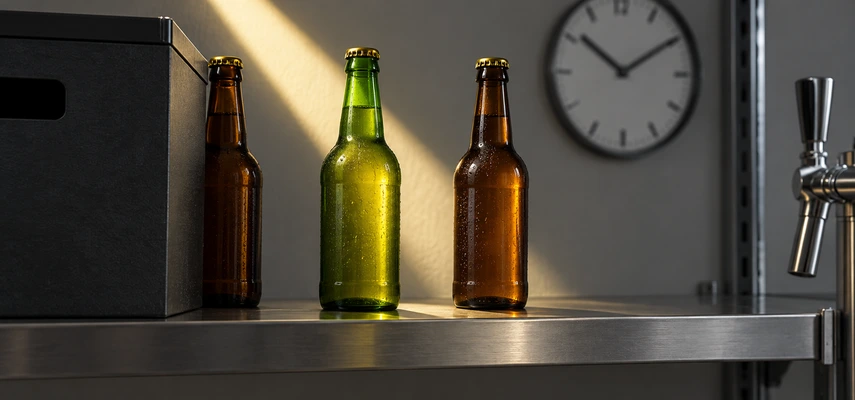

A skunky bottle, a tired cardboard-like beer and a beer that has unexpectedly become sour may all disappoint, but they do not necessarily share a cause. Common beer faults are easier to understand when each sensory effect is connected to the process that can produce it.
The Level 1 focus is staling, light strike or skunking, and bacterial infection. Learning the differences helps explain prevention. It also prevents an equally important mistake: condemning an intended style characteristic simply because it is unfamiliar.
A fault is a departure from the intended beer
Assessing a fault requires context. A crisp non-sour lager is expected to behave differently from a traditional geuze. Fruit-like fermentation character can belong in a Belgian ale, while acidity can belong in a sour style. Neither should be rejected merely because it differs from a neutral pale lager.
However, context isn’t a license to excuse every defect. A style can allow complex fermentation and still suffer poor storage or unwanted contamination. The task is to compare the actual impression with the intended profile, supported by producer information and the beer’s condition.
The official specification identifies the three fault groups required here. Other technical faults exist, but a beginner doesn’t need a complete brewery troubleshooting encyclopedia before understanding these common causes. Keep the prescribed mechanisms distinct first.
Staling: time and handling change the profile
Staling describes unwanted changes as beer loses its intended fresh character. Aroma can become less vivid, especially where fresh hop expression matters. Flavor can seem dull or develop papery, cardboard-like or other aged impressions. The exact change depends on the beer and its history.
Oxygen exposure is an important contributor to oxidation-related deterioration, while time and higher storage temperatures can accelerate unwanted changes. This is why a bottle can be sealed and still become stale: small amounts of oxygen and a history of warm handling can matter before opening.
The Cicerone introduction to off flavors connects common deterioration with storage and handling. The beginner’s aim isn’t to identify a particular chemical from one sniff. It is to recognize the difference between an intended fresh profile and a beer whose aroma and balance have moved away from it.
Why cardboard is a clue rather than a complete diagnosis
Papery or wet-cardboard-like descriptions are useful reminders of oxidation, but not every stale beer presents exactly that way. Loss of fresh aroma can also be important. If revision reduces staling to one mandatory smell, it may miss a broader and very common pattern of deterioration.
Think of a hypothetical hop-forward beer whose producer describes vivid citrus and flowers. A poorly handled example might seem muted before an obvious cardboard note appears. The relevant observation is the changed sensory profile, not a requirement to find a theatrical fault aroma every time.
Some strong beers can develop valued aged character under suitable conditions, but that doesn’t make every oxidation effect beneficial. Intended development and unwanted staling need to be distinguished through product context. A pale lager isn’t automatically improved by being forgotten because some barley wines can mature.
Preventing staling is better than trying to reverse it
Fresh stock, suitable refrigerated storage and sensible inventory rotation help protect the intended beer. Packaging and transfers should limit unwanted oxygen exposure. Once opened, a beer is more exposed and can lose gas as well as changing in flavor.
Chilling a stale bottle may change how strongly some impressions are perceived, but it does not reliably recreate its original freshness. Prevention therefore belongs throughout production, distribution and service. It is not a last-minute trick performed after the fault is noticed.
For an examination question, identify which risk the action addresses. Refrigeration helps slow deterioration; keeping a package closed helps limit exposure and preserve condition. Neither fact proves that existing oxidation can be magically undone.
Light strike: a different route to a skunky impression
Light strike occurs when light triggers reactions involving light-sensitive hop-derived compounds. The result can be a pungent skunky aroma and flavor. This isn’t merely a beer becoming warm, nor is it another name for bacterial infection. The trigger and mechanism are different.
Sunlight can cause exposure, but artificial lighting can matter too. The practical prevention principle is to protect beer from relevant light rather than assuming an indoor display is automatically safe. A clear bottle in a brightly lit setting does not receive protection simply because its cap remains intact.
The BJCP faults resource connects light-struck character with light exposure and associates papery oxidation with a different problem. Keeping those pairings separate makes a prevention question straightforward: shade addresses light, while stock handling and oxygen control address other risks.
Packaging changes the exposure risk
Brown glass generally gives more light protection than clear or green glass, while opaque cans and kegs prevent light reaching the liquid inside. A cardboard outer box can also help. Packaging is therefore part of the defense, not merely a marketing surface.
However, package protection is specific to the risk. A lightproof can can still be stored too warm or too long. A dark cupboard can protect from light while offering poor temperature conditions. Good prevention combines appropriate controls rather than assuming one solves every possible problem.
Nor should skunky character be treated as a required feature of an imported lager. Familiarity with a mishandled example does not make the handling fault part of the beer’s intended recipe. A style expectation should describe the protected product, not normalize damage acquired on the way to the shelf.
Bacterial infection: unwanted microbial activity
Bacterial infection refers here to unwanted bacteria affecting a beer. They can alter flavor and aroma, including producing unexpected acidity or other out-of-place characteristics. The particular effect depends on the organisms and conditions, so a single sensory clue does not identify every infection.
Contamination can occur where production, packaging or service hygiene fails. Poorly maintained equipment can expose otherwise well-made beer to unwanted organisms. This explains why hygiene belongs throughout the chain rather than being relevant only inside the fermentation vessel.
Unexpected sourness in a beer intended to remain non-sour is a useful clue for investigation. It is not proof that every sour sensation has the same cause or that a taster can identify a bacterium without testing. Observation should be precise while the causal conclusion remains appropriately limited.
Intentional bacteria are not an infection fault
Some sour traditions deliberately use bacteria to create acidity. The American Homebrewers Association discussion of sour microbes distinguishes the organisms involved in such beers. Controlled use in an intended process is different from unwanted contamination in a beer expected to have another profile.
Berliner weisse and geuze provide the prescribed comparisons. Their acidity is not automatically evidence of a failed batch. Equally, the existence of those styles doesn’t defend an unexpectedly sour helles. Intention and sensory fit are essential parts of the distinction.
Brettanomyces adds another naming trap: it is yeast, not bacteria. It can contribute intentionally or appear unwanted depending on the product. At Level 1, use the correct broad category and don’t turn every unusual fermentation aroma into a claim of bacterial infection.
Prevention follows the cause
For unwanted microbial activity, suitable cleaning, sanitation, equipment maintenance and intact packaging are central controls. They differ from light protection because the problem being controlled is different. A shaded but dirty draft system remains a poor way to serve beer.
If a product or package seems suspect, follow the appropriate service and producer procedure rather than attempting to rescue it by mixing, chilling or adding flavor. Tasting is not a safety test, and this chapter is not a guide to diagnosing microorganisms at home.
An alcohol-free study exercise can use three hypothetical cases. A fresh IPA has lost aroma and seems papery; a light-exposed lager smells skunky; a normally non-sour beer develops unexpected tartness after questionable equipment handling. Assign the likely fault group, then state what remains uncertain without further investigation.
A compact fault comparison
| Fault group | Useful effect to remember | Main prevention connection |
|---|---|---|
| Staling | Loss of freshness; possible papery or cardboard-like change | Fresh stock, appropriate cold handling, limiting oxygen exposure |
| Light strike or skunking | Pungent skunky character | Protection from light and suitable packaging |
| Bacterial infection | Unexpected sourness or other unwanted microbial change | Hygiene, maintenance and package integrity |
The table is a reasoning aid, not a laboratory diagnostic. If a question gives a clear cause, connect it to the relevant effect. If the evidence is incomplete, avoid overstating certainty. Recognizing the limits of a description is part of accurate beer knowledge.
One-page revision summary
Staling concerns unwanted loss or change of fresh character, often involving oxidation and accelerated by poor handling. Light strike is a light-triggered change involving hop-derived compounds and a skunky impression. Bacterial infection concerns unwanted microbial activity, distinct from deliberately managed sour production.
Remember cause, effect and prevention together. Dark storage doesn’t sanitize equipment; a sealed package doesn’t erase heat exposure; refrigeration doesn’t restore every damaged aroma. Above all, compare the beer with its intended style before deciding whether an unfamiliar characteristic is a fault.
Knowledge check: 10 original practice questions
Independent TFE questions, not official WSET examination items. Choose one answer per question; explanations follow separately.
1. Which description is a classic oxidation-related clue?
- Intended banana aroma in Weissbier
- Papery or cardboard-like character
- Clean grain in pale lager
- Balanced coriander in Witbier
2. What triggers light strike?
- Relevant light exposure acting on sensitive beer compounds
- Only bacterial infection
- Only the size of the bottle
- The presence of any wheat
3. Which impression is associated with skunking?
- A compulsory bread-like aroma
- The normal sweetness of every dubbel
- Only increased body
- A pungent skunky aroma and flavor
4. Which package blocks light from the beer?
- Clear glass in sunlight
- Green glass with no protection
- An opaque can
- An open transparent glass
5. Does refrigeration reliably reverse staling?
- Yes, every fresh aroma is restored
- No, prevention is more reliable than attempted reversal
- Yes, oxidation becomes fermentation
- Only if the glass is branded
6. What can unwanted bacterial activity produce?
- Unexpected acidity or other out-of-place changes
- Proof that every sour style is faulty
- A guarantee of identical symptoms in all beers
- The initial germination of malt
7. Why can bacteria be appropriate in Berliner weisse?
- Bacteria are the same as hops
- All beer must become infected
- Sourness always means light strike
- They can be deliberately used to create intended acidity
8. Which control most directly addresses unwanted microbial contamination?
- Only a darker label
- Only moving the glass from sunlight
- Suitable hygiene and equipment maintenance
- Only choosing a more bitter style
9. What is Brettanomyces?
- A bacterium
- Yeast
- A bottle material
- A light wavelength
10. What is the soundest first context for judging an unfamiliar beer characteristic?
- The intended style and verified product information
- A rule that all unfamiliar aromas are faults
- A rule that every sour impression is desirable
- A comparison with pale lager regardless of style
Answers and explanations
1. B — Papery or cardboard-like character. Papery or cardboard-like change can indicate staling, although loss of freshness may appear in other ways too. Mapping: LO3.
2. A — Relevant light exposure acting on sensitive beer compounds. Light strike has a different cause from microbial contamination or ordinary fermentation character. Mapping: LO3.
3. D — A pungent skunky aroma and flavor. Skunky character is a useful reminder of light strike, not a required identity of imported lager. Mapping: LO3.
4. C — An opaque can. Opaque packaging controls light exposure, while other storage risks still need attention. Mapping: LO3.
5. B — No, prevention is more reliable than attempted reversal. Cold handling slows change but cannot be assumed to recreate the original beer after deterioration. Mapping: LO3.
6. A — Unexpected acidity or other out-of-place changes. Effects vary, and unexpected sourness requires context rather than an overconfident organism diagnosis. Mapping: LO3.
7. D — They can be deliberately used to create intended acidity. Controlled intended bacterial contributions are different from unwanted infection in a non-sour beer. Mapping: LO3.
8. C — Suitable hygiene and equipment maintenance. Cleaning, sanitation and maintenance address organisms; shade controls a different risk. Mapping: LO3.
9. B — Yeast. Correct biological naming prevents every unusual fermentation contribution being mislabeled as bacterial infection. Mapping: LO3.
10. A — The intended style and verified product information. Expected characteristics differ across styles, while handling faults can still affect any individual product. Mapping: LO3.












