











Why can a pale Barolo grip your mouth more firmly than a darker Barbera? Italian red wines explained through grape structure make that puzzle useful rather than confusing. Italy’s names can identify grapes, places or production styles, and the trick is to work out which job a name is doing before you predict the wine.
This is Article #13 of The TFE Guide to WSET Level 2 Wine, Part III: Regionally Important Grape Varieties. It covers Nebbiolo, Barbera, Sangiovese, Corvina and Montepulciano, linking their prescribed origins to acidity, tannin, fruit and production. The most helpful comparisons often sit between neighbouring wines rather than opposite ends of the world.
What WSET Level 2 expects you to know
The current official specification assigns these grapes to LO4, together with their specified origins and terms such as Classico and Riserva. The required map includes Barolo, Barbaresco, Barbera d’Asti, Chianti, Chianti Classico, Brunello di Montalcino, Valpolicella, Amarone della Valpolicella, Recioto della Valpolicella and Montepulciano d’Abruzzo.
Learn each name with a grape and a style anchor. Then ask what production contributes. Drying grapes, retaining sugar or allowing more maturation can change the wine as much as moving between nearby places. A single list of Italian place names won’t explain those differences on its own.
Nebbiolo: pale colour, firm structure
Nebbiolo is the black grape associated with Barolo and Barbaresco in Piemonte. Typical reference features include relatively pale colour, high acidity and high tannin, with red-fruit and floral associations. Rose, cherry and, with suitable development, earthy or savoury notes can form part of the description.
The apparently delicate colour shouldn’t lead you to predict a light structural impression. Pigment, tannin and flavour don’t move in one fixed ratio. This is a valuable contrast with Pinot Noir: both can look relatively pale, while their tannin levels may be very different.
Nebbiolo needs suitable conditions to reach the intended ripeness. In ambitious examples, concentration and structure can support maturation and bottle development. Don’t translate “high tannin” into “bad” or assume age alone will improve a wine lacking balance. Tannin level is an observation; quality requires a broader assessment.
Barolo and Barbaresco: same grape, distinct origins
Barolo and Barbaresco are different DOCG origins, both associated with Nebbiolo. The official Barolo profile confirms the grape and describes its structured, complex character. Their shared variety doesn’t make the appellations interchangeable.
Both have maturation requirements and can produce wines intended for development. Producers may use different oak sizes, ages and handling approaches, so don’t decide the exact barrel treatment from the appellation alone. A mature wine may show a different aromatic balance from a young, fruit-led example.
For Level 2, retain the central association and structural reference before collecting detailed vineyard names or legal maturation figures outside this article’s scope. If you can explain why a pale, high-tannin wine could be Nebbiolo, you’ve learned more than the fact that the two famous names begin with “Bar.”
Barbera d’Asti: another Piemonte red, another framework
Barbera is the grape in the prescribed Barbera d’Asti association. It commonly gives deep colour and high acidity with relatively low tannin, alongside red- and black-fruit character. That makes it a useful structural contrast with Nebbiolo from the same broad part of Italy.
Dark appearance doesn’t prove a firmly tannic palate. A Barbera can look more deeply coloured than a Nebbiolo while feeling less grippy. Describe acid and tannin separately: a wine that makes your mouth water isn’t necessarily the wine with the strongest drying sensation.
Production can range from fresh, fruit-led styles to examples with oak and more concentration. Don’t turn “relatively low tannin” into a guarantee of low body or a ban on maturation. The grape supplies a starting structure that the producer can handle in different ways.
Sangiovese: acidity connects the Tuscan names
Sangiovese is the important black grape behind Chianti, Chianti Classico and Brunello di Montalcino. Cherry, red plum and herbal or savoury associations can help describe suitable wines. High acidity and noticeable tannin provide a useful structural anchor, with body varying according to ripeness and production.
The Chianti consortium’s grape discussion places Sangiovese at the centre of the regional story. That doesn’t mean every Chianti bottle must contain exactly the same blend, use the same oak or taste identical.
Climate, site and harvest influence fruit development and potential alcohol, while extraction and maturation shape the tannins and secondary character. A fresher, relatively accessible Chianti and a concentrated wine designed for development can share the grape without sharing the same drinking purpose.
Chianti, Chianti Classico and Brunello di Montalcino
Chianti and Chianti Classico are distinct origin contexts, not simply a basic wine and an optional marketing adjective. Classico identifies a historic production area in relevant Italian contexts. Don’t assume every wine with the word comes from the same place or follows identical regulations.
Brunello di Montalcino is the prescribed Montalcino association for Sangiovese. Its wines can offer concentration, firm structure and development potential. Brunello isn’t an unrelated grape that happens to grow near Sangiovese; it belongs within the Sangiovese identity for this course.
Riserva is also required terminology. It indicates additional maturation requirements under the applicable wine’s rules, rather than one universal Italian ageing period. It doesn’t mean sweeter, stronger in every component or guaranteed superior to every non-Riserva. Read the word together with the origin.
Corvina and Valpolicella: start with the lighter reference
Corvina is an important black grape in Valpolicella blends. A straightforward Valpolicella commonly provides a lighter red-fruit and cherry reference, with refreshing acidity and relatively modest tannin. Other permitted local varieties can contribute, so don’t assume the wine must be pure Corvina.
The official WSET teaching guidance connects the shared local grape context behind Valpolicella, Amarone and Recioto with their production differences. The striking styles aren’t explained by replacing all the grapes with unrelated varieties. Production provides a major part of the answer.
Classico also appears in this region, referring to the relevant historic area. As with Chianti, it gives origin information rather than automatically prescribing sweetness or one precise tannin level. The same familiar word can be useful across Italy without becoming a single recipe.
Appassimento: removing water before fermentation
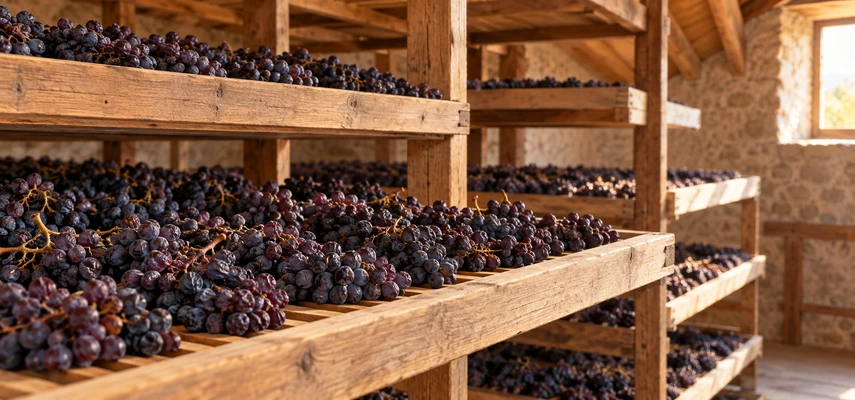
Appassimento means drying grapes before winemaking. Water loss concentrates the remaining material, including sugar and flavour. The result isn’t automatically a sweet wine: the amount of sugar fermented still matters.
Amarone della Valpolicella is the important dry, concentrated reference made using dried grapes. It commonly shows fuller body, high alcohol and ripe or dried-fruit character compared with a straightforward Valpolicella. The exact balance depends on the fruit and producer, but the concentration mechanism explains the broad contrast.
Recioto della Valpolicella uses dried grapes too, but retains sweetness because fermentation doesn’t consume all the sugar. This is the pair to remember: related ingredients and concentration, different final fermentation outcomes. If you say “dried grapes mean sweet,” Amarone immediately reveals the missing step in your reasoning.
Amarone and Recioto: compare the components
Imagine two juices concentrated by water loss. One ferments much further toward dryness; the other retains substantial sugar. The first can produce greater alcohol from that sugar, while the second preserves sweetness. Starting concentration alone hasn’t settled the final balance.
That doesn’t mean the two finished wines can be reconstructed from one simple equation. Their raw materials and handling may differ, and the producer must manage stability and style. The study mechanism is still clear enough to explain why Amarone and Recioto aren’t synonyms.
This distinction also links back to Sauternes, Riesling and later Tokaj: concentrated ingredients and retained sugar are related but separate production questions. Learning that mechanism once is more useful than treating each sweet wine as a mysterious exception.
Montepulciano d’Abruzzo: the grape and place travel together
Montepulciano is the black grape in Montepulciano d’Abruzzo. Useful reference features include deep colour, ripe plum or black-fruit character, medium tannin and medium acidity, with medium to full body depending on the wine. Many examples emphasize accessible fruit, while more ambitious production can add structure and development potential.
The words “d’Abruzzo” identify the regional association. Don’t confuse the grape Montepulciano with the Tuscan town of Montepulciano or assume every wine using that town name is made from this grape. Similar-looking labels can be doing different jobs.
For the assigned course list, fix the simple pair first: Montepulciano grape, Montepulciano d’Abruzzo origin. Then compare its structure with Barbera’s high-acid, lower-tannin reference and Nebbiolo’s high-acid, high-tannin reference. Those contrasts give the names a purpose.
Compare the wines before ranking them
Set up three structural notes: pale with high tannin and acidity; dark with high acidity and lower tannin; dark with riper fruit and more moderate acid and tannin. These can illustrate Nebbiolo, Barbera and Montepulciano reference patterns. They aren’t blind-tasting guarantees, but they make the differences easier to remember.
Add Sangiovese’s cherry-acid-tannin frame and Corvina’s production-driven Valpolicella family. You now have five connected stories. Quality still depends on balance, concentration, complexity and persistence in the particular wine, rather than its place in an imagined league table of famous appellations.
Common mistakes and exam traps
Barolo and Barbaresco point to Nebbiolo, while Barbera d’Asti points to Barbera. Brunello di Montalcino belongs with Sangiovese. Amarone is the dry dried-grape reference, Recioto the sweet one. Montepulciano d’Abruzzo uses Montepulciano, and neither Classico nor Riserva has one identical meaning across every Italian wine.
Related study guides
Knowledge check: 10 original practice questions
Choose one answer each. These independent questions support LO4 and relevant production mechanisms.
1. Which grape makes Barolo and Barbaresco?
- Nebbiolo.
- Barbera.
- Corvina.
- Montepulciano.
2. Which is a useful Barbera reference?
- Mandatory sweetness and high tannin.
- High acidity with relatively low tannin.
- No acidity.
- Always pale and highly tannic.
3. Which group belongs with Sangiovese?
- Barolo and Barbaresco.
- Valpolicella and Recioto.
- Chianti, Chianti Classico and Brunello di Montalcino.
- Gavi and Soave.
4. What does appassimento involve?
- Removing all skins after bottling.
- Turning acid into alcohol.
- Blending only white wines.
- Drying grapes before winemaking.
5. Which is the important dry dried-grape reference?
- Amarone della Valpolicella.
- Recioto della Valpolicella.
- Every Sauternes.
- Every Beerenauslese.
6. Why is Recioto della Valpolicella sweet?
- All dried grapes must become sweet wine.
- Fermentation leaves substantial sugar unconsumed.
- Oak always adds sugar.
- The label’s length creates sweetness.
7. Which grape is important in Valpolicella blends?
- Riesling.
- Fiano.
- Corvina.
- Albariño.
8. Which association is correct?
- Montepulciano d’Abruzzo–Nebbiolo.
- Barolo–Barbera.
- Brunello–Corvina.
- Montepulciano d’Abruzzo–Montepulciano.
9. What does Classico concern in relevant Italian contexts?
- A historic production area.
- A guarantee of sweetness.
- A compulsory oak flavour.
- A universal grape variety.
10. Which statement about Riserva is sound?
- It means the same ageing duration everywhere.
- Its maturation requirements depend on the applicable wine’s rules.
- It always means sweet.
- It always means the wine has more tannin than every alternative.
Answers and explanations
1. A — Piemonte; LO4. Both origins are Nebbiolo associations, with firm tannin and acidity important to their study profiles.
2. B — Barbera; LO4. High acidity and relatively low tannin form a useful contrast with Nebbiolo.
3. C — Tuscany; LO4. These are the prescribed Sangiovese origins, despite their different names.
4. D — Concentration; LO4. Drying removes water and concentrates grapes, but doesn’t itself fix finished sweetness.
5. A — Valpolicella styles; LO4. Amarone is the dry concentrated reference, while Recioto retains sweetness.
6. B — Sweet production; LO4. The fermentation outcome leaves sugar; concentration alone doesn’t guarantee a sweet wine.
7. C — Valpolicella grapes; LO4. Corvina is important alongside other permitted local varieties.
8. D — Abruzzo; LO4. This is the assigned grape-origin pair and shouldn’t be confused with the Tuscan town name.
9. A — Italian terminology; LO4. Classico gives historic-area information rather than one fixed sweetness or oak treatment.
10. B — Italian terminology; LO4. Riserva must be read within the relevant denomination’s maturation rules.
One-page revision summary
| Grape | Prescribed wines | Style anchor |
|---|---|---|
| Nebbiolo | Barolo; Barbaresco | Pale relative colour, high acid and tannin |
| Barbera | Barbera d’Asti | Deep colour, high acid, relatively low tannin |
| Sangiovese | Chianti; Chianti Classico; Brunello di Montalcino | Cherry, acidity and noticeable tannin |
| Corvina | Valpolicella; Amarone della Valpolicella; Recioto della Valpolicella | Fresh red reference versus dry/sweet dried-grape styles |
| Montepulciano | Montepulciano d’Abruzzo | Ripe dark fruit, medium structural reference |
| Terms | Classico; Riserva | Historic area; denomination-specific additional maturation |
First identify grape and place, then explain structure and production. That order turns Italy’s labels from a spelling exercise into a set of memorable wine comparisons.












