










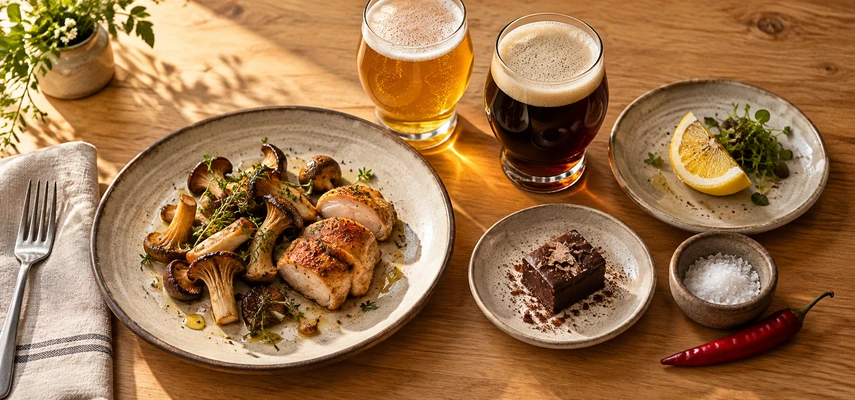

A beer that tastes gently bitter on its own can seem sharper after dessert. Another can feel rounder beside a salty snack. Food and beer pairing becomes much easier to explain when the dish is treated as a set of tastes and textures rather than a name on a menu.
The WSET Level 2 Beer syllabus asks about principal interactions and individual preferences. This lesson follows that direction: identify the dominant food component, predict how the beer may be perceived, then decide whether the change is enjoyable. The prediction and the preference are different judgments.
Start with the person at the table
People differ in sensitivity to bitterness, heat and other sensations. They also differ in what they enjoy. Someone who notices bitterness strongly may like it, while another person may prefer a softer result even at a lower intensity.
WSET’s pairing introduction emphasizes individual perception alongside beer components. A useful recommendation therefore describes the likely effect and asks whether that effect suits the diner. It does not declare a pairing perfect for every palate.
This is especially helpful with spicy food and assertively bitter beer. One person may welcome amplified intensity; another may want relief. Neither response changes the underlying production facts, but both affect the practical choice.
Match intensity before chasing a clever aroma
A delicate dish can disappear beside a powerful beer, while a subtle beer can seem empty next to a heavily roasted or sweet dish. Intensity includes aroma, sweetness, bitterness, acidity, alcohol, roast and texture rather than alcohol alone.
A strong light-colored beer can be more forceful than a dark low-strength one. Likewise, a vegetable dish with fermented sauce and chilli can be more demanding than plainly cooked meat. Evaluate preparation, sauce and seasoning rather than pairing only by protein or color.
The BA and CraftBeer educational course offers a component-led framework. Use it to form a hypothesis: perhaps a richer beer will remain present, or a leaner one will provide a deliberate contrast. Then consider the taste interactions before settling the choice.
Sweetness in food can make beer seem drier
After sweet food, a beer can seem less sweet and more bitter or acidic. A dessert therefore can expose a dry beer’s sharp edges even if the beer seemed balanced alone. The beer’s chemical composition has not suddenly changed; the tasting context has.
For a comfortable dessert pairing, consider whether the beer has enough sweetness and flavor intensity to remain balanced beside the dish. A rich dark beer is not automatically sweet merely because it smells of chocolate. Roast bitterness and residual sweetness need separate assessment.
Imagine a very sweet caramel dessert beside a dry stout. Shared roasted associations may be attractive, yet the dessert can make the beer feel leaner and more bitter. A less sweet dessert or a beer with a different balance may produce a more harmonious result for someone who dislikes that sharpness.
Umami can expose bitterness and dryness
Umami is the savory taste found prominently in ingredients such as mushrooms, aged cheese, stocks and some fermented foods. Umami-rich food can make a drink seem less fruity or sweet and more bitter or harsh. The exact result depends on the whole dish and the person.
Salt and acidity often arrive alongside umami and can alter the interaction. Plain mushrooms and mushrooms seasoned with salt and lemon are not the same pairing problem. This is why broad statements such as beer always suits savory food need more detail.
For a theory answer, name the savory component and the potential change in the beer. Then explain a practical adjustment: moderate aggressive bitterness, consider adequate flavor and body, or account for the dish’s balancing salt and acid. Avoid claiming that umami physically removes fruit compounds from the glass.
Acidity in food can soften a beer’s apparent acidity
An acidic dish can make the beer seem less acidic and relatively rounder or sweeter. The sourness of a lemon dressing sets a different context from plain oil. A beer that seemed bright alone may consequently feel softer beside the food.
This can support a refreshing pairing, but a beer with too little balancing intensity may seem flat in flavor by comparison. Consider both the level of food acidity and the beer’s own acidity, carbonation and aromatic presence. Acidity is a dimension rather than a guarantee of compatibility.
For example, compare an unseasoned salad with the same ingredients dressed sharply with lemon. The food’s name has not changed much, but the pairing has. The useful explanation points to the dressing and resulting perception rather than pretending lettuce dictates one beer style.
Salt can soften bitter edges
Salt in food can reduce perceived bitterness and make a beer seem rounder or sweeter. This helps explain why a salty snack can present a bitter beer differently from the same beer on its own. It does not mean salt has removed the hop compounds.
CraftBeer.com’s component discussion encourages looking beyond dish categories to such interactions. The salt level matters, and the rest of the dish still contributes. A lightly seasoned piece of chicken and a heavily salted cured meat are different starting points.
Use this observation carefully. Salt is a useful culinary variable, not a reason to add excessive seasoning simply to force a pairing. A dish should remain enjoyable in its own right, and personal dietary needs take priority over an educational tasting experiment.
Bitterness can accumulate rather than cancel
Bitter food and bitter beer can create a stronger bitter impression. Charred edges, bitter greens and dark chocolate each bring different accompanying aromas, sweetness and textures, so the final balance still needs the complete dish.
A hoppy IPA beside bitter greens may appeal to someone who enjoys a sharp profile, while another person may prefer a less bitter beer or a dressing that changes the balance. The interaction is not automatically a failure; the preference determines whether it is welcome.
Do not confuse roast aroma with bitterness, either. A browned crust can create aromatic similarity without supplying the same bitter intensity as burnt material. Describe both aroma and taste so a clever flavor bridge does not conceal an uncomfortable combined palate.
Chilli heat is a separate sensation
Chilli heat comes from compounds such as capsaicin acting through a burning sensation, rather than being one of the basic tastes. WSET’s spice-pairing discussion explains why drink components and personal tolerance matter.
Alcohol and strong bitterness can increase the perceived intensity of a spicy pairing. Carbonation can also add a prickling or irritating sensation for some people. Therefore, a very strong, bitter, highly carbonated beer is not automatically the most soothing option simply because it is cold.
Some sweetness and lower alcohol or bitterness can provide a gentler balance, depending on the dish. Avoid promising that beer chemically neutralizes chilli or that bubbles wash capsaicin away. If the diner wants less heat, describe a less amplifying choice rather than selling a dramatic combination as universal relief.
Aroma bridges can be useful after the taste check
Toasted malt can echo browned bread or roasted food; citrusy hops can connect with citrus aromatics; dark malt can meet coffee or cocoa associations. These bridges offer a coherent story when the basic taste balance also works.
However, similar aromas can sometimes become less noticeable through comparison rather than more intense. The Cicerone pairing syllabus recognizes several possible interaction outcomes. Similarity is a starting idea to test, not a law requiring two matching aromas to multiply.
Contrast can work as well. A bright acidic beer can provide a different impression beside a rich dish, while carbonation can refresh the palate through sensation. Keep that language sensory: it does not mean beer literally dissolves all the fat from the food or performs a medical cleansing function.
Texture and serving conditions complete the picture
Body, gas and alcohol influence whether the drink feels light, full, brisk or warming. A creamy dish beside a light sparkling beer can create contrast, while a richer beer may continue the texture. Both approaches can be deliberate, depending on the intended experience.
Temperature and portion size influence the comparison too. A beer served extremely cold may hide aromas expected to connect with the dish. A very large portion of strong beer can overwhelm the meal even if the first sip seemed promising.
The BA pairing worksheet provides a structured way to record observations. Note the dish’s dominant features, the beer alone and the beer after food. That sequence reveals what actually changed instead of merely collecting fashionable pairing words.
A controlled exercise makes the interaction visible
Use written scenarios or, for legally eligible readers who choose to taste, small consistent comparisons. Begin with one beer description and change the food variable: plain bread, sweeter topping, salty seasoning or a lemon dressing. Keep the rest as similar as practical.
Predict the direction of change before checking the answer. Sweetness and umami can expose sharper edges; salt and acidity often soften them in different ways; bitterness and chilli can intensify an already assertive result. Real dishes combine components, so a finished meal may be less predictable than an isolated exercise.
Record personal enjoyment separately from the sensory finding. A pairing can increase bitterness exactly as predicted and still please a bitter-beer enthusiast. Good study explains the interaction; good hospitality also respects the person experiencing it.
One-page revision summary
Identify sweetness, umami, acidity, salt, bitterness and chilli heat in the food. Predict how they can change perceived beer balance, then consider intensity, aroma, texture and serving conditions. Do not confuse a sensory shift with a chemical change in the drink.
There is no compulsory perfect match. Personal sensitivity and preference determine whether a predictable interaction is enjoyable. The strongest recommendation states both the likely effect and the reason it suits that diner.
Continue your beer studies
Explore the related lessons on porter and stout alongside pilsner and hopped lagers alongside IPA explained to extend the ingredient, process or sensory reasoning in this article.
Knowledge check: 10 original practice questions
Independent TFE questions, not official WSET examination items. Choose one answer per question; explanations follow separately.
1. After a very sweet dessert, a dry beer may seem how?
- Necessarily sweeter
- Drier and more bitter or acidic
- Chemically higher in sugar
- Necessarily higher in alcohol
2. Which component can make beer seem rounder by softening bitterness?
- More bitter food
- More alcohol in the food
- Salt
- Chilli alone
3. What should be assessed before a clever matching aroma?
- Relative intensity and taste balance
- Only the food’s color
- Only a traditional country pairing
- Only the label design
4. What is a possible effect of umami-rich food?
- Guaranteed removal of acid
- Guaranteed sweetness increase
- Physical removal of hop compounds
- Less apparent fruit or sweetness and more bitter harshness
5. Why might a strong bitter IPA be uncomfortable with hot chilli?
- Alcohol and bitterness can amplify the perceived intensity
- Cold beer always neutralizes capsaicin
- Hops remove all burning
- Every diner has identical tolerance
6. What is the best interpretation of a pairing that increases bitterness?
- It must be bad for everyone
- Its sensory effect and the diner’s enjoyment are separate judgments
- It changes the beer’s measured IBU immediately
- It proves contamination
7. Which food change can alter a salad pairing substantially?
- Only changing the plate
- Only changing the menu font
- Adding a sharp lemon dressing
- Only changing the fork
8. What does carbonation provide in a pairing?
- Guaranteed fat dissolution
- Guaranteed capsaicin removal
- A universal cure for burning
- A textural sensation that may refresh or add irritation depending on context
9. Which statement about dark beer and dessert is most accurate?
- Dark color does not establish enough sweetness for the dessert
- All dark beer is sweet
- All dark beer tastes identical
- Roast removes food sweetness permanently
10. What makes a useful controlled pairing exercise?
- Changing every variable at once
- Comparing the beer alone and after a specified food change
- Recording enjoyment without observations
- Assuming one result applies to everyone
Answers and explanations
1. B — Drier and more bitter or acidic. Sweet food changes the tasting context and can expose the beer’s sharper balance without altering its composition. Mapping: LO4 AC4.
2. C — Salt. Salt can suppress perceived bitter edges, although the complete dish and individual sensitivity still matter. Mapping: LO4 AC4.
3. A — Relative intensity and taste balance. Aroma similarity cannot rescue an overwhelming or uncomfortable taste balance; intensity provides an essential first check. Mapping: LO4 AC4.
4. D — Less apparent fruit or sweetness and more bitter harshness. Umami can expose sharper drink characteristics; salt and acidity in the actual dish can modify the result. Mapping: LO4 AC4.
5. A — Alcohol and bitterness can amplify the perceived intensity. The combination may intensify heat for some diners, so preference and sensitivity must guide the choice. Mapping: LO4 AC4.
6. B — Its sensory effect and the diner’s enjoyment are separate judgments. A predictable increase can be enjoyable for one person and unpleasant for another; perception and preference differ. Mapping: LO4 AC4.
7. C — Adding a sharp lemon dressing. The added acidity changes the sensory context, showing why dish name alone cannot establish a pairing. Mapping: LO4 AC4.
8. D — A textural sensation that may refresh or add irritation depending on context. Gas changes mouthfeel and can be welcome or uncomfortable; sensory refreshment is not chemical cleansing. Mapping: LO4 AC4.
9. A — Dark color does not establish enough sweetness for the dessert. Color, roast and residual sweetness are separate dimensions; the actual dessert and beer balance must be assessed. Mapping: LO4 AC4.
10. B — Comparing the beer alone and after a specified food change. A consistent comparison reveals the food’s effect, while personal enjoyment can be recorded separately. Mapping: LO4 AC4.












