










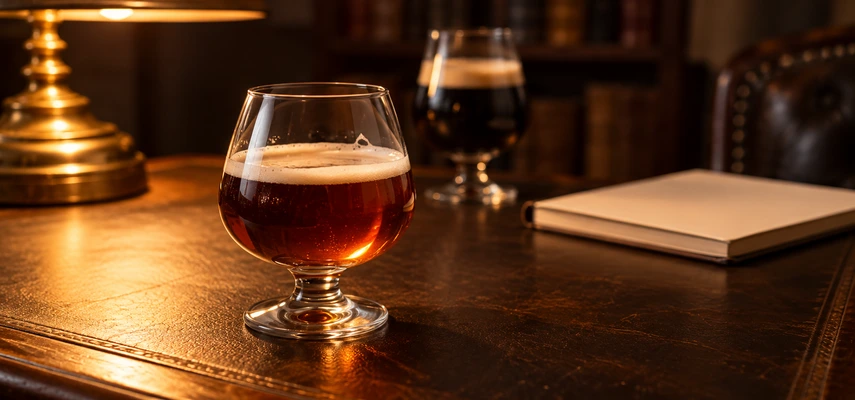

Two strong ales can have similar alcohol but almost opposite personalities: one tastes of roasted grain, another of rich bread and fruit. Strong malt-driven ales make a useful test of whether you understand strength as one dimension of beer rather than the entire description.
This lesson compares imperial stout, American-style barley wine, English-style barley wine and Scotch ale. They are the four prescribed entries in this part of the Level 2 range. Higher starting extract gives the brewer more potential alcohol and a concentrated sensory canvas; ingredients and fermentation decide what appears on it.
More extract creates possibilities and demands
A stronger wort contains more dissolved brewing material before fermentation. Some of that material can become alcohol and carbon dioxide, while less-fermentable components remain. Concentration can therefore support both strength and a substantial palate, but the final balance depends on how the wort is composed and fermented.
This is not a requirement that every strong beer must be sugary. Attenuation, bitterness, roast and alcohol all influence the impression. Equally, a rich aroma can suggest sweetness before the palate confirms whether much actual sweetness remains.
Fermentation is more demanding when the environment contains substantial sugar and later alcohol. Yeast choice, health, nutrition and temperature management matter to successful completion. A powerful ingredient list cannot substitute for a fermentation capable of realizing the intended result.
Imperial stout: concentrated roast with room for variation
Imperial stout is typically very dark brown to black with a tan-to-dark-brown head. Foam persistence can vary with strength and composition. Aroma can combine coffee or cocoa-like roast, dark malt, caramel, dried fruit and sometimes evident hops.
The flavor is intense and layered. Bitterness is usually substantial enough to balance the rich material, although roast and sweetness can produce different perceived balances. Body is full, carbonation commonly low to moderate, and alcohol can be clearly warming while remaining integrated. Harsh solvent heat is not a required mark of authenticity.
Pale base malt supplies much of the extract alongside dark roasted and other specialty ingredients. Fermentation may be restrained or fruitier according to interpretation. Hop expression can range from supporting to quite assertive, so the style should not be defined as universally hop-free beneath its black appearance.
Compared with standard-strength Irish stout or porter, imperial stout generally has much greater concentration, strength and intensity. Compared with dark doppelbock, it usually places more emphasis on roasted grain and uses an ale-fermented profile. Similar darkness does not establish similar malt treatment or fermentation.
English-style barley wine: rich malt and fruit
English-style barley wine can range from golden amber to dark brown, often with ruby highlights and a modest off-white head. It need not be black. Malt aroma can suggest bread, biscuit, caramel or toffee, with fruity depth that may include dried-fruit associations in darker examples.
The palate is full and rich, with noticeable sweetness balanced by variable bitterness and smooth alcohol warmth. Carbonation is commonly low to moderate. The finish may be moderately dry or sweet depending on recipe and age; English-style does not mean bitterness is absent.
Pale ale malt, crystal malt, possible brewing sugars, suitable hops and British ale fermentation provide a useful production framework. Fruit can arise from fermentation and development rather than added grapes. The wine term signals strength and intensity in a beer tradition, not a requirement to ferment grape juice.
Compared with American-style barley wine, the typical emphasis is maltier and fruitier, with less overt hop character and bitterness. Overlap exists. Use the combined balance rather than trying to identify a national style from one caramel note or one number on a label.
American-style barley wine: hops against a strong malt base
American-style barley wine usually ranges from amber to copper or deeper brown, with an off-white head and possible youthful haze. Strong malt can offer bread, caramel or toffee, while contemporary hops often supply citrus, resin or related aromatic contrast.
Bitterness is generally high, sometimes strongly so, but it meets a substantial malt foundation rather than a thin palate. Body is full, carbonation low to moderate, and alcohol commonly adds integrated warmth. The finish can range from moderately dry to somewhat sweet as recipe and age alter the balance.
High starting extract, suitable malt choices and substantial hopping help establish the style. A relatively restrained ale culture can leave more space for grain and hops, though fruitiness is possible. Strong hop expression does not automatically turn the beer into double IPA: barley wine typically retains a different depth and expression of malt richness.
Compared with the English-style reference, American barley wine generally moves hops and bitterness forward. Compared with imperial stout, it lacks that defining intense dark-roast center. Those distinctions explain why similarly powerful ales need separate style homes in the syllabus.
Scotch ale: richness without a peat requirement
The prescribed Scotch ale territory is usefully represented by Wee Heavy. Appearance is generally copper to deep brown, often clear with ruby highlights and an off-white to tan head. Aroma centers on rich malt, caramel, toast and possible dried fruit, with low hop aroma.
The palate is malt-led and often sweet, with enough bitterness to support balance without becoming the main feature. Body is full, carbonation low to moderate, and alcohol can be warming and smooth. The intended impression is substantial rather than aggressively roasted or overtly hop-driven.
Pale malt with appropriate darker or caramel contributions, wort production and clean-to-gently-fruity ale fermentation build the result. The name does not require whisky to be added, a whisky cask to be used or peat-smoked malt to define the aroma. Those would be additional production claims needing evidence.
Compared with English barley wine, Scotch ale often leans toward caramel-rich malt sweetness with quieter hops. Compared with a lightly smoked lager, its defining axis is concentration and malt balance, not smoke. A geographical association should never be allowed to invent ingredients.
Roast, caramel and fruit distinguish the centers
Imperial stout puts dark-roast character prominently into the mix. Barley wines offer strong non-roasted malt and possible fruit with different hopping emphasis. Scotch ale makes rich, often caramel-like malt especially central. These are starting points for comparison, not claims that every possible descriptor appears in every sample.
The underlying malt treatments help explain the distinctions. Roasting creates a different sensory direction from lighter kilning or caramel-malt processing. Proportions matter too: a small dark addition can deepen color without making roast dominate, while a larger grain contribution can change the whole balance.
Fermentation then adds its own compounds and consumes usable sugar. Fruit-like notes may come from yeast or development, and a dry finish can coexist with a rich aromatic impression. Keep appearance, aroma and palate in separate lines of the note before proposing a production explanation.
Alcohol should support, not replace, flavor
Warmth can be appropriate across these styles, but heat alone is not complexity. A well-integrated strong beer lets malt, hops and fermentation character remain legible. Burning or solvent-like sensations can distract regardless of how impressive the label’s strength appears.
Alcohol also changes mouthfeel and perceived balance. Combined with residual material, it can give fullness and a lingering finish. Yet full-bodied is not identical to sweet, and a long finish is not automatically desirable if its main feature is harshness.
For study, describe strength separately from quality. A high-alcohol beer can be faulty or unbalanced; a modest-strength beer can be excellent. The Level 2 comparison asks whether the components work together in the intended style, not which sample wins a contest for the largest number.
Maturation can shift the comparison
Some strong ales are selected for extended maturation or cellaring. Hop aroma and bitterness can soften, while malt and fruit impressions evolve. This can change how an American barley wine compares with its younger self without changing the recipe originally brewed.
However, ageing is not guaranteed improvement. Oxygen exposure, temperature, packaging and the individual beer influence whether development is attractive or damaging. Paper-like staling does not become desirable merely because the bottle was expensive or strong.
Separate brewery maturation from later consumer storage. The brewer may release a beer already ready for its intended presentation. Article #27 returns to the practical question of which beers should be kept and under what conditions, rather than treating every strong ale as a compulsory cellar project.
Build a four-style revision map
Place roast on one axis and hop emphasis on another, then annotate malt richness, sweetness and alcohol. Imperial stout should have a clear roast anchor; the two barley wines separate partly through typical hopping; Scotch ale occupies a particularly malt-centered position. Leave room for real examples to overlap.
Use reliable written descriptions if you do not drink alcohol. If you choose an optional tasting and are legally eligible, modest samples and similar conditions make the exercise more useful. The goal is comparison and explanation, not completing a large serving of each strong beer.
One-page revision summary
Imperial stout emphasizes concentrated dark grain; English-style barley wine combines rich malt and fruit with variable hopping; American-style barley wine brings stronger hop and bitter expression; Scotch ale centers rich, often caramel-like malt with quieter hops.
Explain strength through starting material and fermentation, flavor through ingredient and process choices, and quality through integration. Neither wine in a name nor Scotland in an association authorizes invented grapes, whisky or peat.
Continue your beer studies
Explore the related lessons on malt explained alongside beer yeast to extend the ingredient, process or sensory reasoning in this article.
Knowledge check: 10 original practice questions
Independent TFE questions, not official WSET examination items. Choose one answer per question; explanations follow separately.
1. Which feature most clearly separates imperial stout from barley wine?
- Mandatory low alcohol
- A defining intense dark-roast contribution
- Mandatory grape juice
- Absence of any malt
2. How does American-style barley wine generally compare with English-style?
- It must be paler than water
- It cannot contain fruit-like fermentation notes
- It usually emphasizes hops and bitterness more strongly
- It is always lower in alcohol
3. What does barley wine mean in this context?
- A strong beer tradition, not a requirement for grapes
- A wine made exclusively from grapes
- An alcohol-free cereal drink
- A mandatory blend of beer and whisky
4. Which statement about Scotch ale is accurate?
- It must contain peat smoke
- It must contain whisky
- It must be barrel-aged
- Its malt-rich profile does not require any of those additions
5. What supports greater alcohol potential before fermentation?
- Higher starting extract with suitable fermentability
- Black color by itself
- A taller glass
- The word imperial alone
6. Which alcohol impression is generally preferable in a balanced strong ale?
- Only burning solvent heat
- Integrated warmth that supports the flavor
- No detectable warmth under any circumstances
- Acetic sharpness as a strength test
7. Why does a rich caramel aroma not establish a sweet finish?
- Aroma cannot be perceived
- All caramel comes from hops
- Aroma and palate sweetness are different observations
- Strong beers contain no residual material
8. Which statement about ageing these styles is accurate?
- Every strong beer improves forever
- High alcohol prevents staling
- Expensive bottles cannot oxidize
- Development depends on the beer and storage conditions
9. Which comparison helps distinguish American barley wine from double IPA?
- Barley wine typically retains a different substantial malt foundation
- Both must taste identical
- Double IPA contains no malt
- Only barley wine uses hops
10. Why should a long finish not automatically earn a high quality judgment?
- Length never matters
- Persistent harshness can be long without being well integrated
- All short finishes are faulty
- Only alcohol creates finish
Answers and explanations
1. B — A defining intense dark-roast contribution. Imperial stout typically places roasted grain centrally, while barley wine generally develops strong malt without the same defining roast intensity. Mapping: LO3 AC1/AC2.
2. C — It usually emphasizes hops and bitterness more strongly. American barley wine typically brings a more assertive hop and bitter profile against its rich malt foundation. Style territories still overlap. Mapping: LO3 AC1.
3. A — A strong beer tradition, not a requirement for grapes. Barley wine remains beer. The name reflects strength and intensity, not an ingredient requirement for grape juice or added spirits. Mapping: LO3 AC1.
4. D — Its malt-rich profile does not require any of those additions. The style’s geographical association does not imply whisky, peat or barrel ageing. Those would be separate recipe or production choices. Mapping: LO3 AC1/AC2.
5. A — Higher starting extract with suitable fermentability. The amount and concentration of fermentable material support alcohol formation. Color, glassware and broad label terms do not measure that potential. Mapping: LO3 AC3.
6. B — Integrated warmth that supports the flavor. Smooth warmth can fit a strong beer, while harsh or solvent-like sensations may obscure the intended malt, hops and fermentation profile. Mapping: LO3 AC1.
7. C — Aroma and palate sweetness are different observations. Aromatic associations can suggest sweetness, but actual palate balance depends on residual composition, bitterness, alcohol and other factors. Mapping: LO3 AC1/AC3.
8. D — Development depends on the beer and storage conditions. Some strong beers can develop attractively, but oxygen, heat and time can also cause damage. Strength alone does not guarantee improvement. Mapping: LO3 AC3/LO4 AC1.
9. A — Barley wine typically retains a different substantial malt foundation. Both can be strong and hoppy, but barley wine generally provides a different depth of malt richness and overall balance. Mapping: LO3 AC1/AC2.
10. B — Persistent harshness can be long without being well integrated. Duration and character are separate judgments. A lingering finish should support the beer rather than merely prolong heat or rough bitterness. Mapping: LO3 AC1 evaluation.












