










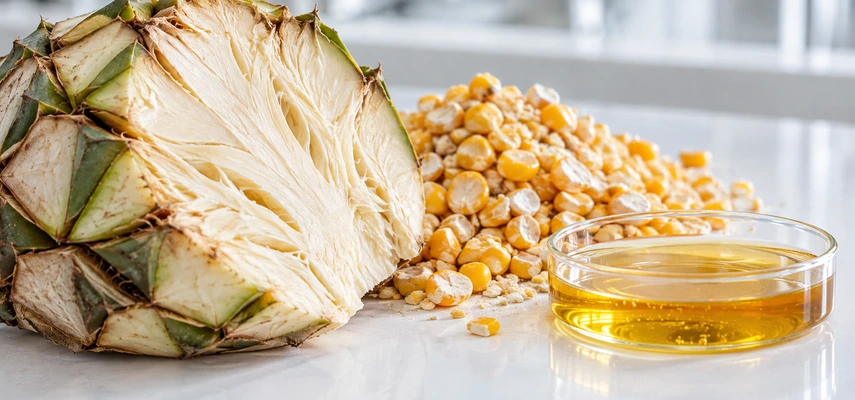

A grape, a corn kernel and an agave heart can all become the starting point for a spirit. Put the same yeast into each, however, and you haven’t given it three equivalent lunches. Sugar, starch, and fructans come in forms with different structures and different levels of accessibility. The distiller’s first job is to make their useful sugars available.
This lesson separates three important starting points: sugars, starch and fructans. The goal isn’t to memorize a chemistry diagram. It’s to see why fruit can follow one preparation route while grains and agave need different transformations. Once that distinction is clear, fermentation methods stop looking like a collection of unrelated traditions.
Sugar, starch, and fructans: what carbohydrates supply
Carbohydrates are a broad family of compounds built from carbon, hydrogen and oxygen. They include simple sugars and larger molecules assembled from sugar units. Plants use different carbohydrates for transport, energy storage and structure. Distillers care especially about the forms that can supply fermentable sugars after suitable preparation.
Yeast uses available sugars to support metabolism and produce ethanol, carbon dioxide and other compounds. But the word “carbohydrate” doesn’t mean “immediately fermentable.” A starch granule and a glucose solution both contain carbohydrate; a conventional distilling yeast cannot treat them identically. Molecular structure and physical access determine the preparation required.
Think of a raw material as a warehouse. Some supplies are already in convenient parcels; others are locked inside larger packages or difficult structures. Processing opens access and, where necessary, breaks larger molecules into smaller units. The analogy has a limit: these are chemical transformations, rather than simply grinding something into smaller visible pieces.
Sugars: small molecules with different routes into yeast
Glucose and fructose are monosaccharides, meaning single sugar units. Sucrose is a disaccharide formed from two units, glucose and fructose. Maltose contains two glucose units. Those distinctions matter because a yeast strain needs suitable enzymes and transport systems to use a particular sugar. Not every yeast handles every available sugar equally well.
Common distilling strains of Saccharomyces cerevisiae can use several important sugars. With sucrose, invertase can split the molecule into glucose and fructose before those sugars enter central metabolism. Maltose utilization involves transport and enzymatic breakdown. “Fermentable” therefore describes a relationship between a substrate and the organism under the conditions provided, rather than a promise of effortless completion.
Concentration matters too. A solution can contain usable sugar while imposing stress through its high concentration. Nutrient shortages or unsuitable temperature can cause problems even when the carbohydrate itself is appropriate. Successful preparation provides access to sugar; successful fermentation also requires an environment in which yeast can use it effectively.
Fruit: release the juice and protect its condition
Grapes provide substantial fermentable glucose and fructose in their juice. Crushing and pressing can release that juice; fermentation then converts available sugars into alcohol. The important distinction is that the producer doesn’t first need to convert a large starch reserve into sugar as in cereal processing. Fruit processing still involves choices about solids, timing and condition.
Damaged fruit can support unwanted microbial activity, so “the sugars are ready” doesn’t mean “nothing needs managing.” Ripeness, handling and storage influence what enters fermentation. A clean, suitable fruit substrate gives the producer a different starting point from spoiled material. Later distillation cannot be assumed to erase every problem created upstream.
Pomace adds another distinction. It is the solid material remaining from grape processing, rather than simply a synonym for juice. Its sugar and alcohol situation depends partly on how and when it was separated. Recognize the raw material before proposing a preparation route; not every grape-derived spirit starts with the same liquid.
Starch: glucose stored in long chains
Grains such as barley, wheat, rye and corn store starch. Starch consists principally of amylose, which is mostly linear, and amylopectin, which is branched. Both contain glucose units linked together. Their size and structure make them different from dissolved glucose. Conventional spirits yeast does not simply swallow a starch granule and ferment it intact.
Starch conversion requires access and appropriate enzymes. Milling helps expose material by breaking the grain. Heat and water can cause gelatinisation: starch granules absorb water, swell and lose their ordered structure. This can improve accessibility to enzymes. Gelatinisation and enzymatic conversion are related stages, but they aren’t names for the same event.
The required conditions depend on the cereal and process. Avoid one magic cooking temperature for every grain. The equipment, water availability and starch properties matter. Excessive heat can also damage enzymes if they are present, so producers coordinate the preparation of starch with the conditions under which their conversion enzymes function.
Enzymes perform particular chemical jobs
Enzymes are biological catalysts: they accelerate reactions without being consumed in the same way as the substrate. Amylases act on starch. Alpha-amylase can break internal links, producing shorter chains; beta-amylase can release maltose from suitable chain ends. Branching and the chosen enzyme system affect what remains and what becomes available for fermentation.
Hydrolysis is the breaking of chemical bonds with the participation of water. In starch processing, appropriate enzymes help hydrolyze links between sugar units. The practical result is a mixture of smaller carbohydrates. Some are usable by the selected yeast; others may remain unfermented. Conversion isn’t automatically complete merely because the mash looks liquid.
Lallemand Biofuels & Distilled Spirits identifies starch-converting enzymes among its distilling tools. That establishes a production possibility, not permission to use any commercial enzyme in every protected spirit. Production chemistry answers what a tool does. Category rules answer whether a particular producer may use it in that named product.
Malting and mashing divide the work
Malting involves controlled grain germination followed by drying. The process develops or makes available enzymes and changes structures that surround the starch. Mashing combines prepared material with water under conditions suited to extraction and enzyme activity. It produces a sugar-containing medium for fermentation, rather than alcohol itself. Yeast supplies the next transformation.
The Scotch Whisky technical file describes using malted barley’s enzymes during conversion. Other spirits traditions may use different permitted enzyme sources, including fungi or commercial preparations. Don’t turn a Scotch production requirement into a general law of fermentation. Shared chemistry can sit inside different legal and cultural systems.
Here is a worked chain: suitable milling and hydration expose grain material; gelatinisation can improve starch accessibility; amylases release smaller sugars; yeast can then ferment the usable portion. Each link answers a different question. Leaving out enzymes makes heat look like the whole conversion process. Leaving out access makes enzyme addition look sufficient regardless of preparation.
Fructans: agave poses a different problem
Agave stores important reserves as fructans, molecules composed mainly of linked fructose units, with structural variation. They aren’t starch, and “fructan” doesn’t mean “free fructose.” Before conventional fermentation, the reserve carbohydrate needs hydrolysis to release usable sugars. The raw material therefore needs a conversion route suited to its own bonds and structure.
Heat under appropriate conditions is central to traditional agave cooking and fructan hydrolysis. The conditions differ from a grain mash built around malt amylases. Extraction also matters: releasing sugars from fibrous material is a physical processing task alongside chemical conversion. Cooking, hydrolysis and extraction interact, but the words shouldn’t be used interchangeably.
Original research on Agave salmiana fructans characterizes the substrate and studies enzymatic hydrolysis. It helps demonstrate why fructan structure and suitable enzymes matter. An experimental enzyme treatment isn’t evidence that every Tequila or Mezcal producer uses it. Species, production method and legal category must remain attached to any example.
Sugar cane: sugar is present, but processing still matters
Sugar cane juice contains sugars that can supply fermentation after appropriate handling. Cane syrup and molasses offer different concentrations and compositions because they have undergone further processing. Molasses is associated with sugar manufacture; it isn’t just fresh cane juice with a darker color. Producers prepare a fermentation medium suited to the material available.
Dilution can make a concentrated material more workable, but it doesn’t automatically correct nutrient balance or microbial condition. Likewise, available sugar does not make every cane product interchangeable. Compare the substrate, then the preparation and fermentation conditions. Later lessons examine how these differences contribute to cane-spirit production without assigning one universal national flavor to each ingredient.
Diagnose the missing step
Imagine a cereal mash that contains substantial starch but yields little alcohol. Adding more yeast may leave the underlying problem untouched if accessible fermentable sugar is scarce. Check grain preparation and conversion before treating the fermentation as merely underpitched. A useful explanation follows the chain backward from the result to the stage that could plausibly cause it.
Now imagine agave material described as “already full of sugar.” Ask which carbohydrate the speaker means. A fructan reserve can represent potential fermentable material while still requiring hydrolysis. Finally, consider grape juice that starts well but stops fermenting. Its usable sugars don’t rule out nutrient, temperature or other fermentation problems. Similar outcomes can have different causes.
What to remember
Identify the carbohydrate, distinguish physical access from chemical conversion, then establish what the yeast can use. Fruit sugars, cereal starch and agave fructans require different preparation decisions. Sugar cane products also need appropriate handling. For an examination description, follow the actual sequence and keep conversion separate from fermentation; that distinction prevents several errors at once.
Written practice: original TFE exercises
These suggested marks and indicative points are independent teaching guidance, not official WSET marking schemes.
Exercise 1: 5 suggested marks
Describe five distinct steps or functions in preparing cereal starch for alcoholic fermentation. Mapping: LO1 state/describe.
Indicative marking points:
- Milling exposes grain material.
- Heat and water can gelatinise starch.
- Gelatinisation can improve enzyme access.
- Amylases hydrolyze suitable starch links into smaller carbohydrates.
- The resulting usable sugars supply the selected yeast.
Model answer: Milling breaks grain and exposes its interior. Heat with water can gelatinise starch, improving access for enzymes. Amylases then hydrolyze suitable links in the starch, producing smaller carbohydrates including fermentable sugars. Those usable sugars provide the yeast substrate for alcoholic fermentation.
Why it works: The description keeps physical exposure, gelatinisation, enzyme action and yeast use in sequence instead of calling all four fermentation.
Common mistake: Writing that boiling cereal alone produces alcohol leaves out both enzymatic conversion and yeast metabolism.
Exercise 2: 5 suggested marks
Describe the carbohydrate starting points and preparation differences for grape juice, cereal grain and agave. Mapping: LO1 state/describe.
Indicative marking points:
- Grape juice supplies fermentable glucose and fructose.
- Cereals supply starch reserves.
- Cereal starch needs suitable access and conversion to usable sugars.
- Agave supplies fructans.
- Agave fructans need appropriate hydrolysis before conventional fermentation.
Model answer: Grape juice contains glucose and fructose available for yeast after appropriate handling. Cereals contain substantial starch, requiring access and suitable conversion into smaller usable sugars. Agave contains fructans, which require hydrolysis to release fermentable sugars. The three raw materials therefore present different preparation tasks.
Why it works: Each raw material is paired with its actual carbohydrate form and preparation need, providing a clear basis for later causal explanations.
Common mistake: Calling every reserve starch erases the distinction between cereal starch and agave fructans.
Knowledge check: 10 original practice questions
Independent TFE questions, not official WSET examination items. Choose one answer per question; explanations follow separately.
1. What is sucrose composed of?
2. Which pair consists of monosaccharides?
3. Why can a sugar-rich medium still ferment poorly?
4. Which carbohydrate is a major storage form in cereals?
5. Which substrate is especially associated with agave reserves?
6. Which statement distinguishes hydrolysis from milling?
7. Which description of yeast and intact starch is sound?
8. Which statement about malting is correct?
9. Which distinction is useful when comparing cane juice with molasses?
10. What does gelatinisation chiefly change?
Answers and explanations
- A — Glucose and fructose units. Sucrose is a disaccharide with glucose and fructose components, released by suitable hydrolysis. Mapping: LO1.
- A — Glucose and fructose. Glucose and fructose are single sugar units; starch is much larger and sucrose and maltose are disaccharides. Mapping: LO1.
- D — Its yeast environment may have nutrient or temperature problems.. Carbohydrate availability is necessary but does not replace suitable nutritional and environmental conditions. Mapping: LO1.
- D — Starch. Cereal starch is a reserve carbohydrate that must provide smaller fermentable sugars before conventional yeast can use it. Mapping: LO1.
- B — Fructans. Agave fructans require suitable hydrolysis to release sugars useful for conventional alcoholic fermentation. Mapping: LO1.
- B — Hydrolysis breaks chemical bonds; milling breaks material physically.. Physical size reduction can expose substrate, while hydrolysis acts on bonds within its carbohydrate molecules. Mapping: LO1.
- B — Conventional distilling yeast needs starch to yield usable sugars.. Enzyme-mediated conversion and accessible substrate are needed before standard distilling yeast can exploit cereal starch effectively. Mapping: LO1.
- C — It uses controlled germination followed by drying.. Malting prepares grain structures and enzymes for subsequent processing; fermentation is a separate stage. Mapping: LO1.
- D — Processing changes concentration and composition.. Cane products represent different processing histories, so preparation should reflect their actual composition and concentration. Mapping: LO1.
- C — The physical organization and accessibility of starch granules. Heat and water can swell and disrupt starch granules, improving access for subsequent enzyme action. Mapping: LO1.
Continue exploring this series
3. Alcoholic Fermentation Explained: Yeast, Nutrients, and Flavor Compounds
4. Fermentation Methods Explained: Liquid, Solid-State, Sequential, and Parallel Fermentation
11. How Grains Become Whisky: Malting, Mashing, Enzymes, and Starch Conversion
16. How Fruit Spirits Are Made: Grapes, Wine, Pomace, and Fermentation
21. Sugar Cane Spirits Explained: Juice, Syrup, Molasses, and Fermentation
23. Agave Spirits Explained: Growing, Cooking, Crushing, and Fructan Conversion
32. Shōchū Explained: Honkaku Shōchū, Awamori, and Japanese Distillation
33. Baijiu Explained: Qu, Solid-State Fermentation, and China’s Major Styles
1. How to Think Like a WSET Level 3 Spirits Student: Explaining Style, Quality, and Production
50. WSET Level 3 Spirits Exam: Complete Revision Guide and Practice Examinations












